China's Concern Over Leakage of Didi Chuxing Partner Information to the US
Personal Movement Data Leak Viewed as National Security Issue
Twitter, Facebook, Google Services Face Suspension Threat in Hong Kong
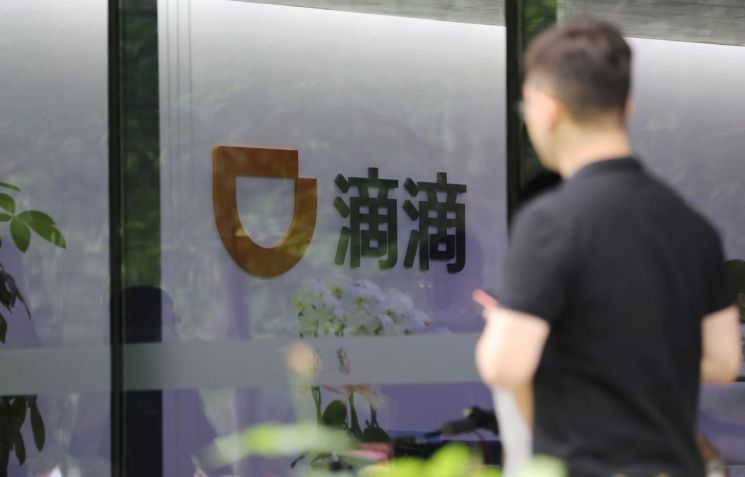
[Asia Economy New York=Correspondent Baek Jong-min] It has been understood that the Chinese authorities' move to curb the ride-sharing company Didi Chuxing, which is listed on the U.S. stock market, is rooted in the U.S.-China conflict over the leakage of important data.
The Wall Street Journal reported on the 5th (local time) that Didi Chuxing pushed ahead with its listing on the New York Stock Exchange despite the authorities' stance that a security inspection was necessary.
According to WSJ citing sources, Didi Chuxing proceeded with overseas listing with the support of Chinese financial authorities, but the Cyberspace Administration, which is responsible for security, is wary that a lot of information will be disclosed to foreigners through Didi Chuxing's U.S. stock market listing.
WSJ particularly noted that Chinese security authorities are sensitive to information about major clients and supply chains that the U.S. requires from Chinese companies listed in the U.S.
Former U.S. President Donald Trump signed a bill allowing the delisting of Chinese companies from the U.S. stock market if they fail to comply with U.S. accounting standards, after a series of Chinese companies listed in the U.S. were involved in fraudulent accounting issues.
Accordingly, Didi Chuxing is in a situation where it must disclose various information to the U.S. side according to U.S. accounting standards. Analysts say that the recent push by Chinese authorities to encourage companies listed overseas, such as in the U.S., to list on the Hong Kong or Shanghai stock exchanges is not unrelated to this.
Chinese security authorities are concerned that equipment such as servers used for information storage by Didi Chuxing might be composed of foreign-made products in this process.
They worry that using foreign servers could lead to Chinese people's movement information being leaked overseas through hacking, etc.
Therefore, during the security inspection process of Didi Chuxing, the security authorities have been informed to check not only who supplied the servers, data storage equipment, software, and services but also the risk factors arising from them.
This is the exact opposite situation from when the U.S. was concerned about the Chinese video-sharing app TikTok storing Americans' personal information on servers located in China, raising fears of personal information leakage.
WSJ predicted that Chinese authorities do not consider the backlash from overseas investors who have invested in domestic companies.
According to the Asia Internet Association, major U.S. internet companies such as Twitter, Facebook, and Google have warned of service suspensions due to the 'Doxxing Regulation Law,' an anti-doxxing law being promoted by Hong Kong authorities.
The Doxxing Regulation Law was established to block Hong Kong anti-government protesters from pressuring Hong Kong officials who cooperated with China by publicly revealing their personal information on the internet.
Once the Doxxing Regulation Law is enforced, employees of major internet companies face the risk of prosecution. Violations of the law can result in a fine of 1 million Hong Kong dollars or imprisonment for up to 5 years.
WSJ noted that the conflict between U.S. information technology companies and Hong Kong authorities, which expanded following the Hong Kong National Security Law, is intensifying further through the Doxxing Law.
© The Asia Business Daily(www.asiae.co.kr). All rights reserved.
![Clutching a Stolen Dior Bag, Saying "I Hate Being Poor but Real"... The Grotesque Con of a "Human Knockoff" [Slate]](https://cwcontent.asiae.co.kr/asiaresize/183/2026021902243444107_1771435474.jpg)















