Increase in Unemployed Vlogs Confessing 'Heuksujeo, Debt, Depression'
Contrasting with Wealthy, Perfect Daily Life of Existing YouTubers
Viewers Offer Genuine Comfort, Support, and Advice
Experts Say "YouTubers and Viewers Empathize and Heal Each Other"
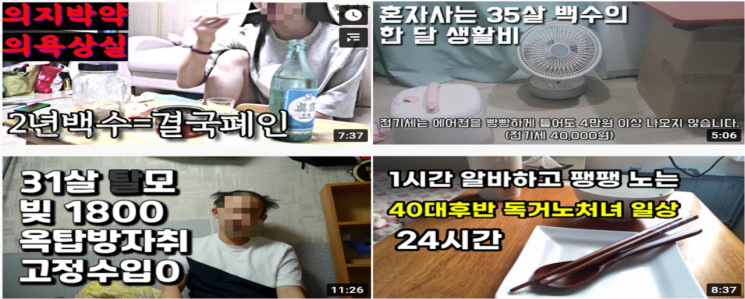
[Asia Economy Reporter Park Hyun-joo] "I am a 35-year-old unemployed person living alone." , "I am a weak-willed, unmotivated recluse." , "Cheer up. Better days will come."
These days, with many YouTube contents on various topics such as mukbang, daily life, makeup techniques, and styling, so-called 'unemployed vlogs' showing people with no job, poor circumstances, or lack of motivation spending all day inside their rooms are attracting attention.
They honestly confess their difficult situations, including reasons why they had no choice but to quit their jobs, their job-seeking activities, current loan status, and living conditions. Viewers watching these videos offer sincere advice and leave positive comments, sharing hope.
The videos capturing their daily lives differ from typical vlogs. While conventional vlogs show waking up in the morning, taking a neat shower, watching the news, and planning the day, their wake-up times are irregular due to having no workplace to go to. This is completely different from the perfect daily lives that used to evoke envy in others in traditional vlogs.
This contrasts with the 'Flex' phenomenon, where people flaunt their wealth by consuming luxury clothing or high-end foreign cars. Some viewers criticized such videos as "unrealistic" or "artificial." On online communities, there was even a joke saying, "If you want to shoot a vlog, you have to wake up early, slice an avocado first, and suddenly dip your feet in Cheonggyecheon while going to work."
Compared to that, unemployed YouTubers work part-time cleaning jobs at the goshiwon where they live or make meals using ramen, rice, and kimchi provided by the goshiwon. Some avoid going to hair salons to save money.
They also honestly reveal their inner feelings through their videos. One YouTuber who introduced himself as unemployed for 1 year and 6 months said, "The longer I am unemployed, the emptier I feel inside. Even after eating, I get hungry quickly. Why is my digestion so good..." expressing his frustration.
He added, "I keep avoiding people's calls," and "Now I don't even want to do anything." Another YouTuber preparing for employment for two years shared experiences of job failures, and one with many debts disclosed his debt details and credit rating.
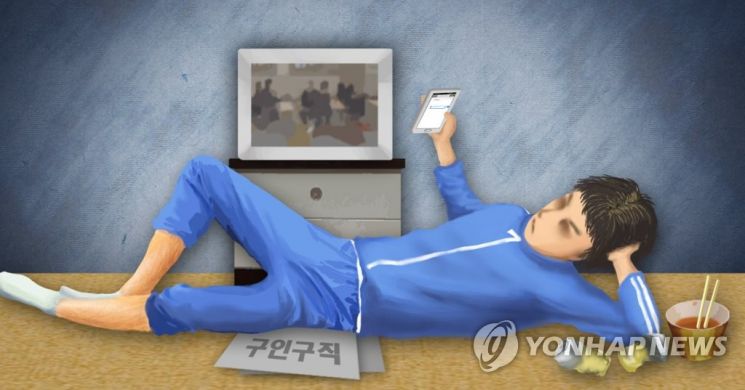
Viewers empathize with their situations and send encouragement. The most common comments are expressions of empathy and comfort like "It's okay. I was like that too." One viewer commented, "I was kicked out without getting paid after my business failed. I just lay down and ate for a year due to stress and gained 10 kg," adding, "I thought I couldn't go on like that, so I got certifications and prepared for a job. All I can do is live hard today. What else is life?" comforting the YouTuber.
Another viewer said, "I relate because I wandered for two years after failing the civil service exam," and left a comment, "I sincerely empathized while watching the video. I support you."
Some viewers offer heartfelt advice. Comments like "You are still young," "Start by cleaning and get your mind right," and "Make a plan" can be seen.
Experts analyzed that viewers give advice to unemployed YouTubers while exchanging empathy and comfort. It is described as a kind of 'healing.'
Professor Kwak Geum-ju of Seoul National University’s Department of Psychology explained, "YouTubers express their pain and hardships to seek comfort from someone. Viewers are comforted by thinking, 'Others are struggling too. I'm not the only one.' It is easier to open up completely to strangers than to people you know."
However, she expressed concern about the tendency to seek more sensational topics for profit. Professor Kwak advised, "It is good in the true sense to share hardships and encourage each other, but if stories are fabricated to gain viewers' sympathy and attention, problems may arise later, so caution is needed."
© The Asia Business Daily(www.asiae.co.kr). All rights reserved.
![Clutching a Stolen Dior Bag, Saying "I Hate Being Poor but Real"... The Grotesque Con of a "Human Knockoff" [Slate]](https://cwcontent.asiae.co.kr/asiaresize/183/2026021902243444107_1771435474.jpg)
















