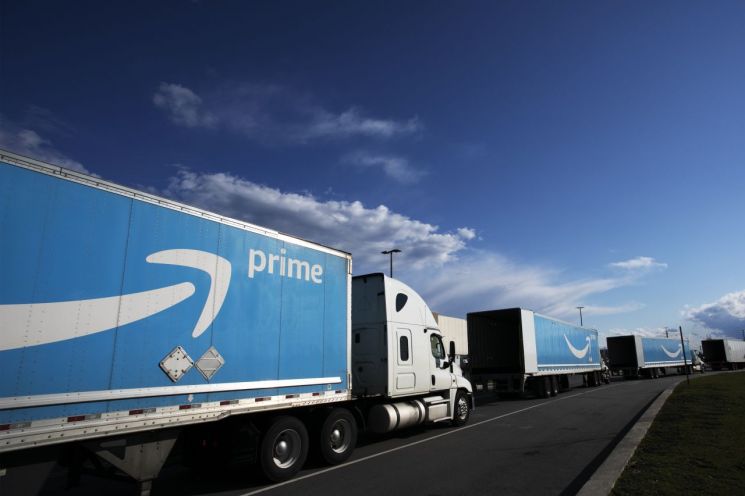
[Asia Economy Reporter Byunghee Park] The global supply chain crisis is expected to impact Amazon Prime Day, which takes place on the 21st and 22nd (local time). Experts predict that the supply chain disruptions could continue into next year.
CNBC reported on the 20th that ongoing supply chain issues have prevented sellers from securing sufficient inventory, meaning Prime Day products could sell out early.
Amazon has held Prime Day every summer since 2015. Last year, due to concerns over product supply and delivery disruptions caused by COVID-19, Prime Day was held in October. This year, the schedule was moved back to summer, but it is expected that the impact of supply chain disruptions will be unavoidable.
In fact, a survey conducted by logistics company Freytos among 177 small and medium-sized businesses selling products on Amazon found that half expect inventory shortages during Prime Day due to shipping delays. In a survey by the National Retail Federation (NRF), which has over 16,000 member companies, more than two-thirds of members said it takes an additional 2 to 3 weeks to secure goods due to supply disruptions. This increases sellers' costs, which inevitably reduces the discount rates during Prime Day. As of April, the inventory-to-sales ratio for U.S. retailers recorded its lowest level since 1992.
Air and sea transportation have been disrupted due to COVID-19 lockdown measures. In particular, the city of Shenzhen in China imposed entry restrictions at Yantian International Container Terminal, one of the world's largest logistics ports, to prevent the spread of COVID-19. This is expected to severely impact many small and medium-sized U.S. manufacturers importing goods from China. Isaac Larian, founder and CEO of manufacturer MGA Entertainment, said, "In the 42 years since MGA was founded, we have faced many difficulties, but this kind of disruption is unprecedented."
The Wall Street Journal (WSJ) analyzed that supply chain disruptions continuing into next year could trigger inflation. The Institute of International Finance (IIF) also predicted in a report on the 10th that the U.S. personal consumption expenditure (PCE) inflation rate will reach 2.6% by the end of this year, exceeding the U.S. central bank's monetary policy target of 2%. The IIF forecasted that supply chain disruptions will increase manufacturing costs, ultimately leading to higher consumer prices.
Aneta Makosta, an analyst at investment bank Jefferies, said, "Even in the best-case scenario, supply chain disruptions will not end within 12 months," adding, "The situation will worsen until the back-to-school season in September."
© The Asia Business Daily(www.asiae.co.kr). All rights reserved.
![Clutching a Stolen Dior Bag, Saying "I Hate Being Poor but Real"... The Grotesque Con of a "Human Knockoff" [Slate]](https://cwcontent.asiae.co.kr/asiaresize/183/2026021902243444107_1771435474.jpg)















