[Asia Economy Reporter Yujin Cho] The recovery of long-haul air passenger demand is slow, deepening the slump of the global big two airlines.
On the 15th (local time), the Wall Street Journal (WSJ) reported that Emirates Airlines, the largest airline in the Middle East, posted a loss of about $6 billion (approximately 6.7 trillion KRW) last year, marking its first deficit in 30 years since its launch.
The sharp decline in passenger transport performance due to the impact of COVID-19 led to the deterioration of results. Last year, Emirates Airlines' transported passenger numbers plummeted by about 88% compared to the previous year.
As the world's largest airline in terms of fleet capacity and passenger transport capability, Emirates Airlines was hit hardest by the decrease in air travel demand caused by the COVID-19 pandemic.
In response to the aviation industry downturn, Emirates Airlines laid off about 30% of its approximately 105,000 employees last year.
This is the largest scale of layoffs taken by an airline since the COVID-19 outbreak. Along with layoffs, efficiency measures such as ending leases on large aircraft models like the A380 and B777 are also reportedly underway to reduce costs.
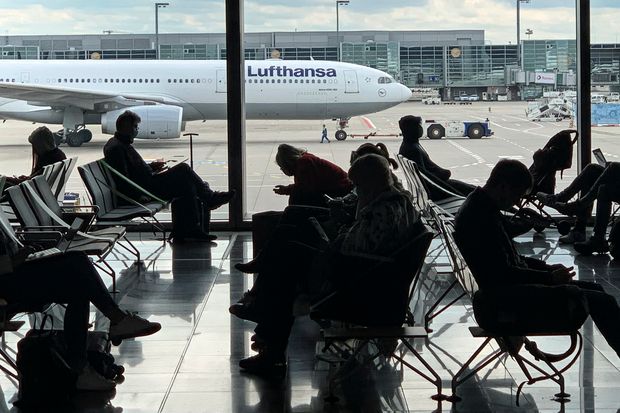
Europe's largest airline, Lufthansa, also decided to cut an additional 10,000 jobs this year as the COVID-19-induced management crisis deepened.
This corresponds to about 9% of its total 111,000 employees. Since the outbreak of COVID-19, Lufthansa has already reduced its workforce by about 26,000 to cut costs.
The WSJ explained, "Lufthansa plans to save 3.5 billion euros by 2024," adding, "This workforce reduction is also part of emergency management."
Lufthansa expects that while short-haul travel demand is partially returning due to vaccinations, its profitable long-haul routes and business demand will not return to pre-pandemic levels until 2025.
Although economic reopening has begun as vaccination speeds up, restrictions on the business environment such as quarantine and self-isolation continue, leading to a judgment that the recovery of long-haul travel demand will be delayed.
An Airbus sales executive said, "International passenger traffic has decreased to half of the pre-COVID-19 level," adding, "Domestic travel demand remains at about 80% compared to 2019."
© The Asia Business Daily(www.asiae.co.kr). All rights reserved.
![Clutching a Stolen Dior Bag, Saying "I Hate Being Poor but Real"... The Grotesque Con of a "Human Knockoff" [Slate]](https://cwcontent.asiae.co.kr/asiaresize/183/2026021902243444107_1771435474.jpg)















