International Oil Prices Maintain at $70 Range... Growing Outlook for $100 Reach
WSJ "Fossil Fuel Investment Declines Amid Expansion of Eco-Friendly Investments"
Possibility of Sharp Oil Price Surge Due to Demand and Supply Mismatch
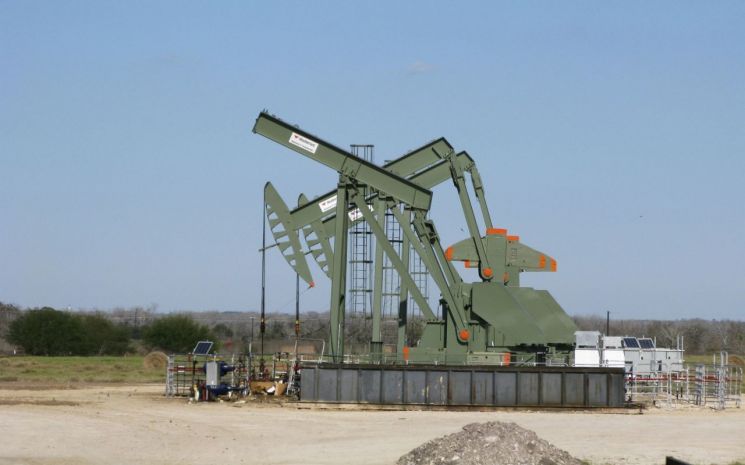
[Asia Economy New York=Correspondent Baek Jong-min] Amid soaring international crude oil prices, an analysis has emerged that the clean energy promotion policy of the Joe Biden U.S. administration is actually acting as a destabilizing factor driving oil prices higher.
Environmental groups are restraining new investments by fossil energy companies, and Wall Street, which should provide investment funds, is focusing on clean energy investments, creating a boomerang effect that could push oil prices up. There are also concerns that rising oil prices could threaten industries until the clean energy sector is fully operational.
On the 14th (local time) at the New York Mercantile Exchange, July West Texas Intermediate (WTI) crude oil closed at $70.88 per barrel, down 3 cents (0.04%). After recording negative prices last year, oil prices have recently maintained above $70. The average gasoline price in the U.S., compiled by the American Automobile Association (AAA), has also surged to $3.08. Despite the resolution of the Colonial Pipeline hacking incident, gasoline prices in the U.S. have not declined.
The Wall Street Journal (WSJ) expressed concerns that the Biden administration’s energy industry policies could further fuel the rise in oil prices.
There are roughly two reasons why oil prices remain strong even as the transition to clean energy such as wind and solar power is underway.
First, oil demand remains high. Jet fuel, expected to surge with the recovery of international travel, is a prime example of a fuel that cannot be replaced by clean energy.
WSJ reported that, besides transportation fuel demand, demand for various petrochemical products is expected to continue growing at a high rate over the next decade. The International Energy Agency also forecasts that oil demand will increase at least until 2026.
On the other hand, investment in oil drilling plunged last year. The amount invested in drilling last year was $330 billion, only half of the 2014 level. Due to the COVID-19 impact and the plunge of crude oil prices into negative territory at one point, investments decreased amid anticipated demand deterioration. According to drilling equipment company Baker Hughes, the number of oil drilling rigs in the U.S. is about 40% of the level at the end of 2018.
Some warn that if oil demand continues to steadily increase after 2022 and reserves decrease, a serious imbalance between oil demand and supply could arise.
Investment bank JP Morgan analyzed that oil-related companies need to invest an additional $600 billion (approximately 671 trillion KRW) by 2030 to meet demand, but securing investment funds has become difficult.
WSJ conveyed experts’ analysis that recent energy sector funds have concentrated on renewable energy such as wind and solar, causing a sharp decline in investments in fossil energy.
Energy companies like ExxonMobil, Chevron, and Royal Dutch Shell are finding it difficult to attract external investments, and internal circumstances are also hindering investment expansion. Shareholders’ increasing demands for cash dividends amid concerns over poor performance, combined with pressure from environmental groups, are reducing investment funds for oil-related companies.
WSJ introduced views that rising oil prices could induce production expansion, reducing concerns about price surges, but gave significant weight to voices emphasizing the risk of sharp price increases.
The shale industry, which was a cause of oil price declines since 2010, also faces problems as it underwent large-scale asset reductions due to the crisis caused by last year’s oil price drop, making it unable to actively expand production as before.
Regarding this, Lee Kwang-ho, head of Hanwha International’s New York branch, said, "Under the Biden administration, new shale drilling permits are not being issued," and conveyed that the future of the shale industry is not bright. He explained that recently, the atmosphere predicting oil prices could rise to $100 has increased.
Lee Gering, who operates a futures specialized investment company, also expressed to WSJ concerns that the recent oil demand and supply situation "could trigger an oil crisis."
© The Asia Business Daily(www.asiae.co.kr). All rights reserved.
![Clutching a Stolen Dior Bag, Saying "I Hate Being Poor but Real"... The Grotesque Con of a "Human Knockoff" [Slate]](https://cwcontent.asiae.co.kr/asiaresize/183/2026021902243444107_1771435474.jpg)
















