105 Vaccination Errors Out of 14.79 Million Doses as of Midnight on the 13th
"I Don't Understand," "Worrying About Hospitals Before Side Effects" Public Outrage
Experts Say "More Undetected Errors Likely... Thorough Selection and Training of Vaccination Centers Needed"
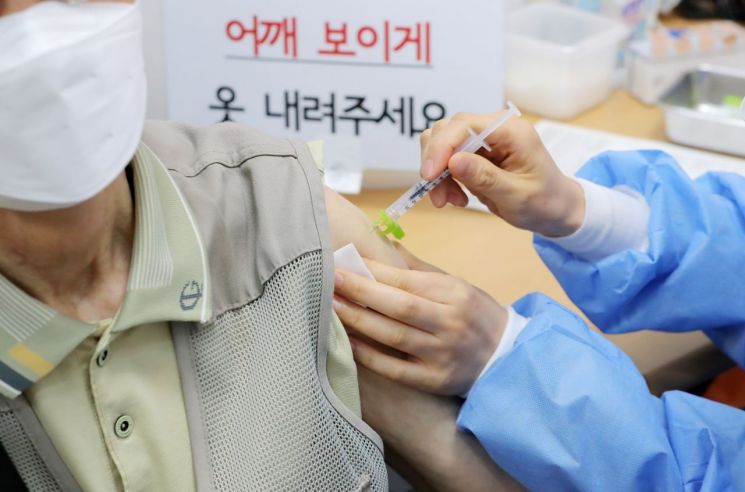
[Asia Economy Reporter Kim Soyoung] "Honestly, I am quite anxious." , "I hope the government pays much more attention."
As medical institutions continue to make mistakes such as vaccine errors, overdosing, and underdosing during the COVID-19 vaccination process, citizens' anxiety is growing.
On the 14th, the COVID-19 Vaccination Response Promotion Team (Promotion Team) announced in a regular briefing that as of midnight on the 13th, out of a total of 14.79 million vaccinations, there were 105 cases of vaccination errors.
Specifically, the most common error was incorrect vaccination of the target recipient, accounting for 85.7% or 90 cases, followed by 10 cases (9.5%) of not adhering to the vaccination interval, and 5 cases (4.8%) of dosage errors. Most cases of misjudging the vaccination target involved administering the AstraZeneca (AZ) vaccine to individuals under 30 years old.
On the 28th of last month, a minor who visited a general hospital in Gwangju for general medical treatment was mistakenly given the AZ vaccine by medical staff. While vaccinating essential personnel including medical staff, the hospital staff mistook a minor, Mr. A, who came to the injection room after orthopedic treatment, for medical personnel and administered the AZ vaccine.
Subsequently, the hospital identified that Mr. A had been given the AZ vaccine, hospitalized him to monitor for adverse reactions, and discharged him the next day after no abnormal reactions were found. Seo-gu is reportedly reviewing administrative measures.
Currently, the AZ vaccine is only administered to those aged 30 and above due to reports of rare thrombosis. Therefore, vaccinating a minor who is not a target recipient, as in this case, posed a dangerous risk of adverse reactions.
Earlier, on the 11th, a woman in her 50s, Ms. B, visited a clinic in Jinju to receive the Janssen vaccine as a female reservist. However, the clinic mistakenly administered the AZ vaccine instead of the Janssen vaccine.
There were also cases where the correct vaccine dosage was not administered. On the 11th, a private commissioned medical institution was found to have overdosed five men in their 30s, including Mr. C, with the Janssen vaccine by five times the proper amount.
The Janssen vaccine vial is supposed to be divided among five people, but the hospital staff administered the entire vial to one person.
The health authorities in Jeonbuk Province stated, "It appears that 2.5 to 3 ml, which is 5 to 6 times the standard 0.5 ml dose, was administered," and added, "An investigation into the overdose is underway."
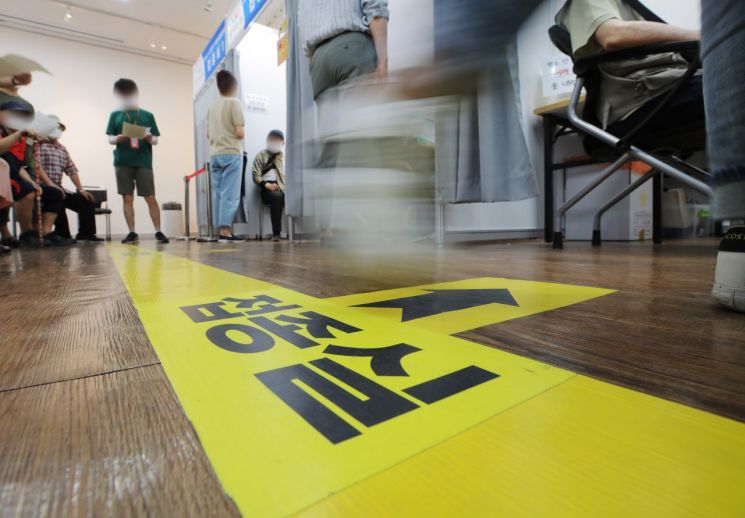 On the afternoon of the 12th, elderly people are receiving vaccinations at the vaccination center in Gangdong-gu, Seoul. The photo is not related to any specific expressions in the article. [Image source=Yonhap News]
Conversely, at a hospital in Namdong-gu, it was revealed that some recipients received less than the proper vaccine dose. Following a complaint and investigation by Namdong-gu, it was found that among 676 AZ vaccine recipients, about 40 chronic patients or elderly individuals were given only 0.25 to 0.3 ml, less than the standard 0.5 ml dose.
As most vaccination errors were found to be due to medical institutions' negligence, citizens' anxiety and outrage continued. Jeong, a 26-year-old university student, said, "People's lives are at stake, so I can't understand how such mistakes happen," and expressed frustration, "If they paid close attention even once before vaccination, these incidents wouldn't occur."
Kim, a 33-year-old office worker, said, "I'm scared of adverse reactions after vaccination, but now I even have to doubt whether the hospital administers the vaccine correctly," and pointed out, "Since trust in the vaccine is connected to this, more caution seems necessary."
With vaccination targets set to expand significantly and vaccine types to increase from next month, management and countermeasures against misvaccination are urgently needed. Jeong Eun-kyung, head of the Promotion Team (Director of the Korea Disease Control and Prevention Agency), said, "To ensure safe vaccination, we will cooperate with the medical community and local governments to conduct on-site inspections, education, investigations, and countermeasures regarding misvaccination cases," and added, "We will work with the medical community to minimize errors at vaccination sites and ensure safe vaccination."
In addition, the Promotion Team plans to form a 'Public-Private Safety Vaccination Countermeasure Council' (tentative name) in consultation with the Korean Medical Association and other medical groups to develop practical measures to minimize misvaccination. The measures to minimize misvaccination are expected to include restrictions on vaccine types administered, attaching individual identification labels for each vaccine, separating movement paths, and strengthening education. The Promotion Team will conduct joint investigations of misvaccination cases with the council, recommend recurrence prevention measures to the involved medical institutions, and strengthen the adverse reaction reporting and monitoring system after vaccination.
Experts have suggested thorough management in selecting vaccination institutions and providing vaccination education. Professor Kim Woo-joo of the Department of Infectious Diseases at Korea University Guro Hospital pointed out, "These incidents occur because the vaccination speed-up is being done in a short period without sufficient education and training."
He added, "Unlike places that have regularly conducted vaccinations, newly designated sites may face problems if they proceed without proficiency," and urged, "Thorough education on vaccine storage, accurate vaccination methods, dosage, and guidance on side effects must be conducted in advance."
However, Professor Kim also noted, "Behind the currently revealed accidents, there are likely many more errors. This is not just about the number of misvaccination cases but a fragmentary indication of how poorly the current vaccination system is functioning."
© The Asia Business Daily(www.asiae.co.kr). All rights reserved.
![Clutching a Stolen Dior Bag, Saying "I Hate Being Poor but Real"... The Grotesque Con of a "Human Knockoff" [Slate]](https://cwcontent.asiae.co.kr/asiaresize/183/2026021902243444107_1771435474.jpg)
















