"Cognitive Dissonance and Self-Justification Occur"
Claims of Media Influence in Early Stages
Request for Leniency Amid Legal Action by Friend A's Side
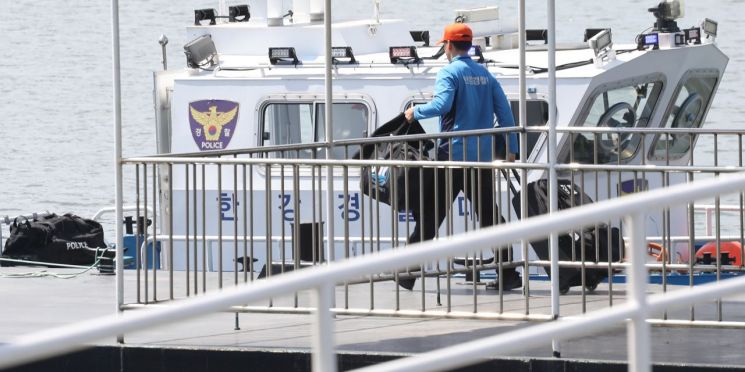
[Asia Economy Reporter Lee Jung-yoon] Unfounded speculations about friend A, who was with university student Son Jeong-min (22) when he went missing and was later found dead at Hangang Park, continue to circulate. Most of these claims suggest that A is involved in Son’s death and imply criminal connections, but based on the police investigations so far, these remain unverified.
Experts explain that many of the online speculations stem from ‘cognitive dissonance’ and ‘self-rationalization.’ Professor Lim Myeong-ho of Dankook University’s Department of Psychology said, “When reality differs from what one believed, cognitive dissonance occurs, meaning one cannot accept that they were wrong. Simply put, self-rationalization happens.” He added, “People feel uncomfortable admitting their beliefs or emotions were mistaken, which leads to distrust in the media and authorities, sometimes resulting in conspiracy theories.” He emphasized, “Ultimately, dialogue and communication are necessary. Instead of only viewing posts or comments that favor one’s own perspective, it is important to also consider opposing views and engage in open communication.”
There are also claims about the significant influence of the media. Professor Yoo Hong-sik of Chung-Ang University’s Department of Media Communication said, “In the early stages of the case, the media’s excessive attention brought many suspicions to the forefront, which seems to have left the impression that ‘there is a problem with A’ in people’s minds.” He added, “In such an environment, some YouTubers and netizens anonymously vent their thoughts like excrement and appear to exploit the situation for profit.”
Professor Lim evaluated that the legal actions taken by A’s side have been effective in calming the heated speculations. He said, “When legal action is announced, people tend to refrain from making unverified claims or using extreme expressions. As a result, the number of supporters also decreases.”
On the 4th, the law firm One & Partners, representing A, announced plans to sue YouTubers and netizens who posted unverified speculations about A and his family. They also requested that those seeking leniency or wishing to avoid prosecution delete their posts or comments and send photos before and after deletion along with a statement of leniency and contact information via email.
By 9:30 a.m. on the 11th of this month, it was reported that over 1,000 leniency requests had been received by the law firm. The firm stated, “We have a zero-tolerance policy toward YouTube operators, bloggers, cafe and community managers, post authors, and malicious commenters who spread unverified information or disclose personal information.” They added, “If certain conditions are met, settlements may be reached upon leniency requests, but unconditional forgiveness is not guaranteed.” However, there are concerns that such leniency could backfire as a boomerang of malicious comments. Actor Park Hae-jin granted leniency to a netizen who left malicious comments on him on the condition that they perform volunteer work. However, the malicious commenter was caught again after posting further malicious comments despite the volunteer work.
Meanwhile, according to the National Police Agency, the number of cyber defamation and insult crimes has steadily increased each year. After 13,348 cases in 2017, the numbers rose to 15,926 in 2018, 16,633 in 2019, and 19,388 last year.
© The Asia Business Daily(www.asiae.co.kr). All rights reserved.
![Clutching a Stolen Dior Bag, Saying "I Hate Being Poor but Real"... The Grotesque Con of a "Human Knockoff" [Slate]](https://cwcontent.asiae.co.kr/asiaresize/183/2026021902243444107_1771435474.jpg)















