The Most Rewarding and Miserable Moments in Politics
"Former President Park Geun-hye, It Breaks My Heart as a Human Being"
Remembering Those the Nation Failed to Protect and Those Who Devoted Themselves to the Country
[Asia Economy Reporters Naju-seok and Lee Hyun-joo] Former People Power Party lawmaker Yoo Seung-min is a politician who often asks himself the question, "Why do I do politics?" Even when speaking the truth became betrayal, and even when he was asked to be expelled despite not betraying anyone, he must have repeatedly asked himself this question. Whether he found an answer at every moment is unknown.
However, looking at the trajectory of his life, there are parts that are difficult to readily understand as choices made by someone who studied economics, which assumes rational human behavior. This is because he has made choices that cannot be explained by "political calculation." Even when facing criticism or insults, he did not care. At least, he pretended to be unfazed. Why did he choose difficult paths over easier ones?
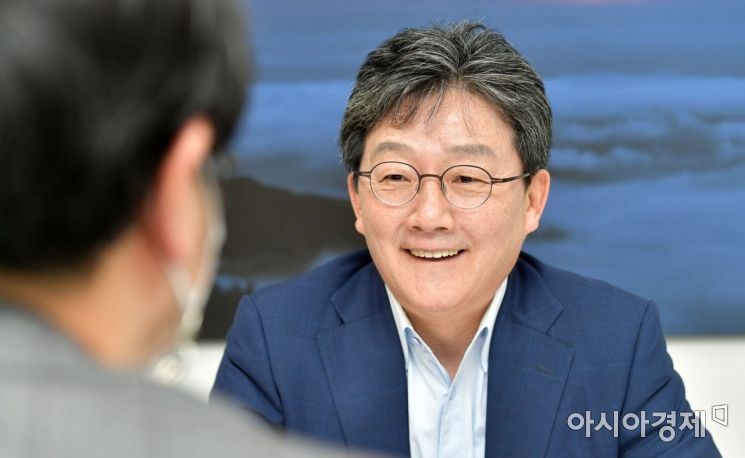
On the 7th, an interview was conducted with former lawmaker Yoo at the presidential campaign office "Hope 22" set up in Yeouido, Seoul. The rest of the interview, which could not be included due to space constraints, is introduced here.
In the interview, Yoo spoke about economic growth. While it had become common to talk about distribution as economic growth rates declined from '5, 4, 3, 2, 1,' he stated that growth must resume. He said that growth is the only way to solve issues like polarization and low birth rates. After presenting economic growth measures, he said, "It is time to choose the path of growth, even if it is painful, instead of populism." He also said, "To study well, you have to sit at your desk for a long time, endure sleep deprivation, and fight off drowsiness; growth is similarly a process of pouring energy and enduring pain." It is a difficult path, but one that must be taken. Additionally, he argued that the conscription system should be maintained from the perspective of fairness, but those fulfilling military service through housing, education, employment, and jobs should receive sufficient benefits. He also mentioned that the female recruitment system could be considered while providing similar benefits to women.
Why Politics?
When asked about moments of fulfillment and despair during his turbulent political journey, he struggled to open up, unlike his prompt answers to difficult questions such as the female conscription system.
"The reason I do politics is because I want to make this world a better place. There are many ways to make the world better. One could become a novelist, a teacher, or a doctor. Every profession has meaning, but the ultimate decision-making power lies in politics. There are many forces that change the world, but the strongest among them is politics. That’s why I am drawn to politics."
The answer he gave was accompanied by an episode.
"When I was on the National Defense Committee in the National Assembly, the top graduate of the Air Force Academy should have been a female cadet based on grades, but the male cadets changed it so that a male cadet received the presidential award. When I found out, I thought, 'How could this happen?' so I convened a meeting. Usually, the chairperson of a standing committee does not ask many questions, but I asked a lot at that time."
Yoo argued the issue and persuaded the Air Force, eventually correcting it so that the first place received the presidential citation and the second place the prime minister's citation according to grades.
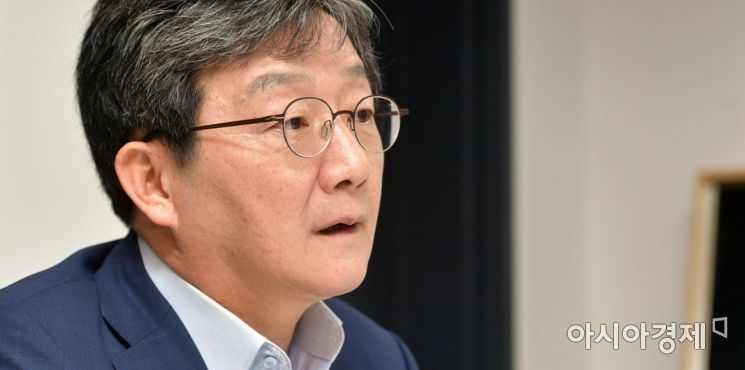
"Later, when I attended the Air Force Academy graduation ceremony as the chair of the Defense Committee, the cadet receiving the presidential citation was a small female cadet whose name I still remember. It was touching. Changing the world in such a way?I don’t consider that a small thing. Also, during the 12.12 military coup, there was a person named Kim Oh-rang who resisted the coup and lost his life; restoring his honor is that kind of work. Five marines died tragically in the Marine One helicopter crash, but no one took responsibility, and the prosecution dismissed the case. This needs to be reinvestigated."
"Whether it’s welfare, housing, or major economic discourse, everything is important, big or small. What may seem small to others can be a matter of life for someone. Efforts to change the world one step at a time can ripple out and make our society a better place. I have had many such experiences in politics."
Asked about the moments of despair.
"I don’t know. Rather than despair, the thorny path after leaving the Saenuri Party was very difficult. Since it started with the floor leader position, about five years were very hard."
In April 2015, Yoo served as the floor leader of the Saenuri Party and delivered a negotiation group speech. Beginning with stories of the Sewol ferry missing and bereaved families, he spoke about politics beyond growth, welfare, and factional logic. That groundbreaking speech received great attention and was unusually praised as a 'great speech' even by the opposition.
Afterward, he walked a path of downfall. Despite achievements such as reforming the public officials' pension law, regarded as the greatest accomplishment of the Park Geun-hye administration, he faced friction with the Blue House. Former President Park opposed the National Assembly law amendment package agreed upon with the pension reform. At the time, Park said, "I question whether the ruling party’s floor leader sought any cooperation from the National Assembly for the government’s economic revival," emphasizing, "Politics represents the will of the people and their representatives; it should not be used for personal political philosophy or logic." It was clearly aimed at Yoo. She even declared, "Politics of betrayal must be judged."
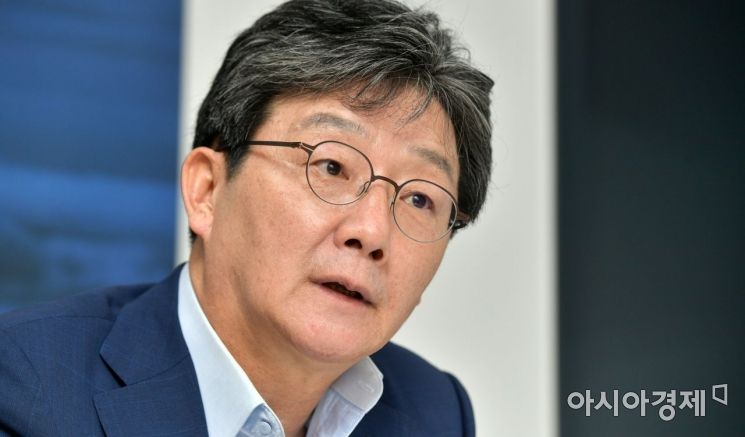
The downfall began. Yoo was dragged down from the floor leader position, forced to leave the party, and run as an independent in the general election. These were the moments he described as despairing. He says he still finds it hard to explain former President Park in words.
"Because there is the person I feel as a human being personally, and then there is the political figure I chose to impeach publicly. I feel something personally, so that part is very difficult. She was someone I worked closely with in the past, and it pains me to see her suffer such hardships."
Asked why he chooses the difficult path.
Even during his time at the Korea Development Institute (KDI), he raised issues with government economic policies and was forced into silence. Why did he make such choices, speaking harsh truths even when he could have enjoyed privileges as a presidential aide, only to be eventually ousted?
"I think it’s because of my personality."
But beyond his answer, other stories emerge. His social media accounts contain many posts commemorating and remembering others. On the 10th, he remembered Jeong-in, who would have turned two if alive. He vowed, "To prevent another Jeong-in from happening, to ensure she is not forgotten, protecting and safeguarding children is the natural duty of adults." Two days earlier, on the 8th, marking the third anniversary of the Marine One helicopter crash, he emphasized, "The Marine One helicopter crash must be reinvestigated from the beginning to identify the cause and punish those responsible. That is justice and the way to honor the souls of the fallen soldiers."
On the 6th, Memorial Day, he shared his thoughts after attending the memorial service for the Korean War child soldiers. The country sent boys under 17 to the battlefield. The government has denied this fact and avoided the child soldier issue. However, Yoo said, "Although they sacrificed their only lives at such a young age to save the country, we have done nothing for the child soldier grandfathers." He urged the current National Assembly to pass the special law for child soldiers that he had previously promoted.
Why does he do politics?
In his book, Why Do I Do Politics, he tells stories about those whom the state, politics, and national defense failed to protect. Through this, he revealed his feelings of guilt and responsibility toward those whom the state and politics could not safeguard.
Yoo expressed his feelings about running in this presidential election as follows:
"My approval rating is not high, and I have no desire for the position, status, or power that comes with being president. However, if I become president, I can see what can be done, and I know those things are truly important. I believe my determination to do those things is stronger than anyone else’s. I do it with a sense of mission."
"I have always lived a difficult, challenging course. Even as a scholar and in politics, it was a tough path. If it is fate, it is strange, and if it is destiny as a politician, I think so. I have rarely suffered or regretted it. I have been in politics for 22 years, and this is my last challenge. I want to do my best and achieve it."
Perhaps the reason he walked the thorny path is because of the "memory" and "sense of responsibility" for those who should have been protected but were not.
© The Asia Business Daily(www.asiae.co.kr). All rights reserved.
![Clutching a Stolen Dior Bag, Saying "I Hate Being Poor but Real"... The Grotesque Con of a "Human Knockoff" [Slate]](https://cwcontent.asiae.co.kr/asiaresize/183/2026021902243444107_1771435474.jpg)

















