Ochanghee, President of the Korea Travel Association
Current Entry Allowed Only for US and Europe
Recovery of Japan and Southeast Asian Markets is Key
Travel Industry Initially Excluded from 'Loss Compensation Act'
Included After Strong Protests and Appeals from the Industry
Disappointment Over Compensation Being Merely Benevolent Aid
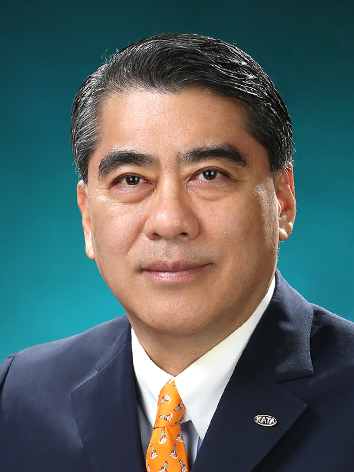
[Asia Economy Reporter Donghyun Choi] "Although there is hope that the travel industry will soon recover due to increased vaccination rates and the introduction of the 'Travel Bubble,' small and medium-sized travel agencies still have a long way to go."
Changhee Oh, Chairman of the Korea Association of Travel Agents (58, photo), predicted that it will take a considerable amount of time for the travel industry to enter a recovery phase. This is because the number of vaccinated people remains low, and the majority of the power consumer group for travel, the 2030 generation, has not yet been vaccinated. As of the 6th, marking 100 days since Korea began vaccinations, only 4.4% (2.28 million people) of the entire population have completed their second dose.
Chairman Oh viewed the global movement toward the introduction of vaccine passports positively. However, he believed the impact on the recovery of domestic small and medium-sized travel agencies would be minimal. He said, "Recently, only countries like the United States and Europe have allowed entry for vaccinated individuals," adding, "For practical sales recovery, markets such as Japan and Taiwan, which are our main markets, as well as Southeast Asia, need to revive." Japan, which is preparing for the Olympics, recently reported daily confirmed cases exceeding 2,000. Vietnam, facing the fourth wave of COVID-19, completely banned foreign entry as of the 1st.
Chairman Oh expressed great expectations for the Travel Bubble currently being promoted domestically. The Travel Bubble is a system that exempts quarantine and allows free travel among countries with excellent quarantine measures. The government is currently negotiating with Singapore, Thailand, Taiwan, Guam, and Saipan. The Travel Bubble, scheduled to be implemented next month, will initially allow limited group tours only for those who have completed vaccination. PCR tests must be taken three days before departure and arrival, respectively.
Oh said, "Even people who were hesitant to get vaccinated may be encouraged to do so by the Travel Bubble as a kind of incentive, which is positive from a quarantine perspective," but added, "More in-depth consideration is needed on how to operate this." He continued, "Currently, obtaining an English-language negative test certificate for overseas travel costs about 150,000 won, and since it must be obtained twice for departure and arrival, the total cost is about 300,000 won, which is burdensome," and added, "If a large number of foreign tourists flood in at once, the current PCR testing centers may cause inconvenience to the general public, so separate testing centers exclusively for foreigners should be established."
The travel industry held protests in front of the National Assembly and the Blue House in February. Dozens of travel agencies closed daily, pushing the industry to the brink of extinction. Three months after the protests, at the end of last month, the travel industry again headed to the National Assembly. On the 8th, they held a picket protest in front of the National Assembly because the COVID-19 situation showed no signs of improvement and the business conditions worsened. Chairman Oh is still going back and forth to the National Assembly, urging the political circles to prepare compensation measures for industry damages.
The travel industry’s strongest demand is to include travel industry damage compensation in the amendment to the 'Loss Compensation Act (Act on Protection and Support for Small Business Owners)' currently being discussed by the ruling party and government. The current law only compensates industries that have received administrative orders to close, such as entertainment establishments and indoor sports facilities. Although the travel industry suffered significant damage due to government quarantine measures, it has been excluded from support because it did not receive such orders.
Due to persistent demands from the industry, the ruling party and government decided on the 7th to include 10 business crisis industries, including the travel industry, in the loss compensation support target. However, the opposition party opposes this because the compensation is not proactive but rather a form of benevolent consolation payment.
Chairman Oh said, "It is positive that the support industries have been expanded," but lamented, "It is disappointing that the support is in the form of discretionary payments rather than mandatory loss compensation." He added, "The Loss Compensation Act alone is insufficient, so the law should be amended to allow support for the travel industry through the Tourism Promotion and Development Fund," emphasizing, "It is also necessary to maintain employment retention subsidies until the end of COVID-19."
© The Asia Business Daily(www.asiae.co.kr). All rights reserved.
![Clutching a Stolen Dior Bag, Saying "I Hate Being Poor but Real"... The Grotesque Con of a "Human Knockoff" [Slate]](https://cwcontent.asiae.co.kr/asiaresize/183/2026021902243444107_1771435474.jpg)















