"Concerns Over Significant Impact on Overall Subcontracting and Service Structures Between Primary and Subcontractors"
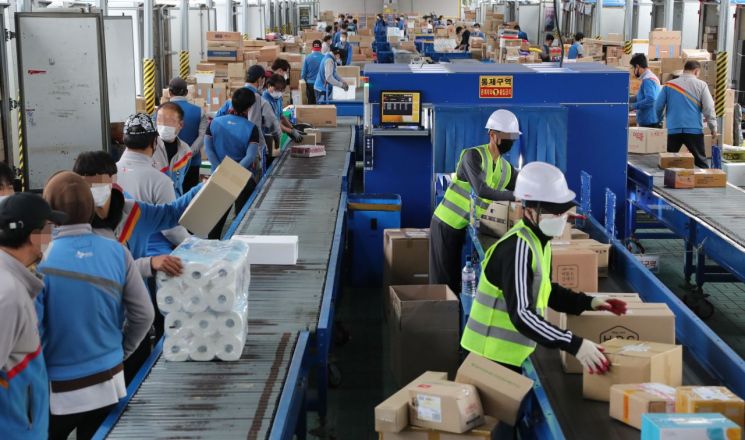
[Sejong=Asia Economy Reporter Moon Chaeseok] Controversy is growing as CJ Logistics, which signed delivery contracts with agencies rather than delivery drivers, was ruled to have committed unfair labor practices for refusing to negotiate with delivery drivers.
The Central Labor Relations Commission (CLRC) ruled on the 2nd that CJ Logistics' refusal to engage in collective bargaining with delivery drivers constituted unfair labor practices.
The issues presented by the Delivery Workers' Union to CJ Logistics as subjects for collective bargaining included shortening the delivery acceptance time at sub-terminals where loading and unloading work is done, applying a five-day workweek, and guaranteeing parking spaces within sub-terminals. In March of last year, the Delivery Workers' Union requested collective bargaining with CJ Logistics on these topics but was refused, leading to a relief application to the CLRC.
The key point of contention is whether CJ Logistics directly instructed the delivery drivers' work. The CLRC and the union claim CJ Logistics is the "de facto substantial employer," but CJ Logistics argues that it only signed delivery contracts with agencies, raising concerns from the business community. The Supreme Court has also ruled that collective bargaining is only applicable when an employment contract is recognized, contrary to the CLRC's judgment.
This is the first ruling requiring a primary contractor to engage in collective bargaining with subcontracted workers without using disguised subcontracting or illegal dispatch. There are concerns that this ruling will have a significant impact not only on special employment workers (special types of workers) such as delivery drivers and insurance planners who work through agencies but also on manufacturing industries like shipbuilding, steel, and heavy industries where primary-subcontractor relationships are common.
Concerns are already emerging that the CLRC's judgment will greatly influence the overall subcontracting service structure in the form of subcontracting between primary and subcontractors. The business community has stated that they plan to file administrative lawsuits regarding this case, citing reasons such as indirect employment workers flooding similar types of bargaining demands.
© The Asia Business Daily(www.asiae.co.kr). All rights reserved.
![Clutching a Stolen Dior Bag, Saying "I Hate Being Poor but Real"... The Grotesque Con of a "Human Knockoff" [Slate]](https://cwcontent.asiae.co.kr/asiaresize/183/2026021902243444107_1771435474.jpg)















