Major Investment Decision
Central Point for Securing Future Business Competitiveness
The Later, the Less Effective
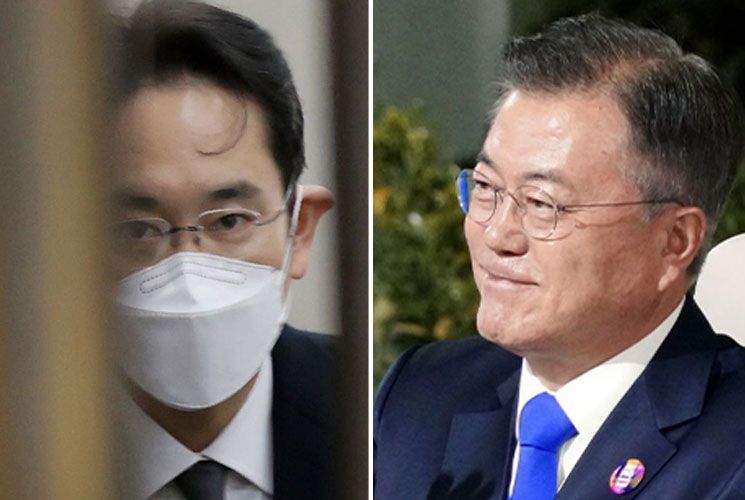
[Asia Economy Reporters Kim Heung-soon and Jung Hyun-jin] As momentum builds for the pardon of Samsung Electronics Vice Chairman Lee Jae-yong, interpretations suggest that it is only a matter of timing. Following President Moon Jae-in’s progressive remarks on Lee’s pardon during a meeting with the heads of the four major conglomerates, a similar atmosphere was sensed on the 3rd at a roundtable with Prime Minister Kim Boo-kyum and five major economic organizations including the Korea Chamber of Commerce and Industry, the Korea Employers Federation, and the Korea Federation of Small and Medium Business.
There are three main reasons why various sectors, including the business community, believe Lee’s pardon should be granted around the August 15 Liberation Day. First, the absence of a head who can oversee urgent matters such as large-scale investments and inter-company cooperation amid the global semiconductor industry’s race for dominance is a significant loss not only for Samsung Electronics but also for the Korean economy, which heavily relies on this sector. Second, there is a strong evaluation that Lee and Samsung Electronics can play a substantial role in future industries such as artificial intelligence (AI), telecommunications, and biotechnology. Considering the urgent economic situation and the need to give Lee the opportunity to focus on management activities, opinions have emerged that the timing should be advanced, such as through a Liberation Day special pardon, so as not to miss the ‘golden time.’

"Decision-making by the head crucial for large-scale investments"
Samsung yet to finalize detailed plans
Competitors TSMC, Intel making aggressive investments
Kim Ki-nam, Vice Chairman of Samsung Electronics, said at a luncheon meeting with President Moon the day before, "The semiconductor industry requires decisions on large-scale investments, and having the head present enables swift decision-making." Kim’s remarks, as head of the Device Solutions (DS) division overseeing Samsung’s semiconductor business, are interpreted as expressing the crisis Samsung Electronics faces amid competitors’ aggressive investments.
Overseas companies competing with Samsung Electronics in the global semiconductor market have already finalized and are executing large-scale investment plans. Taiwan’s TSMC, the world’s No. 1 foundry (semiconductor contract manufacturing), is expanding production lines with a $100 billion (about 111 trillion won) investment and recently broke ground on a semiconductor plant in Arizona, USA. It is also broadening its scope by investing a total of 37 billion yen (about 37.45 billion won) to establish semiconductor R&D hub facilities with the Japanese government. Intel in the US plans to invest $20 billion (about 22 trillion won) in building a semiconductor plant in Arizona to strengthen its foundry business. It has also decided to enhance semiconductor plant construction and R&D projects in Israel.
Meanwhile, Samsung Electronics has mentioned investment plans domestically and abroad but has yet to establish detailed plans. It has publicly committed to investing 171 trillion won in domestic system semiconductors by 2030 and $17 billion (about 19 trillion won) to expand its foundry plant in the US, but the location for the production line has not been finalized. Ahn Ki-hyun, Executive Director of the Korea Semiconductor Industry Association, emphasized, "Even if investment plans for the foundry business are announced, it takes years to build facilities and mass-produce products. We must quickly establish infrastructure to attract customers and lead the speed race to secure supply chains."
Job creation and strengthening future industries
Rapidly changing technology wars
Global network essential
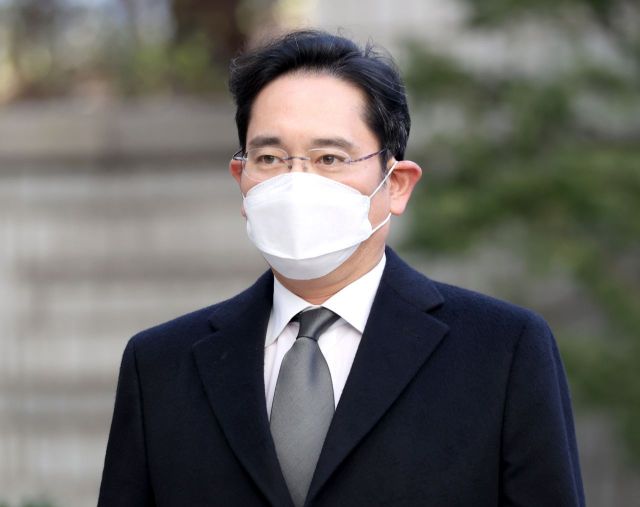
In the uncertain economic environment caused by the COVID-19 pandemic, Samsung’s role with significant ripple effects is again drawing attention. The employment sector, which heavily depends on large corporations, is a prime example. According to a recent survey by the corporate evaluation site CEO Score on the employment status of 309 out of the top 500 domestic companies with disclosed employee numbers in the first quarter of this year, the number of regular employees in large corporations as of the end of March was 1,131,308, down by 11,170 from 1,143,018 at the end of 2019 before the COVID-19 outbreak.
In contrast, Samsung Electronics increased its regular employees by 6,358 during the same period. In August 2018, Samsung declared a total investment of 180 trillion won to revitalize the economy, create jobs, and foster new industries, with plans to hire about 40,000 new employees over three years until 2020. Despite the COVID-19 challenges, Samsung kept this promise, hiring more than 10,000 new employees annually. Currently, among the four major conglomerates, only Samsung Electronics and its affiliates maintain open recruitment for new university graduates.
In advanced industries such as 5G telecommunications, Lee has experience achieving results by leveraging global networks. A representative case is Samsung Electronics’ first-ever contract to supply 5G telecommunications equipment to Japan’s NTT Docomo in the same industry. This was the result of a cooperative relationship built over time to increase customers. Given the challenging domestic environment surrounding future industries, with the US and Japan strengthening alliances to secure leadership in 6G, there is a common assessment that Lee should serve as a focal point to reinforce collaboration with global companies.
Some predict inclusion in August 15 special pardon
Business community urges earlier decision
The business community holds the view that the timing of Lee’s pardon should be advanced to create an environment where he can be released and contribute to national interests. Some predict that Lee may be included in the August 15 special pardon. President Moon’s comment on the four major conglomerates’ request for Lee’s pardon, stating, "Many people among the public sympathize with this," and "We are well aware that bold corporate roles are required," supports this possibility.
Considering that Lee’s sentence is scheduled to end in July next year, there are forecasts that the political and economic effects will diminish the later the pardon is granted. Professor Hong Ki-yong of Incheon National University’s Business Administration Department argued, "Considering the urgent national economic situation and public opinion, a prompt decision (by the responsible authority) is necessary to allow Lee to return to management activities as soon as possible." A business official added, "It would be more effective to empower him through a pardon rather than parole, which inevitably restricts management activities."
© The Asia Business Daily(www.asiae.co.kr). All rights reserved.
![Clutching a Stolen Dior Bag, Saying "I Hate Being Poor but Real"... The Grotesque Con of a "Human Knockoff" [Slate]](https://cwcontent.asiae.co.kr/asiaresize/183/2026021902243444107_1771435474.jpg)

















