Announcement of 2022 Budget Request Status
[Sejong=Asia Economy Reporter Kim Hyunjung] Government ministries have submitted next year’s spending plans approaching 600 trillion won. This represents an increase of more than 6% compared to this year’s budget, driven by expanded welfare, employment, and environmental budgets aimed at recovery from the COVID-19 crisis and resolving K-shaped polarization.
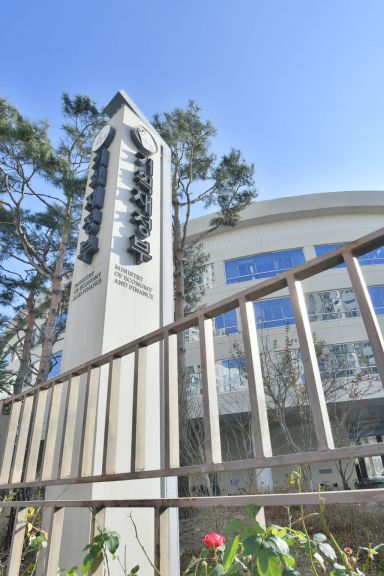
On the 3rd, the Ministry of Economy and Finance announced that the total budget and fund expenditure requested by each ministry for 2022 amounted to 593.2 trillion won, a 6.3% increase from this year’s budget of 558 trillion won. The ministry explained, “Each ministry requested the 2022 budget focusing on the needs for economic recovery, inclusion, and leap forward.”
In particular, sectors with large demands for key tasks such as the Korean New Deal and resolving K-shaped polarization?including environment, welfare, research and development (R&D), defense, and industry, SMEs, and energy?requested high growth rates. Meanwhile, social overhead capital (SOC), general and local administration sectors requested lower growth rates as temporary expenditures normalized.
By major sector, the health, welfare, and employment sector requested 219 trillion won, a 9.6% increase from this year’s budget of 199.7 trillion won, accounting for about 40% of total ministry expenditure requests. The budget is planned to be used for resolving K-shaped polarization through customized income, housing, care safety nets, and strengthening employment safety nets. Funding was also requested for COVID-19 vaccine purchase and inoculation implementation.
The education sector requested 77.8 trillion won, 9.2% more than this year’s budget of 71.2 trillion won, focusing on key investment elements such as Green Smart Schools and national scholarships. Excluding local education finance grants, the requested budget is 18.2 trillion won, 2.0% more than the current 18 trillion won.
In the culture, sports, and tourism sector, a plan was submitted to increase the budget by 2.2% to 8.7 trillion won from this year’s 8.5 trillion won. This is due to projects supporting cultural powerhouse initiatives such as guaranteeing basic cultural life for vulnerable groups and fostering non-face-to-face core content.
The environment sector showed the highest growth rate among all sectors, with a 17.1% increase to 12.4 trillion won from this year’s 10.6 trillion won. The budget is mainly allocated to investments in the Korean New Deal and 2050 carbon neutrality implementation foundation, including electric and hydrogen vehicle infrastructure and greenhouse gas reduction facility support.
Additionally, R&D and industry, SMEs, and energy sectors requested 29 trillion won and 29.6 trillion won respectively, reflecting increases of 5.9% and 3.2% compared to this year’s budgets. SOC (26.5 trillion won) showed a 0.1% increase, agriculture, forestry, livestock, and food sector (22.9 trillion won) a 0.9% increase, and defense (55.7 trillion won) a 5.0% increase. Other sectors such as diplomacy and unification (5.8 trillion won), public order and safety (22.8 trillion won), and general and local administration (90.4 trillion won) increased by 1.6%, 2.2%, and 6.7% respectively. For the general and local administration sector, excluding local allocation tax, a reduced amount of 32.7 trillion won was requested, down 0.6%, due to normalization of temporary expenditure projects such as local bond underwriting and regional gift certificates.
The Ministry of Economy and Finance stated, “We will comprehensively consider next year’s economic conditions, revenue and expenditure needs, and reflect additional requests due to policy changes after receiving the requests to prepare the budget plan. We will enhance the efficiency of fiscal spending by reinvesting resources secured through strong expenditure restructuring into key tasks such as the Korean New Deal and resolving K-shaped polarization.”
Meanwhile, based on the requests from each ministry, the Ministry of Economy and Finance plans to compile and finalize the 2022 budget and submit it to the National Assembly by September 3.
© The Asia Business Daily(www.asiae.co.kr). All rights reserved.
![Clutching a Stolen Dior Bag, Saying "I Hate Being Poor but Real"... The Grotesque Con of a "Human Knockoff" [Slate]](https://cwcontent.asiae.co.kr/asiaresize/183/2026021902243444107_1771435474.jpg)
















