Spec Stocks with Rapid Fluctuations in a Day
"Speculative Forces" vs. "Increased Volatility" Divided Opinions
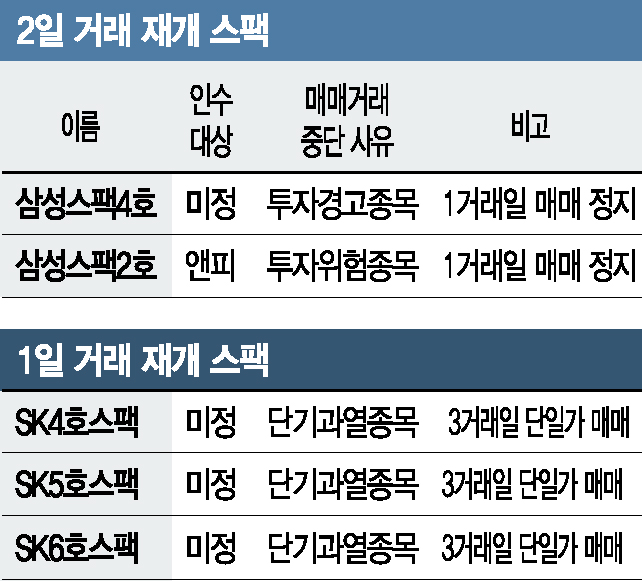
[Asia Economy Reporter Junho Hwang] The stock price of Samsung SPAC (Special Purpose Acquisition Company) No. 4, which recorded a 405% return after hitting the daily upper limit for six consecutive trading days, has been volatile since trading resumed on the 2nd. It started trading at 10,100 KRW, dropped to 8,030 KRW (-25.77%) in the early session, and then surged to 11,800 KRW (+16.83%) as of 9:48 AM. Samsung SPAC No. 2, which was also suspended due to a sharp rise in stock price on the 28th and 31st of last month, showed a similar pattern. It started at 8,580 KRW, fell to 6,220 KRW, and has recovered to 8,730 KRW at this time. The stock price of SPACs, which swings between heaven and hell in a single day, is drawing various interpretations in the securities industry.
The day before, SPAC stock prices also showed a zigzag pattern. On the morning of the 1st, 25 out of the 30 stocks with the highest increase rates in the KOSDAQ market were SPACs, but by the close, they were among the stocks with the largest declines. The day before that, 14 out of 18 stocks hitting the daily upper limit were SPACs.
The market views the recent sharp fluctuations in SPACs as abnormal phenomena. SPACs are listed paper companies used as a backdoor listing route for unlisted companies, and their stock prices surge when a merger target is decided. However, recently surged SPACs such as Samsung SPAC No. 4, SK No. 4, 5, and 6 have seen their stock prices soar without having decided on merger targets. Samsung SPAC No. 4 responded to the exchange's inquiry disclosure request by stating, "There are no major matters to disclose related to the stock price surge."
Accordingly, the possibility of speculative forces intervening is being cautiously raised. It is possible that speculative groups are driving up the stock price and then selling once retail investors get involved. SPACs have an average base price of 2,000 KRW and a small number of shares, making it easy to move the stock price with a small amount of capital.
However, there is also a view that it is unreasonable to see this solely as a speculative operation since volatility has increased not only in some SPACs but in most SPACs. A securities firm official analyzed, "Due to the crash of cryptocurrencies, disappointing IPO returns, and a decline in US SPAC investment enthusiasm, funds seem to be flowing into SPACs, which can easily have their stock prices lifted."
Due to these abnormal phenomena in SPAC stock prices, the original purpose of SPACs?merging with unlisted companies?is facing difficulties. When the stock price rises and market capitalization grows, the shareholding percentage received by the merger target company's shareholders decreases, making the merger practically difficult. A financial investment industry official said, "In such cases, the securities firms that initiated the SPAC will start selling shares to lower the stock price." In the case of Samsung SPAC No. 4, Samsung Securities, the sponsoring securities firm, was the largest net seller until the 31st of last month after listing.
© The Asia Business Daily(www.asiae.co.kr). All rights reserved.
![Clutching a Stolen Dior Bag, Saying "I Hate Being Poor but Real"... The Grotesque Con of a "Human Knockoff" [Slate]](https://cwcontent.asiae.co.kr/asiaresize/183/2026021902243444107_1771435474.jpg)
















