Passage of the Amendment to the Act on the Establishment of the Northern Gyeonggi Committee at the Cabinet Meeting
Completion of Enactment and Revision of Ordinances in 17 Cities and Provinces Nationwide
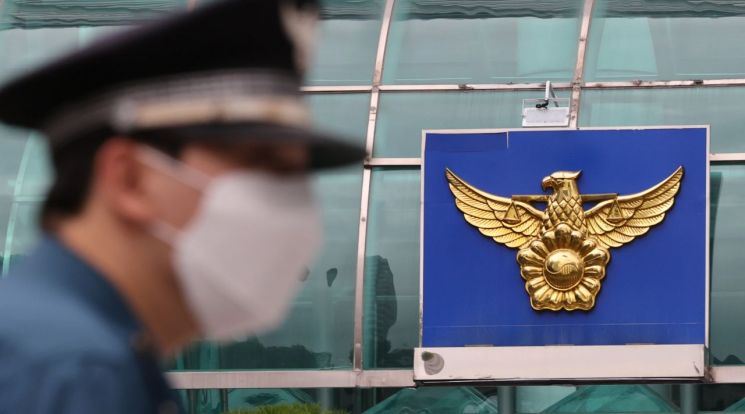
[Asia Economy Reporter Lim Cheol-young] The Ministry of the Interior and Safety, the Presidential Committee on Autonomy and Decentralization, and the National Police Agency announced on July 1 that all cities and provinces nationwide completed the enactment and revision of ordinances by the end of May in preparation for the full implementation of the autonomous police system on July 1.
In this regard, the amendment bill to related ministries’ laws supporting the establishment of the ‘Gyeonggi Northern Autonomous Police Committee’ was passed at the Cabinet meeting on the same day, marking the full-scale promotion of the pilot operation of the autonomous police system nationwide. So far, the pilot operation of the autonomous police system has been conducted regionally, starting with Chungnam in March, followed by six cities and provinces including Gangwon in April, and Jeonbuk on May 28, completing the enactment and revision of related ordinances in all 17 cities and provinces nationwide.
The government implemented a full revision of the Police Act for the introduction of the autonomous police system starting January this year, and after pilot operations by city and province, will fully implement the autonomous police system responsible for public safety nationwide from next month. The autonomous police system to be implemented this time grants local governments the command and supervision rights over autonomous police affairs to secure the democracy and decentralization of police administration while maintaining the current police organizational structure.
Once the autonomous police system is implemented, cooperation and linkage between local administration and police administration are expected to be activated in areas such as community safety, children and women, and traffic. The integrated operation of the resident safety budget can improve budget management efficiency, and local governments can additionally invest their own budgets. In the case of the Safe Speed 5030 project, the budget, which was previously divided between the National Police Agency (1.8 billion KRW) and local governments (471.3 billion KRW), can now be fully integrated, planned, and executed by local governments.
The installation period for traffic safety facilities will be shortened. Currently, when a demand for traffic safety facility installation arises, the entire process?including police review, notification to local governments, local government decision, and installation?takes about 1 to 2 years. With the unification of the facility review and installation process, it is expected to take about 6 months, reducing the period by a minimum of 6 months to a maximum of 1 year and 6 months.
Additionally, field-oriented police services tailored to regional characteristics will be enhanced. The Incheon Autonomous Police Committee, launched on May 17, announced that it will prioritize child safety by strengthening traffic safety within school zones. It plans to install unmanned traffic enforcement equipment and ‘Yellow Carpets’ (children’s waiting areas to prevent pedestrian accidents) at about 260 school zones near all elementary schools in Incheon Metropolitan City within this year.
Going forward, the Ministry of the Interior and Safety, the Committee on Autonomy and Decentralization, and the National Police Agency will closely monitor whether the autonomous police system is properly established on the ground during the pilot operation in cities and provinces nationwide until the end of June. If any issues arise, they will promptly support improvements through joint meetings to thoroughly prepare for the full implementation on July 1.
Kim Soon-eun, Chairperson of the Presidential Committee on Autonomy and Decentralization, said, “Through the implementation of the autonomous police system, we will be able to more closely monitor blind spots in community safety and develop policing policies tailored to regional characteristics, advancing toward an era of resident sovereignty where local residents are the true owners.” Kim Chang-ryong, Commissioner of the National Police Agency, said, “As the responsible agency for the introduction and operation of the autonomous police system, the National Police Agency will do its best to supplement issues through pilot operations so that the autonomous police system can firmly take root as a new system and culture and contribute to public safety. We will also provide active cooperation and support at the police agency level for the operation of the autonomous police system.”
Minister Jeon Hae-cheol said, “The autonomous police system is one of the core tasks of Autonomy and Decentralization 2.0, enabling policing administration tailored to local needs. Through organic cooperation between local administration and police administration, it is expected to provide policing services more closely connected to residents,” and added, “We will support the proper establishment of the system on the ground after the full implementation of the autonomous police system.”
© The Asia Business Daily(www.asiae.co.kr). All rights reserved.
![Clutching a Stolen Dior Bag, Saying "I Hate Being Poor but Real"... The Grotesque Con of a "Human Knockoff" [Slate]](https://cwcontent.asiae.co.kr/asiaresize/183/2026021902243444107_1771435474.jpg)
















