[Asia Economy Reporter Yoo In-ho] President Moon Jae-in expressed his views on establishing the Korea Peninsula Peace Process in a special speech marking his 4th anniversary in office on the 10th.
With the upcoming South Korea-US summit on the 21st expected to place major issues such as denuclearization of the Korean Peninsula on the dialogue table, attention is focused on whether the North Korea policy will be realized during the remaining one year of his term.
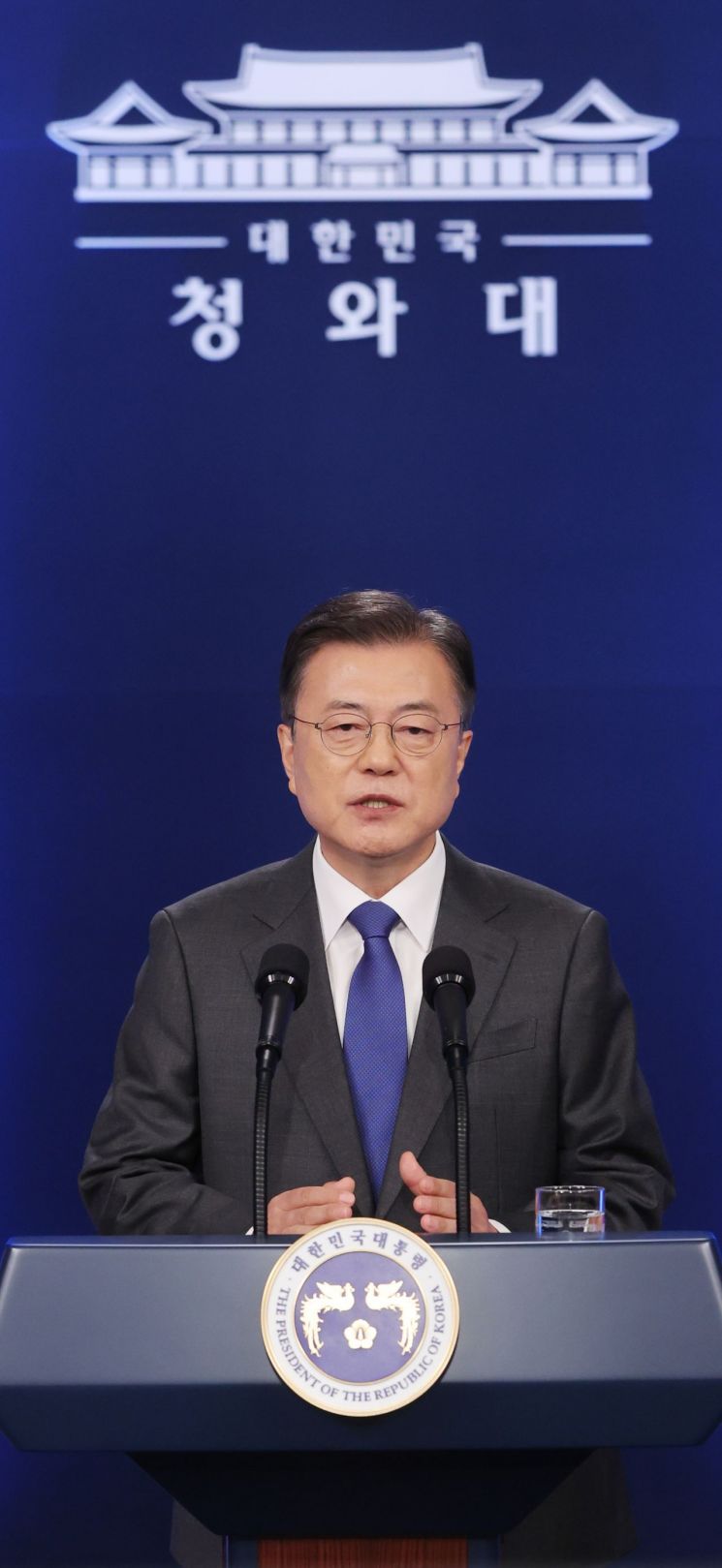
In his special speech on the 4th anniversary of his inauguration on the 10th, President Moon said, “President Joe Biden’s North Korea policy is the result of close consultation with us,” and “I welcome the Biden administration’s North Korea policy direction, which aims for the complete denuclearization of the Korean Peninsula as a basic goal, based on the Singapore Declaration, and seeks to resolve issues through flexible, gradual, and pragmatic diplomatic approaches.”
However, President Moon mentioned the need for pace adjustment. He said, “I will not be rushed or impatient during the remaining term,” and “I hope North Korea will respond to the dialogue request, so that we can create peace together and move forward toward prosperity together.”
This is interpreted as his intention to persuade surrounding countries such as the United States rather than taking reckless steps to establish the Korea Peninsula Peace Process within his term, and to derive denuclearization and peace settlement on the Korean Peninsula through diplomacy.
President Moon also expressed his determination to make every effort to leverage the upcoming South Korea-US summit at the end of this month as a 'lever' to bring North Korea to the dialogue table.
At a press conference held after the special speech, President Moon explained, “There have been three inter-Korean summits and two North Korea-US summits, but they have not continued and the dialogue is at a deadlock,” adding, “This is definitely undesirable, and so far it has been a process of waiting for the establishment of the US North Korea policy.”
He continued, “I do not think North Korea’s response means a refusal to dialogue,” and expressed hope, saying, “I think North Korea will now take the time for a final judgment.”
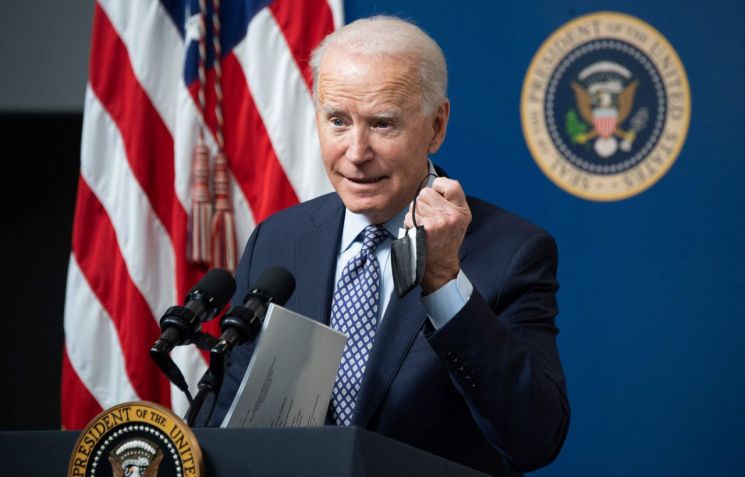
This is interpreted as reaffirming that North Korea must respond in some way to the US North Korea policy. It implies that if Kim Jong-un, General Secretary of the Workers' Party of Korea, no longer conducts military provocations or responds to dialogue, there will be no opportunity.
In diplomatic circles, President Moon’s four years in office are highly evaluated for his diplomatic and security achievements. This is because he contributed to easing tensions on the Korean Peninsula based on the Korea Peninsula Peace Process concept.
Over the past four years, President Moon has focused on building the Korea Peninsula Peace Process in the diplomatic and security fields, which includes ‘Declaration of the End of War → Conclusion of a Peace Agreement → Establishment of a Permanent Peace Regime.’
In his first year in office in 2017, despite North Korea’s provocations such as successive missile launches including intercontinental ballistic missiles (ICBMs) and the 6th nuclear test in September of the same year, he patiently pursued the Korea Peninsula Peace Process.
This not only created an opportunity to thaw the frozen inter-Korean relations, exemplified by North Korea’s participation in the 2018 Pyeongchang Winter Olympics, but also led to the April 27 inter-Korean summit with Kim Jong-un, General Secretary of the Workers' Party of Korea.
Subsequently, President Moon took on the role of mediator to facilitate dialogue between Kim Jong-un and then US President Donald Trump, leading to two North Korea-US summits and inter-Korean summits, achieving significant results in reducing the risk of war on the Korean Peninsula.
However, some critics say it is regrettable that President Moon, while focusing on inter-Korean relations, failed to achieve results in South Korea-US, South Korea-Japan, and South Korea-China relations.
After the second North Korea-US summit held in Hanoi, Vietnam in February 2019 ended with no deal, the North Korea-US relationship fell into a deadlock, and inter-Korean relations also entered a lull.
Last year, tensions on the Korean Peninsula escalated again as North Korea blew up the inter-Korean joint liaison office, citing the issue of leaflets sent by some defector groups, and the shooting incident of a Ministry of Oceans and Fisheries official occurred.
Moreover, with the change of the US administration, which holds the key to the Korean Peninsula situation, President Moon’s Korea Peninsula Peace Process remains at a standstill. South Korea-Japan relations have also remained cold due to historical issues and the decision to discharge contaminated water from the Fukushima nuclear plant.
Professor Kim Hyun-wook of the Korea National Diplomatic Academy pointed out, “The Moon administration focused only on North Korea policy from the early days of its term, and it seems that some desired results were achieved during President Trump’s time,” adding, “However, it is problematic that diplomatic issues other than North Korea, such as South Korea-US, South Korea-China, and South Korea-Japan relations, were neglected.”
© The Asia Business Daily(www.asiae.co.kr). All rights reserved.
![Clutching a Stolen Dior Bag, Saying "I Hate Being Poor but Real"... The Grotesque Con of a "Human Knockoff" [Slate]](https://cwcontent.asiae.co.kr/asiaresize/183/2026021902243444107_1771435474.jpg)
















