If Runny Nose, Sneezing, and Nasal Congestion Worsen, Respiratory Aftereffects May Occur
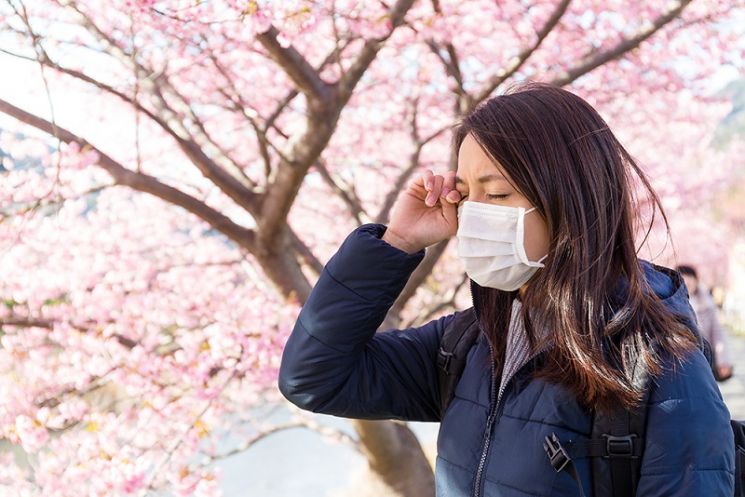 During the spring pollen season, it is advisable to reduce outdoor activities and be cautious of pollen allergies. [Image source=Clipart Korea]
[Asia Economy Yeongnam Reporting Headquarters Reporter Kim Yong-woo] Are you suffering because of pollen?
This season is especially difficult for those with allergic rhinitis symptoms. Due to pollen, severe sneezing often leads to canceled outings.
Although summer is naturally the season for frequent laundry and showers, respiratory system medical experts consider the spring pollen dispersal period as the season when clothes need to be changed frequently throughout the year.
Some say that this year, pollen seems to be flying more than usual.
Due to the yellowish changed atmosphere like this, threats to health and daily life are increasing. To respond to rapidly changing environments and climate, the Korea National Arboretum under the Korea Forest Service (Director Choi Young-tae) has been observing the pollen dispersal period of domestic forests annually since 2010, together with 10 national and public arboretums nationwide.
The Korea National Arboretum recently analyzed that due to climate change, the ecological clock of plants such as leaf unfolding and flowering has accelerated, causing the pollen dispersal period to advance by about half a month (an average of 1.43 days per year).
Last week, through its official SNS account, it issued a spring pollen "warning," stating that the pollen dispersal phenomenon has advanced by more than half a month.
Allergy generally refers to an unnecessary hypersensitive reaction to external antigens that are not harmful to the body. There are allergic diseases such as allergic rhinitis and bronchial asthma. Pollen allergy is caused by pollen as an allergenic substance.
Clear nasal discharge, paroxysmal sneezing, and nasal congestion are the main symptoms, and itching around the nose or eyes may also accompany.
In severe cases, headaches or decreased sense of smell may appear, and if left untreated, it can lead to sinusitis, pharyngitis, otitis media, or chronic sinusitis. If symptoms do not improve, accurate diagnosis and treatment should be sought at medical institutions.
Dr. Lee Kyu-min, head of the Respiratory Clinic at Daedong Hospital (specialist in respiratory medicine), said, "Pollen with a large production volume is light and small, so it easily flies in the wind. In spring, even a small breeze can cause yellow pollen to accumulate on phones, terraces, and cars," adding, "Since pollen is mixed in the air and cannot be avoided, it is advisable to develop the habit of checking the pollen index before going out."

On days with a high pollen index, it is best to avoid outdoor activities as much as possible, but if you must go out, minimize body exposure by wearing hats, sunglasses, masks, etc.
Avoid touching your eyes or nose with unwashed hands and practice hand hygiene frequently. After returning home, shake off or wash the clothes you wore, and keep your body clean by showering to prevent pollen from sticking to sofas or beds.
© The Asia Business Daily(www.asiae.co.kr). All rights reserved.
![Clutching a Stolen Dior Bag, Saying "I Hate Being Poor but Real"... The Grotesque Con of a "Human Knockoff" [Slate]](https://cwcontent.asiae.co.kr/asiaresize/183/2026021902243444107_1771435474.jpg)
















