Approaching Runaway Youth Under Pretext of Providing Money and Accommodation
Suddenly Forcing Sexual Exploitation and Prostitution
Over 100,000 Runaway Youth Annually... Only 135 Shelters Nationwide
Experts Say "Youth Shelters Need Improvement to Support Independence"
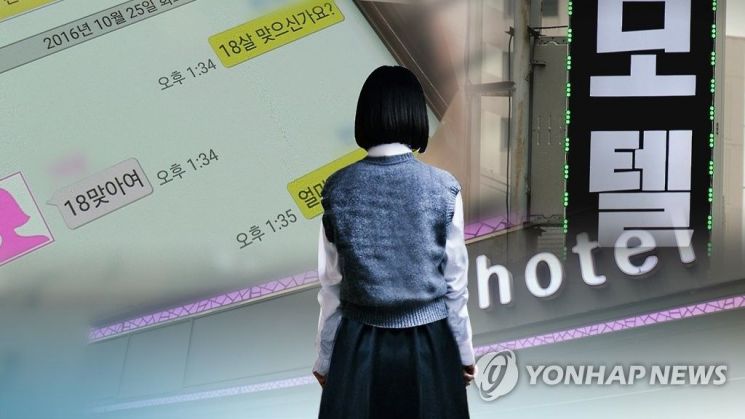 'Helpers' who approach runaway youth claiming to provide meals, accommodation, and other services continue to appear without end. / Photo by Yonhap News
[Asia Economy Reporter Lim Juhyung] So-called 'helpers' who lure runaway youth by promising living expenses and shelter and then sexually exploit them are rampant. These individuals approach youth through online communities and social networking services (SNS) under the pretense of "offering help," only to sexually assault or coerce them into prostitution.
In particular, due to the insufficient number of government-run residential facilities to protect runaway youth, there are concerns that the number of youth relying on helpers is not decreasing. Experts have suggested improving youth welfare facilities to support the safe independence of runaway youth.
◆'Helpers' Targeting Runaway Youth on the Rise
According to media reports on the 21st, a man in his 40s, Mr. A, who recently approached and sexually assaulted a runaway middle school girl, has been booked by the police on charges including violation of the Youth Protection Act and the Missing Children Protection Act and is currently under investigation.
Mr. A is accused of approaching middle school student Ms. B after seeing her post on SNS seeking a 'helper,' taking her to an empty one-room apartment he owns, and sexually assaulting her.
It is reported that Mr. A coaxed Ms. B, who hesitated to run away, by saying things like "I understand your difficulties" and "There are other female students in my one-room apartment." However, once Ms. B ran away and stayed at the apartment, he revealed his true nature.
The police arrested Mr. A on the 17th and applied for an arrest warrant at the Seoul Northern District Court. However, the court dismissed the warrant, citing that Mr. A has a fixed residence and is showing remorse.
The police believe there may be more victims like Ms. B and plan to conduct additional investigations before reapplying for an arrest warrant for Mr. A.
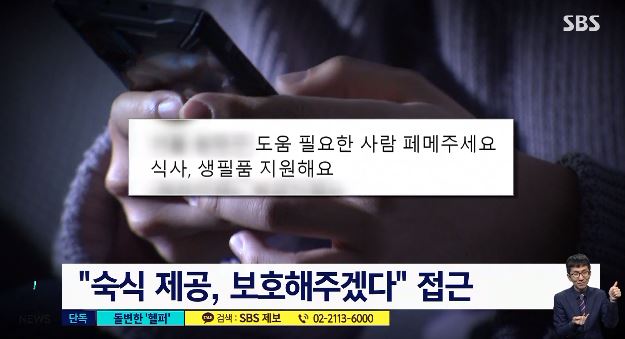 'Helper' is known to approach runaway youth through social networking services (SNS) and internet cafes. / Photo by SBS Broadcasting Capture
◆Demanding Sexual Relations and Prostitution Using Monetary Bait
Crimes targeting economically vulnerable runaway youth continue unabated. Adults who claim to be 'helpers' offering financial assistance suddenly turn violent, sexually assaulting or coercing youth into prostitution.
Runaway youth are said to seek people to provide meals and lodging mainly through SNS or online communities known as 'runaway cafes.' Helpers approach after seeing posts by youth, lure them by offering one-room apartments and meals, and then sexually exploit them.
Last year, a man in his 20s in Jeonbuk was caught by police for attempting sexual exploitation of runaway youth using money as bait. He is accused of demanding sexual relations and filming of body parts by telling a minor he met on SNS, "I will pay 500,000 won for sex and 50,000 won for videos."
There have also been cases where runaway youth forced into prostitution were murdered. In 2015, a middle school girl was killed by a male client during a transactional meeting at a motel in Bongcheon-dong, Gwanak-gu, Seoul. The girl was a runaway youth who had been introduced to the meeting by a pimp she contacted through a chat app.
◆Over 120,000 Runaway Youth Annually... Only 135 Shelters Nationwide
Why do runaway youth rely on dangerous adults like helpers? Critics point out that the scale of facilities to protect these youth from crime is grossly insufficient compared to the number of runaway youth.
According to data obtained by Rep. Lee Sujin of the Democratic Party from the National Police Agency in October last year, about 24,000 youth are reported missing or runaway annually. Including unreported cases, the Ministry of Gender Equality and Family's survey estimates the actual number of runaway youth at about 120,000 per year.
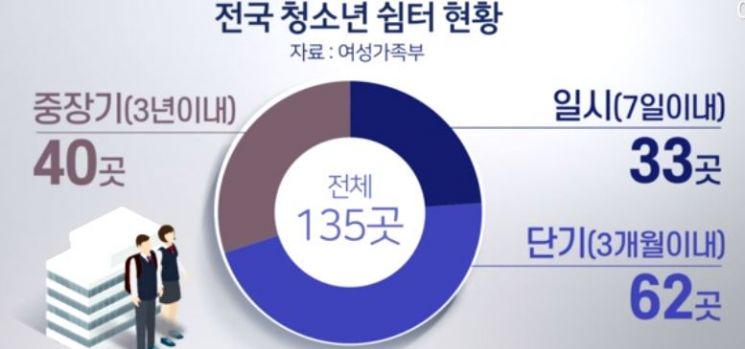
However, as of 2020, there are only 135 government-run 'youth shelters' nationwide where runaway youth can stay, with a maximum capacity of 1,369 people at one time. This scale is far too small to protect the more than 100,000 youth who flood the streets each year.
As a result, runaway youth who have nowhere to sleep or eat immediately end up contacting helpers through internet cafes and SNS.
Regarding this, Rep. Lee pointed out during a National Assembly audit attended by the Ministry of Gender Equality and Family, "There are dozens of 'runaway cafes' targeting runaway youth on the internet," and "In September 2020, a gang that lured nine runaway female youth by promising shelter and then arranged and coerced them into prostitution was arrested."
Experts have recommended expanding youth shelters and improving residential environments so that runaway youth can actively use these facilities.
Senior Researcher Hwang Jingu of the Korea Youth Policy Institute advised in last year's publication, "A Study on Restructuring Youth Welfare Facilities to Strengthen Support for Runaway Youth," that "Runaway behavior during adolescence has very diverse causes, and sometimes it is difficult for youth to live in shelters or they do not want to enter shelters. If youth shelters improve their physical environment to address issues like overcrowding and privacy protection, it will not only facilitate shelter use but also contribute to the psychological and emotional stability of admitted youth, thereby enhancing the effectiveness of independence support."
© The Asia Business Daily(www.asiae.co.kr). All rights reserved.



















