LG Chem and Samsung SDI... Institutional Investors' First Monthly Net Buying This Year
Litigation and Volkswagen-Related Negative Factors Disappear... Growth Expectations Rise
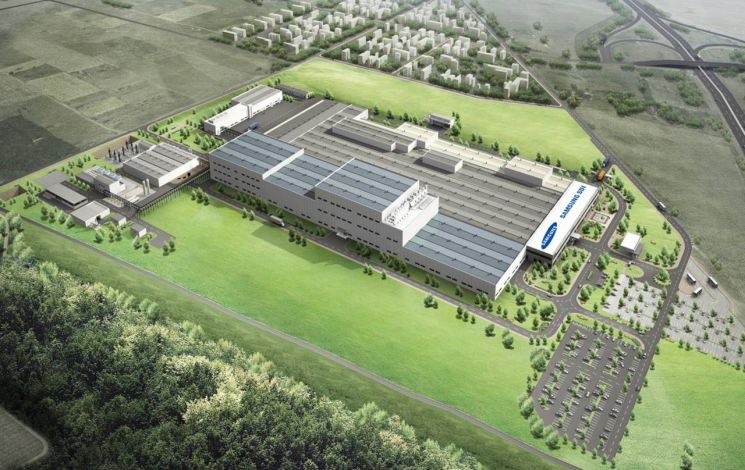
[Asia Economy Reporter Minwoo Lee] Institutional funds are flowing into leading secondary battery stocks such as Samsung SDI and LG Chem. This appears to be based on the judgment that issues such as Volkswagen's in-house battery supply and lawsuits have been resolved, allowing for a return to stable growth.
According to the Korea Exchange on the 21st, institutional investors have net purchased 154.4 billion KRW worth of Samsung SDI shares so far this month. This ranks fourth in total institutional net purchases for the month. LG Chem also ranked ninth with 88 billion KRW. This marks the first monthly net purchase since the beginning of this year. Previously, institutional investors had been steadily selling Samsung SDI shares this year, with net sales of 280.9 billion KRW in January, 234.8 billion KRW in February, and 164.4 billion KRW in March. LG Chem showed a similar pattern, starting with net sales of 423.6 billion KRW in January, followed by 605 billion KRW in February and 194.2 billion KRW in March.
It seems that investments have resumed based on the judgment that negative factors such as the lawsuit uncertainties between LG Chem (LG Energy Solution) and SK Innovation, the Hyundai Kona battery fire, and concerns over battery internalization by major electric vehicle manufacturers like Tesla and Volkswagen have been resolved.
Jang Jeong-hoon, Senior Research Fellow at Samsung Securities, explained, "The recall, which was a trigger for the adjustment, was concluded with the confirmation of cost-sharing between Hyundai Motor and LG Energy Solution, and the International Trade Commission (ITC) lawsuit between LG Energy Solution and SK Innovation was finally settled on the 11th. This effectively eliminated risks such as disruptions in order investments and additional litigation costs that were feared if the agreement had failed."
As electric vehicle demand is expected to remain robust, there are forecasts that earnings will continue to grow steadily. According to the Korea Automobile Manufacturers Association, last year's global sales of pure electric vehicles (BEV) increased by 34.7% year-on-year to 2,025,371 units. Plug-in hybrid vehicles (PHEV) also sold 910,000 units, up 73.6% from the previous year. This was influenced by strong sales in major regions such as China, the United States, and Europe.
Cho Hyun-ryeol, Senior Research Fellow at Samsung Securities, said, "Several factors that triggered the adjustment are being resolved one by one. Although it is currently difficult to gauge the extent of the impact caused by the supply of automotive semiconductors, it is highly likely that concerns will be alleviated over time."
© The Asia Business Daily(www.asiae.co.kr). All rights reserved.
![Clutching a Stolen Dior Bag, Saying "I Hate Being Poor but Real"... The Grotesque Con of a "Human Knockoff" [Slate]](https://cwcontent.asiae.co.kr/asiaresize/183/2026021902243444107_1771435474.jpg)















