Government Proposes 'Vaccine Swap' Card Between Korea and the US Amid Supply Shortage Concerns
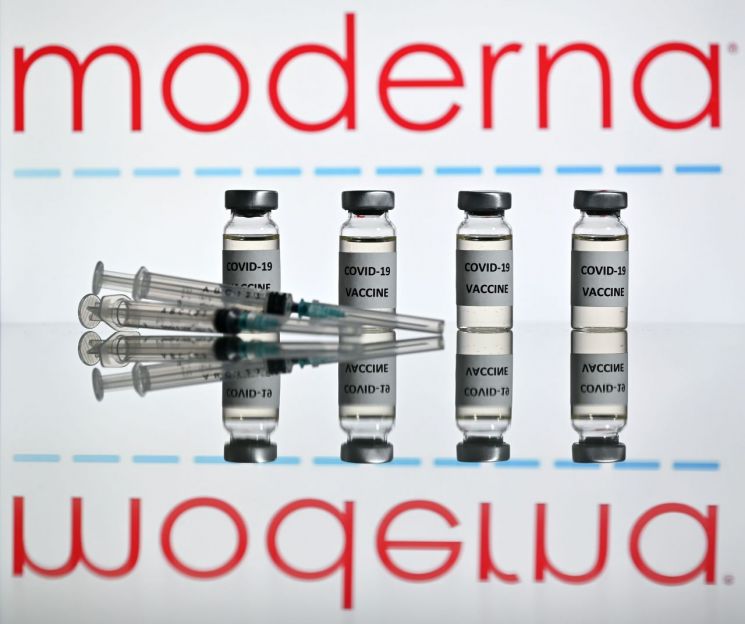
The government’s decision to even consider a ‘vaccine swap’ card appears to be driven by the growing difficulty in securing vaccine supplies. Although health authorities have appealed to the government to trust them in ensuring the smooth procurement of COVID-19 vaccines, the reality of vaccine shortages is becoming apparent due to controversies over blood clots linked to some vaccines and delays in the supply of Moderna vaccines. However, even if the swap is successful, the amount of vaccines the U.S. can provide may not be sufficient, and depending on the vaccine type, it could trigger further controversies.
Since Foreign Minister Chung Eui-yong mentioned the Korea-U.S. vaccine swap during the National Assembly’s Foreign Affairs and Unification Committee on the 20th, various proposals have been put forward in the medical community. The most likely plan currently is to first receive Pfizer and Moderna vaccines from the U.S. and then repay with domestically produced vaccines. Candidates include vaccines from domestic pharmaceutical companies scheduled for contract manufacturing in August, as previously mentioned by the government, or Novavax vaccines produced by SK Bioscience at its Andong plant.
Some analysts suggest that the quantity and type of vaccines could be variables. Currently, over 130 million adults in the U.S.?more than half the adult population?have received at least one dose of a COVID-19 vaccine, but the country is pushing for ‘booster shots’ to further enhance immunity. It is uncertain how much of the surplus will be sent to Korea. The arrival of vaccines with blood clot controversies, such as AstraZeneca (AZ), also remains a point of contention.
Professor Lee Jae-gap of Hallym University’s Infectious Diseases Department said, “At present, the biggest issue is not the type of vaccine but whether the swap can be realized. Separately, if technology transfer can be secured, it would establish a domestic production base and have a very positive impact on vaccine supply in the second half of the year.”
In this situation, the government’s efforts to explore various options for early vaccine procurement indicate increasing instability in vaccine supply. Virus vector-based vaccines like AZ and Janssen have suffered a blow to their credibility due to blood clot controversies. The day before, the European Medicines Agency (EMA) announced that it found a possible link between Janssen’s COVID-19 vaccine and rare cases of unusual blood clots accompanied by low platelet counts. Although vaccination resumed because the benefits outweigh the risks, in Korea, those under 30 were excluded from receiving the AZ vaccine after a similar conclusion was reached.
Other vaccines such as Pfizer and Moderna are experiencing intensified concentration. Some of the 20 million doses of Moderna vaccines contracted for were scheduled for delivery in the first half of the year but have been postponed to the second half. On the day of reporting, 250,000 doses of Pfizer vaccines arrived, bringing the total imported in the first half to only 1.75 million doses out of 7 million planned. Between May and June, 5.25 million doses are expected to arrive sequentially each week, but actual delivery remains uncertain.
Meanwhile, according to the Central Disease Control Headquarters (CDCH), as of midnight on the day, 731 new COVID-19 cases were reported domestically. With the weekend’s reduced testing effect gone, cases surged by nearly 200, rising to the 700s for the first time in a week since the 14th (731 cases). Of these, 692 were locally transmitted and 39 were imported. While the spark of the fourth wave remains, health authorities currently believe that the medical response capacity is sufficient for the ongoing outbreak and are not considering tightening social distancing measures immediately.
© The Asia Business Daily(www.asiae.co.kr). All rights reserved.
![Clutching a Stolen Dior Bag, Saying "I Hate Being Poor but Real"... The Grotesque Con of a "Human Knockoff" [Slate]](https://cwcontent.asiae.co.kr/asiaresize/183/2026021902243444107_1771435474.jpg)















