Taiwan Not Designated as Currency Manipulator... Avoiding Worst-Case Scenario
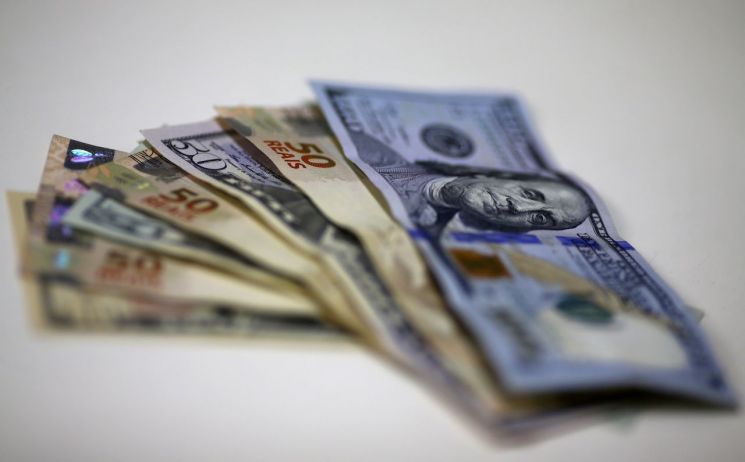
[Asia Economy New York=Correspondent Baek Jong-min] The U.S. Department of the Treasury has maintained South Korea on its currency watchlist. Taiwan's monitoring was strengthened as it was upgraded from a watchlist country to a currency monitoring country, but it was not designated as a currency manipulator.
On the 16th (local time), the Treasury Department announced its first currency report since the inauguration of the Joe Biden administration, listing a total of 11 countries on the watchlist. In addition to the existing watchlist countries including South Korea, China, Japan, Germany, Italy, Singapore, Thailand, Malaysia, and India, Ireland and Mexico were newly added.
The U.S. evaluates each country's currency policies based on three criteria under the Trade Facilitation and Trade Enforcement Act of 2015: ▲a significant bilateral trade surplus with the U.S. exceeding $20 billion in the past year ▲a substantial current account surplus exceeding 2% of GDP ▲persistent, one-sided intervention in the foreign exchange market by net purchases of foreign currency exceeding 2% of GDP over a 12-month period.
If a country meets two of these three criteria, it is designated as a watchlist country; if all three criteria are met, it is designated as a currency monitoring country.
South Korea met the watchlist criteria in two areas: bilateral trade surplus with the U.S. and current account surplus.
Vietnam and Switzerland were already designated as currency monitoring countries, and Taiwan was added to this list. Taiwan's inclusion had drawn attention recently due to the U.S.-China conflict and its growing importance in the semiconductor supply chain.
The U.S. government applied the principles consistently regarding currency regardless of its expanding relations with Taiwan. China, which is at odds with the U.S., remained on the watchlist, while only Taiwan, whose relations with the U.S. are strengthening, faced heightened monitoring standards.
However, the Treasury Department removed the currency manipulator classification previously applied to Vietnam and Switzerland. Taiwan was also not included as a currency manipulator. The Treasury explained that there was insufficient evidence to conclude that these three countries manipulated their currencies under the 1988 Omnibus Trade and Competitiveness Act.
While the designation of Taiwan as a currency monitoring country cannot involve subjective judgment, the designation as a currency manipulator allows for U.S. discretion. This reflects a degree of consideration by the U.S. toward Taiwan.
If designated as a currency manipulator, the U.S. can demand corrective measures from the country and, if no improvement occurs within a year, impose sanctions such as restrictions on investments by U.S. companies.
Vietnam and Switzerland, which were classified as currency manipulators by the previous Donald Trump administration in December last year, strongly opposed the U.S. measures.
Bloomberg News evaluated that the Biden administration refrained from designating these countries as currency manipulators in its first currency report.
The U.S. typically releases currency reports in April and October. The previous Trump administration did not adhere to this principle and released reports irregularly.
© The Asia Business Daily(www.asiae.co.kr). All rights reserved.
![Clutching a Stolen Dior Bag, Saying "I Hate Being Poor but Real"... The Grotesque Con of a "Human Knockoff" [Slate]](https://cwcontent.asiae.co.kr/asiaresize/183/2026021902243444107_1771435474.jpg)















