Reflecting Expert Advisory Meeting Results to Prioritize Application in School Quarantine Measures
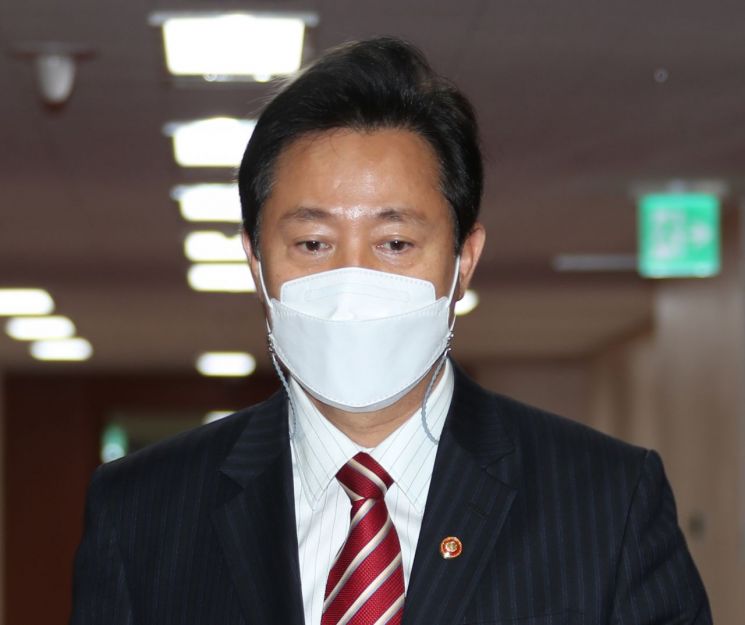
[Asia Economy Reporter Lim Cheol-young] Seoul Mayor Oh Se-hoon has shifted the direction of the pilot project for self-testing kits and decided to prioritize implementation in schools in consultation with the government. Mayor Oh has explained the purpose of the "Seoul-style mutual coexistence quarantine" as using self-testing kits to extend the operating hours of multi-use facilities, such as singing practice rooms, whose business hours have been restricted due to social distancing measures.
On the 15th, Park Yu-mi, the quarantine control officer of the Seoul Disaster and Safety Countermeasures Headquarters, stated during a COVID-19 online briefing, "Experts have expressed cautious opinions about introducing self-diagnosis kits domestically due to the low prevalence rate, which reduces the accuracy of the kits. However, there is also an opinion that the accuracy is high for symptomatic individuals who can actually spread the infection." This was the result of an expert advisory meeting held on the 14th.
She added that there were positive opinions about applying the pilot project to schools. Park explained, "Self-testing kits have the advantage of accessibility because people who want to get tested can do so conveniently, and screening is possible in situations where community infection is spreading. Therefore, there were many positive opinions about applying the pilot project to schools."
Accordingly, Seoul plans to create detailed guidelines reflecting the expert advisory meeting's opinions. Park emphasized, "We will develop detailed guidelines on how to introduce and apply self-testing kits," and added, "We will also consult with the Ministry of Health and Welfare, the Ministry of Food and Drug Safety, the Korea Disease Control and Prevention Agency, and the Seoul Metropolitan Office of Education."
Since the start of the school term in March, the number of confirmed cases under the age of 19 has been steadily increasing. In January, 7% of confirmed cases were under 19, but last month, this surged to 11.2%. In particular, 11 school clusters have occurred since March.
Park noted, "In the UK, rapid diagnostic kits are widely used overseas, with all students being tested and decisions made for full in-person attendance."
© The Asia Business Daily(www.asiae.co.kr). All rights reserved.
![Clutching a Stolen Dior Bag, Saying "I Hate Being Poor but Real"... The Grotesque Con of a "Human Knockoff" [Slate]](https://cwcontent.asiae.co.kr/asiaresize/183/2026021902243444107_1771435474.jpg)















