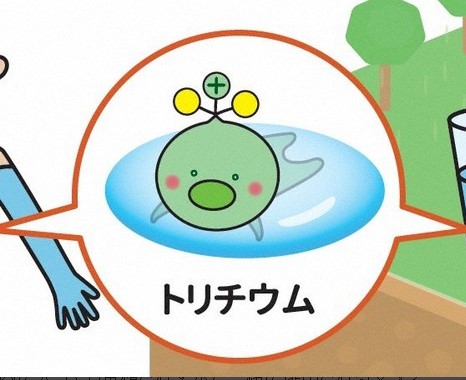
[Asia Economy Reporter Kiho Sung] As the Japanese government has decided to discharge radioactive contaminated water from the Fukushima Daiichi Nuclear Power Plant into the ocean, promotional materials depicting tritium (a radioactive substance contained in the contaminated water) as a cute character are drawing criticism.
On the 13th, the Reconstruction Agency released leaflets and videos promoting the safety of tritium contained in the treated contaminated water, following the decision made at the Cabinet meeting to discharge the contaminated water from the Fukushima Daiichi Nuclear Power Plant into the ocean.
The plan is to discharge the contaminated water treated by a purification device called the Advanced Liquid Processing System (ALPS). The Japanese government refers to the contaminated water that has passed through ALPS as treated water, but this treated water still contains tritium, a representative radioactive substance that is technically difficult to remove.
The Japanese government claims that diluting the treated contaminated water 400 to 500 times with seawater before discharge meets international standards and poses no safety issues.
To promote this message domestically and internationally, the Reconstruction Agency created a cute character representing tritium and gave it the nickname "Yurukyara" (ゆるキャラ), then featured it in promotional leaflets and videos.
The term "Yurukyara," meaning "loose character," conveys a rustic yet relaxed and easygoing atmosphere. The character in question carries the message that the radioactive substance tritium is not very dangerous and is safe.
In fact, the Reconstruction Agency explains in the leaflets and videos featuring this character that tritium exists in rainwater, seawater, tap water, and even the human body, and that it does not accumulate inside the body but is excreted along with water.
However, this explanation has been criticized for ignoring the risk of internal exposure caused when tritium, which emits radiation that cannot penetrate the skin and thus does not cause external exposure, is absorbed into the body along with water.
© The Asia Business Daily(www.asiae.co.kr). All rights reserved.
![Clutching a Stolen Dior Bag, Saying "I Hate Being Poor but Real"... The Grotesque Con of a "Human Knockoff" [Slate]](https://cwcontent.asiae.co.kr/asiaresize/183/2026021902243444107_1771435474.jpg)















