- Blockchain-Based Identity Verification and Vaccine Passport Apps Unveiled Abroad... Easy Preservation of Vaccination Records
- All Transaction Records Are Anonymously Logged & Alteration or Deletion of These Records Is Practically Impossible... Strengthening 'User Protection'
As the number of COVID-19 cases rises again, blockchain technology based on healthcare is emerging as an advanced alternative for epidemic prevention.
This is because blockchain can help curb the spread of the coronavirus by strengthening identity verification procedures and recording and preserving vaccination records.
Overseas, related technologies have already been introduced and are nearing commercialization. Representative examples include the digital vaccine passport app “Excelsior Pass” in New York State, USA, which records COVID-19 vaccination status, and the UK’s application of blockchain distributed ledger technology to vaccine distribution and supply plans.
In South Korea, Prime Minister Chung Sye-kyun announced earlier this month that a digital vaccine passport system based on a blockchain app will be officially launched within this month.
The reason blockchain is rapidly commercializing in various healthcare fields is due to its unique data management method: all transaction records are anonymously recorded on-chain, and it is virtually impossible to alter or delete these records.
For medical data, which must be stored safely and anonymously over the long term, blockchain technology can create significant synergy.
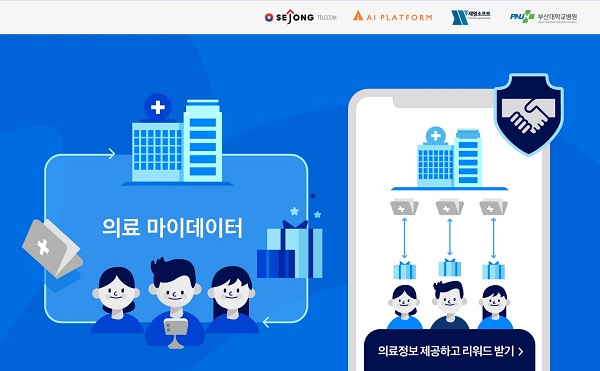
This second half of the year, a meaningful demonstration project aimed at reducing uncertainties like COVID-19 will be actively conducted in Busan, accelerating the establishment of a “blockchain-based medical MyData ecosystem.”
Last July, the government selected the “blockchain-based medical MyData non-face-to-face platform service” for the medical sector in the second phase of the Busan Blockchain Regulatory Free Zone project, appointing Sejong Telecom Co., Ltd. along with AI Platform Co., Ltd., Jaeyoung Soft Co., Ltd., and Busan National University Hospital as project operators.
In particular, as blockchain-based certificate issuance services including digital vaccine passports are emerging in daily life, there is high expectation that users will voluntarily and rapidly enter the blockchain-based medical MyData ecosystem. It is analyzed that experiencing the convenience and safety of this technology firsthand will reduce resistance to new services and lower adaptation costs.
Furthermore, through demonstration exceptions, obstacles that have been considered institutional barriers to blockchain-based medical MyData projects are being resolved, raising expectations for the project’s success.
Until now, uploading personal data related to individuals onto the blockchain was considered illegal. According to the Personal Information Protection Act, businesses must promptly destroy collected information when the retention period expires or the purpose of processing the personal information is achieved. However, blockchain’s immutability conflicted with this requirement, as original records cannot be modified or deleted.
However, the demonstration exception allows storing personal information on a separate deletable server (off-chain) rather than on the blockchain, and only the off-chain address is recorded on the blockchain. This means that personal information can be deleted by removing data from the off-chain server when necessary.
Wang Young-jin, Director of Sejong Telecom, stated, “As nationwide interest and expectations for healthcare-related data have increased since the COVID-19 pandemic, our company will actively engage in data integration and utilization research as part of implementing a blockchain-based protocol economy ecosystem.” He added, “Starting in the second half of this year, through the ‘blockchain-based medical MyData non-face-to-face platform service’ demonstration in Busan, we plan to build a personal medical data ecosystem that provides cost reduction in medical expenses and user convenience through non-face-to-face methods (electronic prescriptions, certificate issuance, insurance one-stop claims).”
Professor Lee Ho-seok of Busan National University Hospital (Vice Director of the Institute of Convergence Medical Technology, Professor of Thoracic Surgery) said, “This demonstration project is an innovative step addressing practical issues of medical data and technical improvements. It is expected not only to provide convenience but also to lead to medical technology development using diverse personal health information, big data, and artificial intelligence technology.” He added, “Furthermore, it will serve as a foothold for improving public health and advancing the medical industry, while also acting as a catalyst for creating a medical MyData ecosystem.”
© The Asia Business Daily(www.asiae.co.kr). All rights reserved.
![Clutching a Stolen Dior Bag, Saying "I Hate Being Poor but Real"... The Grotesque Con of a "Human Knockoff" [Slate]](https://cwcontent.asiae.co.kr/asiaresize/183/2026021902243444107_1771435474.jpg)















