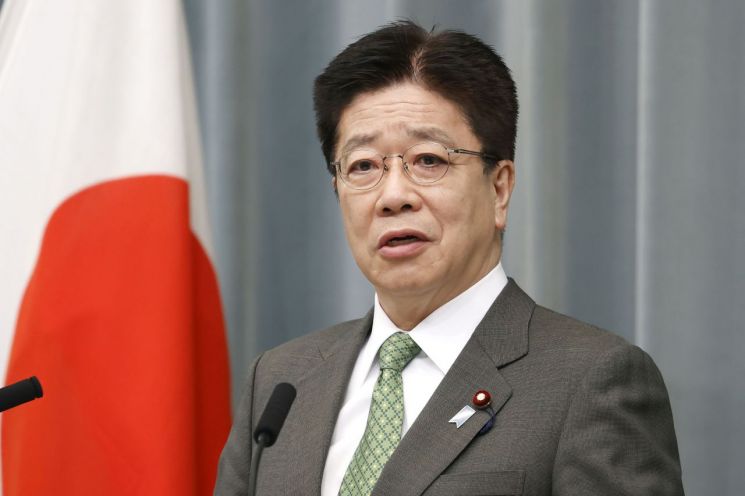
[Asia Economy Reporter Suyeon Woo] Kato Katsunobu, Chief Cabinet Secretary and spokesperson for the Japanese government, stated on the 13th that "the Korean government has lodged a protest" regarding the decision to discharge radioactive contaminated water from the Fukushima Daiichi Nuclear Power Plant into the ocean.
At a press conference that afternoon, Secretary Kato revealed that the Korean government had protested, saying, "We are providing reasonable explanations based on Japan's position" in response to Korea's strong opposition.
That afternoon, the Korean government summoned Koichi Aiboshi, the Japanese Ambassador to Korea, to protest the decision to discharge contaminated water from the Fukushima Daiichi Nuclear Power Plant into the ocean. The Korean Ministry of Foreign Affairs stated, "Second Vice Foreign Minister Choi Jong-moon conveyed Korea's opposing stance and expressed deep concern about the potential threats to the health of our people and the environment."
Not only Korea, but also the Chinese Ministry of Foreign Affairs protested that day, saying it would "cause serious damage to neighboring countries," and Taiwan's Atomic Energy Council expressed discomfort, stating that "members of the legislature and civic groups oppose the discharge."
Regarding this, Japanese Secretary Kato said, "There have been various remarks from China, Korea, and Taiwan," and also referred to a statement by Rafael Grossi, Director General of the International Atomic Energy Agency (IAEA), which defended Japan's position.
On the same day, Director General Grossi expressed support for Japan's discharge of radioactive contaminated water, calling it an "international practice." He said, "The treatment method chosen by Japan is technically feasible and follows international practice," and added, "The IAEA is ready to provide technical support to monitor and verify the safe and transparent implementation of this plan."
Meanwhile, it is known that before the decision to discharge contaminated water into the ocean, the Japanese government notified the Korean government through diplomatic channels in advance. At the same time, an online briefing session was held for embassy officials from various countries, with 49 countries including China and Taiwan participating, but the Korean Embassy in Japan did not attend.
© The Asia Business Daily(www.asiae.co.kr). All rights reserved.
![Clutching a Stolen Dior Bag, Saying "I Hate Being Poor but Real"... The Grotesque Con of a "Human Knockoff" [Slate]](https://cwcontent.asiae.co.kr/asiaresize/183/2026021902243444107_1771435474.jpg)















