Bank of Korea 'Survey Results on Lending Practices of Financial Institutions'
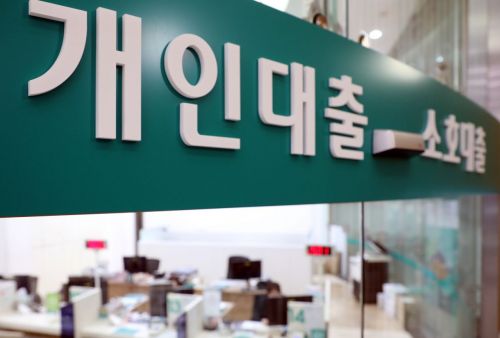
[Asia Economy Reporter Kim Eun-byeol] As concerns over the rapidly increasing household debt persist, it is expected to become more difficult to obtain household loans from domestic banks.
According to the "Financial Institution Lending Behavior Survey Results" announced by the Bank of Korea on the 12th, lending attitudes of domestic banks are expected to tighten, especially for household loans, during the second quarter of this year. The banks' lending attitude index (forecast) was -2 in the second quarter, indicating a tightening of lending attitudes compared to the previous quarter (5).
The Lending Behavior Survey is a questionnaire conducted among credit officers of domestic financial institutions. A plus (+) indicates easing of lending attitudes, increased credit risk, and increased loan demand, while a minus (-) indicates the opposite. A tightening of lending attitudes means that loan screening will become stricter than before.
The lending attitude index by borrower was -3 for large corporations, 6 for small and medium enterprises (SMEs), -18 for household mortgages, and -9 for general household loans. A Bank of Korea official stated, "While banks' lending attitudes toward large corporations are expected to tighten slightly, they are expected to continue easing toward SMEs, reflecting the extension of financial support measures for small business owners and SMEs due to the prolonged COVID-19 pandemic."
In the case of household loans, it is expected to tighten compared to the previous quarter due to regulatory tightening by supervisory authorities and increased caution regarding credit risk.
The credit risk index by borrower was 6 for large corporations, 26 for SMEs, and 24 for households. The comprehensive credit risk index, calculated as a weighted average of corporate and household loan amounts, was 26. This is twice as high as the first quarter (13).
Lending attitudes of non-bank financial institutions are also expected to tighten across most sectors, including mutual finance cooperatives. The lending attitude index is expected to tighten for mutual finance (-21) and credit card companies (-6). Credit risk is expected to increase in all sectors compared to the previous quarter, and loan demand is expected to rise across all sectors, especially among credit card companies and savings banks.
© The Asia Business Daily(www.asiae.co.kr). All rights reserved.
![Clutching a Stolen Dior Bag, Saying "I Hate Being Poor but Real"... The Grotesque Con of a "Human Knockoff" [Slate]](https://cwcontent.asiae.co.kr/asiaresize/183/2026021902243444107_1771435474.jpg)
















