'Zoom' Normalized in the COVID Era... Frequent Swearing and Pornographic 'Terror' Incidents Everywhere
Experts "Can Be Punished for Obstruction of Business and Defamation"
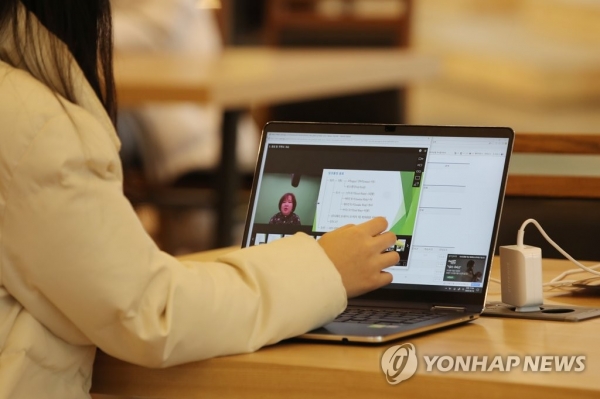
[Asia Economy Reporter Kang Juhee] Due to the increase in non-face-to-face activities caused by the COVID-19 pandemic, the use of the video platform 'Zoom' has become routine in school classes and meetings. However, recently, there have been continuous incidents of so-called 'Zoom bombing,' where outsiders enter online classes to post obscene materials or use abusive language.
Experts emphasize the need to prepare countermeasures, including reviewing the application of laws against acts that infringe on the right to conduct classes.
Zoom bombing is a newly coined term combining 'Zoom' and 'bombing,' referring to a type of trolling that maliciously disrupts Zoom video meetings or classes by sharing obscene or hateful videos through the screen sharing function. Trolling means intentionally engaging in or enjoying acts such as seeking attention or provoking anger.
The most recent case occurred on the 22nd of last month at a university in Seoul, where an unidentified person suddenly entered a non-face-to-face class, used abusive and hateful language, posted obscene materials in the chat room, and disrupted the class for about 30 minutes.
Professor A, who was conducting the class, forcibly removed the unidentified person from the room, but the individual reconnected several times afterward and continued the disturbance.
Although Professor A warned of legal action, the individual ignored it, claiming to be a 'juvenile offender' and continued to disrupt the class. Eventually, on the 25th of last month, Professor A filed a complaint with the police on charges including insult and violation of the Sexual Violence Punishment Act.
Similar incidents have occurred not only in university online lectures but also in high schools. On the 17th of last month, at a high school in Anyang, Gyeonggi Province, people presumed to be members of 'Ilbe' (Ilgan Best) intruded into a class attended by nearly 400 students and spewed hateful remarks.
They scribbled on the teacher's screen, used all kinds of abusive language, and caused a disturbance for about 10 minutes. They also mocked participants by displaying hand gestures symbolizing Ilbe on the screen.
In April last year, at a high school in Gwangju, an outsider entered an online class and exposed their body parts during the session.
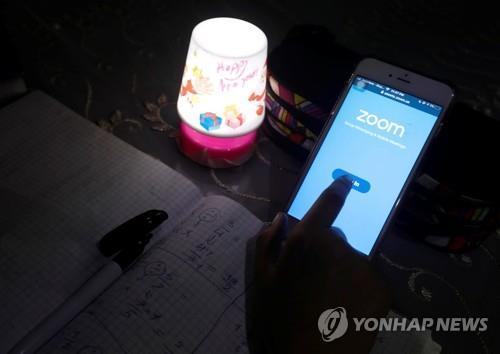
Zoom allows easy creation of chat rooms that many people can join, and sharing chat room addresses is convenient, so the frequency of use for non-face-to-face activities has greatly increased in many companies and schools since the outbreak of COVID-19.
In particular, it is preferred over other remote learning platforms due to its advantages such as easy real-time attendance checking, interactive communication, and immediate feedback.
However, concerns about security have been consistently raised because anyone can easily join the chat if they know the chat room link and the shared password.
In fact, some online communities have posted many messages requesting or offering to perform Zoom bombing, such as 'Posting coordinates (lecture links) for online lectures' and 'If you give me the cyber lecture link, I'll properly terrorize Zoom.'
In other countries like the United States, Zoom bombing is already recognized as a serious social problem. As cybercrimes exploiting security vulnerabilities increase, the New York City Department of Education decided to suspend Zoom classes altogether in April last year.
Experts suggest the need to prepare countermeasures, including the application of laws against acts that infringe on the right to conduct classes.
Professor Oh Yoonseong of the Department of Police Administration at Soonchunhyang University said, "Zoom bombing can be called a 'new crime' newly appearing in society. While strengthening security on the platform itself is necessary, it seems essential to examine which laws can be applied when such damage occurs and to establish ways to punish offenders," he emphasized.
He added, "Acts that infringe on the teacher's right to conduct classes, such as posting obscene materials or using abusive language, can be subject to charges like obstruction of business and defamation."
© The Asia Business Daily(www.asiae.co.kr). All rights reserved.
![Clutching a Stolen Dior Bag, Saying "I Hate Being Poor but Real"... The Grotesque Con of a "Human Knockoff" [Slate]](https://cwcontent.asiae.co.kr/asiaresize/183/2026021902243444107_1771435474.jpg)
















