Comparison of Debt Change Trends by Korea Institute of Public Finance
34.9 Percentage Points Higher Than the Global Average of 63.7%
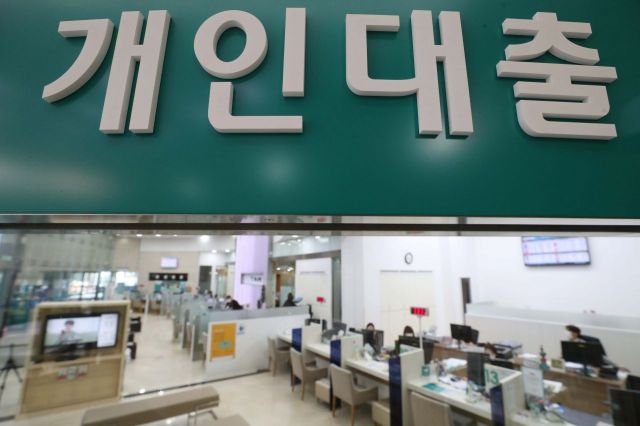
[Asia Economy Reporters Kwangho Lee, Sehee Jang, Hyunjin Jung] South Korea's household debt has been increasing at a faster pace than major countries, reaching nearly 100% of its Gross Domestic Product (GDP). Concerns are also rising about the increasing risk of insolvency among highly indebted companies and self-employed individuals.
According to data from the Korea Institute of Public Finance titled "Trends and Comparisons of Total Debt and Sectoral Debt by Country," as of the second quarter of last year, South Korea's household debt-to-GDP ratio stood at 98.6%. The Bank of Korea reported that the nominal GDP of South Korea last year was 1,924.4529 trillion won, indicating that household debt has grown to a similar scale.
This figure is 34.9 percentage points higher than the global average of 63.7%. Since 2008, South Korea's household debt-to-GDP ratio has increased by 27.6 percentage points, whereas the global and advanced economies recorded increases of 3.7% and -0.9%, respectively, showing a relatively slower growth trend. The ratio of household financial liabilities to financial assets is also high at 47.2%, compared to France (30.0%), the United Kingdom (28.7%), Germany (28.3%), and the United States (17.3%).
Not only households but also corporate and self-employed debt levels are at risky levels. The Korea Economic Research Institute under the Federation of Korean Industries announced that, based on an analysis of financial statements of 1,017 non-financial companies listed on the KOSPI and KOSDAQ, one in four listed companies cannot even cover interest expenses with operating profits. Professor Donghyun Ahn of Seoul National University's Department of Economics stated, "From the corporate perspective, if interest rates rise, the cost of capital increases, which may lead to a contraction in investment."
As of March (cumulative), loans to individual business owners (SOHO) from the five major banks?KB Kookmin, Shinhan, Hana, Woori, and NH Nonghyup?amounted to 277.9909 trillion won, an increase of 33.0863 trillion won (13.50%) compared to one year earlier (244.9046 trillion won).
With economic recovery leading to interest rate hikes, the risk of debt becoming non-performing inevitably grows. The Korea Institute of Public Finance stated, "At this point, where the scale of debt has significantly increased, a rapid rise in interest rates could lead to a sharp increase in interest expenses, potentially causing shocks to the entire economy."
© The Asia Business Daily(www.asiae.co.kr). All rights reserved.
![Clutching a Stolen Dior Bag, Saying "I Hate Being Poor but Real"... The Grotesque Con of a "Human Knockoff" [Slate]](https://cwcontent.asiae.co.kr/asiaresize/183/2026021902243444107_1771435474.jpg)















