Ministry of Land, Infrastructure and Transport and Police Agency Establish 'Traffic Accident Fatality Countermeasures'
Targeting 2,000 Traffic Accident Deaths by 2022
Current Pedestrian Fatality Rate Among Lowest in OECD
Expansion of Driver Stop Obligations, Strengthening Driver Responsibilities
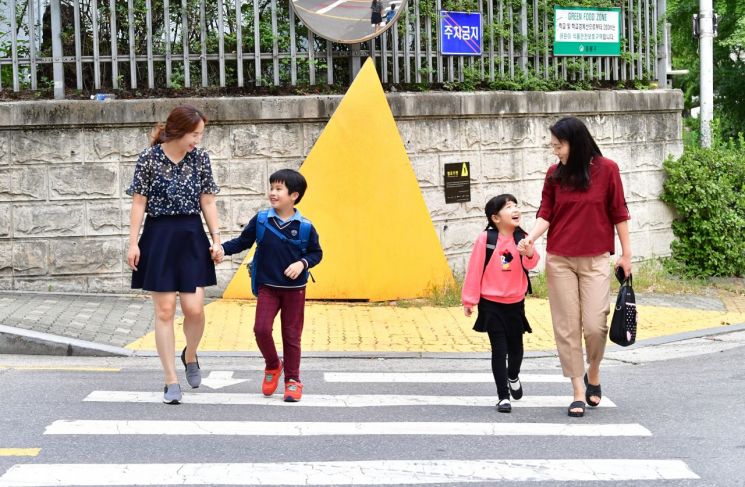
[Asia Economy Reporter Moon Jiwon] In the future, drivers will be required to stop not only when pedestrians are crossing at crosswalks without traffic lights but also when they are about to cross. Additionally, pedestrians will be given priority on roads without separated sidewalks and carriageways, and in cases of motorcycle drunk driving accidents, the full insurance payout can be reclaimed, significantly increasing the burden on drivers.
On the 25th, the Ministry of Land, Infrastructure and Transport, the Ministry of the Interior and Safety, and the National Police Agency finalized the '2021 Traffic Accident Fatality Reduction Measures' at the 124th National Policy Issue Inspection and Coordination Meeting chaired by Prime Minister Chung Sye-kyun. This plan focuses on establishing a pedestrian-first traffic environment with the goal of reducing traffic accident fatalities to the 2,000 range by next year.
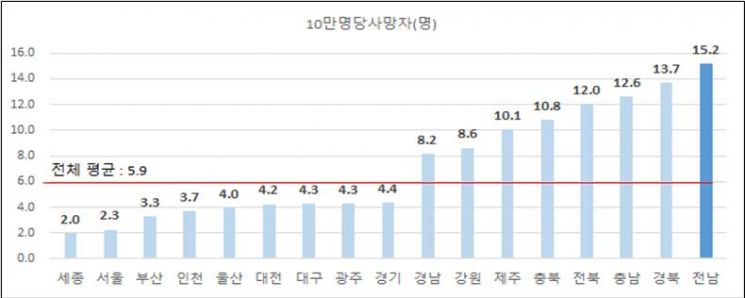
Domestic traffic accident fatalities have decreased from 4,185 in 2017 to 3,081 last year, recording an average annual fatality reduction rate of 9.7% over three years. However, the fatality rate per 100,000 people was 5.9 in 2020, which is still insufficient compared to the OECD average of 5.6 in 2018. Notably, pedestrians account for about 40% of total fatalities, which is twice the OECD average of 20.5%, ranking among the lowest.
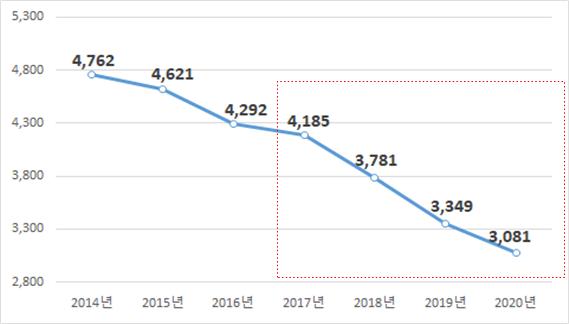 Number of Traffic Accident Deaths from 2014 to 2020 (Source: Ministry of Land, Infrastructure and Transport)
First, to reduce traffic accident fatalities, the government will fully implement the 'Safe Speed 5030' policy from the 17th of next month, lowering the urban vehicle speed limit from 60 km/h to 50 km/h. Countries like Denmark, Germany, and Australia have seen an 8-24% reduction in traffic fatalities after lowering urban speed limits to 50 km/h.
Additionally, the Road Traffic Act will be amended to require drivers to stop when 'pedestrians are about to cross' at crosswalks without traffic lights. Currently, drivers must stop only when pedestrians are 'crossing' the crosswalk, but this scope will be expanded. The amendment is expected to take place in the first half of this year.
At intersections, drivers will be required to stop before making right turns and then proceed. Stop signs will be pilot-installed at crosswalks within school zones. The system will actively transition to a pedestrian-first traffic system by promoting insurance premium surcharges for accidents occurring at crosswalks or in school zones.
Fines and penalties for illegal parking in school zones will also be increased from two to three times the amount for general roads, with the Road Traffic Act enforcement ordinance taking effect in May.
For high-risk vehicles such as motorcycles, drivers will be held liable for the full insurance payout in cases of drunk driving, unlicensed driving, or hit-and-run accidents. Currently, the scope of reimbursement is 10 million KRW for bodily injury and 5 million KRW for property damage in drunk driving cases, and 3 million KRW for bodily injury and 1 million KRW for property damage in hit-and-run cases. This scope will be expanded to increase driver responsibility.
Regulations will be strengthened to include drug and substance-impaired driving in the scope of accident liability payments, and claims for vehicle repair costs (property damage) will be restricted in cases of 12 major serious violations such as unlicensed driving, drunk driving, and crossing the center line. To manage habitual violations, penalties will be increased by imposing heavier fines based on the number of traffic violations, and the introduction of alcohol ignition interlock devices for habitual drunk drivers is also under consideration.
To reduce accidents involving commercial vehicles such as trucks, a 'one-strike-out' policy for drunk driving will be introduced for transportation workers. Rental car operators will be included in the safety inspection targets for transportation means to strengthen management. From July, new trucks and special vehicles exceeding 3.5 tons gross weight will be required to install lane departure and emergency automatic braking systems, with plans to expand this requirement to vehicles under 3.5 tons in the long term.
The government plans to regularly monitor progress through the National Policy Issue Inspection and Coordination Meeting and inspection councils led by the Office for Government Policy Coordination. Joint inspections by related ministries will continue for local governments with poor traffic accident reduction performance, and traffic accident fatality statistics by local government will be regularly disclosed.
© The Asia Business Daily(www.asiae.co.kr). All rights reserved.
![Clutching a Stolen Dior Bag, Saying "I Hate Being Poor but Real"... The Grotesque Con of a "Human Knockoff" [Slate]](https://cwcontent.asiae.co.kr/asiaresize/183/2026021902243444107_1771435474.jpg)


















