Rising Per Capita National Income May Surpass G7
Household Debt and Soaring Real Estate Could Trigger 'Balance Sheet Recession' Like Japan
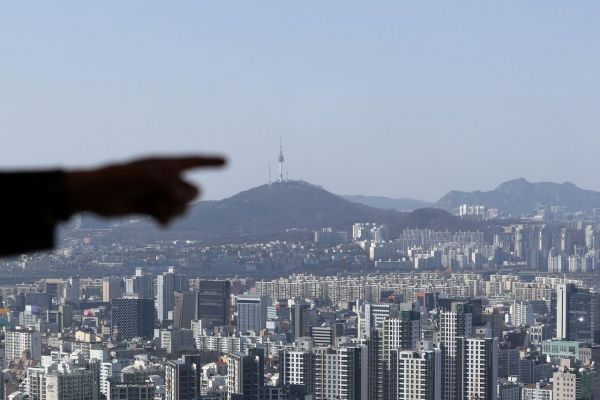
[Asia Economy Reporter Kim Eunbyeol] Although South Korea's per capita Gross National Income (GNI) has risen to surpass Italy, a member of the G7 (Group of Seven major economies), a diagnosis has emerged that future growth potential is significantly declining due to soaring real estate prices and rapidly increasing household debt. The recent speculation scandal involving employees of the Korea Land and Housing Corporation (LH) vividly illustrates South Korea's real estate problems, and government real estate measures through tax increases have been evaluated as failing to curb housing prices.
The Wall Street Journal (WSJ) on the 12th (local time) published an article titled "Korea’s Big Economic Conundrum: Mo Money, Mo Problems," pointing out that "South Korea could fall into a 'balance sheet recession' like Japan due to the rapid rise in real estate prices and increasing debt problems."
WSJ stated, "One of South Korea's most dangerous economic issues (the surge in real estate prices) was clearly revealed in the recent speculation scandal involving employees of the Korea Land and Housing Corporation (LH)," adding, "While surpassing G7 countries in per capita GNI means South Korea has entered the ranks of wealthy nations, the problems of housing prices and household debt pose a serious threat to South Korea's potential growth." According to the Bank of Korea, last year's per capita GNI was $31,755, which is expected to be similar to or surpass Italy depending on the exchange rate application method.
In particular, while South Korea's Gross Domestic Product (GDP) growth rate and per capita GNI are important indicators, there is significant concern that as debt increases substantially, companies and households will reduce spending.
WSJ noted, "South Korea's household debt service ratio (DSR) is 12.8%, much higher than the United States (7.6%) or Germany (6.1%)," and warned, "Like Japan in the 1990s, South Korea faces the risk of falling into a balance sheet recession where all economic sectors simultaneously cut spending." It also reported that non-financial corporate debt stands at 110% of GDP, close to the record high set in 1999 right after the Asian financial crisis.
While South Korea's growth rate is gradually stagnating, the relatively smaller scale of per capita GNI compared to advanced countries was also viewed negatively. According to the International Monetary Fund (IMF), South Korea's average annual growth rate from 2018 to 2025 is 2.1%, compared to 1.6% for the United States, narrowing the growth rate gap to its lowest level ever. This means South Korea is no longer a country growing faster than advanced nations. However, according to the World Bank (WB) estimate reflecting exchange rates, South Korea's per capita GDP in 2019 was only $28,675, about half that of the United States.
The COVID-19 pandemic has resulted in high unemployment rates, and South Korea's declining birth rate was also cited as a challenge. WSJ pointed out, "South Korea's total fertility rate last year was 0.84, the lowest among OECD countries," and "the population growth rate has been lower than that of the United States for about 30 years."
Furthermore, WSJ explained that the government needs to increase public spending to prevent South Korea from falling into the 'advanced country trap.' South Korea's general government fiscal deficit last year was 4.2% of GDP, the fourth lowest among OECD member countries, suggesting that the government can afford to increase spending.
Regarding last year's government real estate measures such as raising capital gains tax, WSJ evaluated that they "failed to prevent the rapid rise in housing prices and the increase in household debt." On supply measures, it added, "The plan to supply more than 836,000 housing units over the next four years is ambitious, but it will take time to affect prices."
© The Asia Business Daily(www.asiae.co.kr). All rights reserved.
![Clutching a Stolen Dior Bag, Saying "I Hate Being Poor but Real"... The Grotesque Con of a "Human Knockoff" [Slate]](https://cwcontent.asiae.co.kr/asiaresize/183/2026021902243444107_1771435474.jpg)
















