On the 9th, Songpa Book Museum's Special Exhibition 'Textbooks, Our Stories' Opens... Over 150 Items Including Textbooks from Late Joseon to Japanese Occupation to Present and Videos Displayed... Reexamining the Footsteps of Korean Education
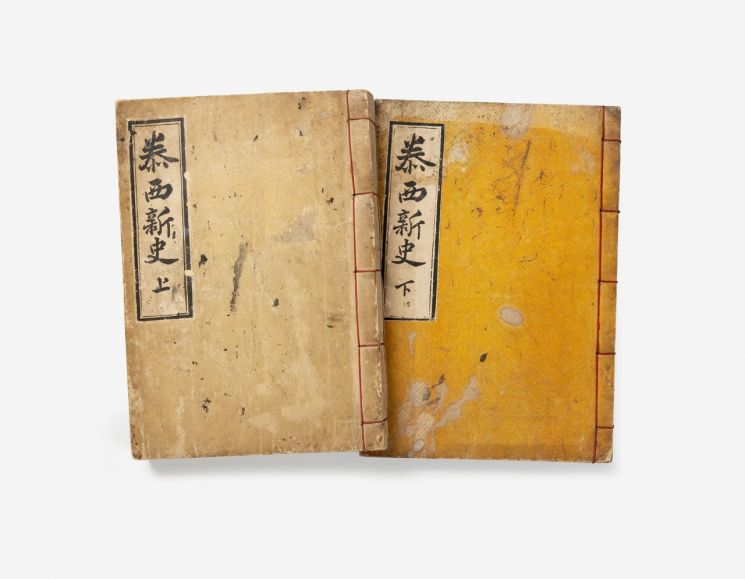
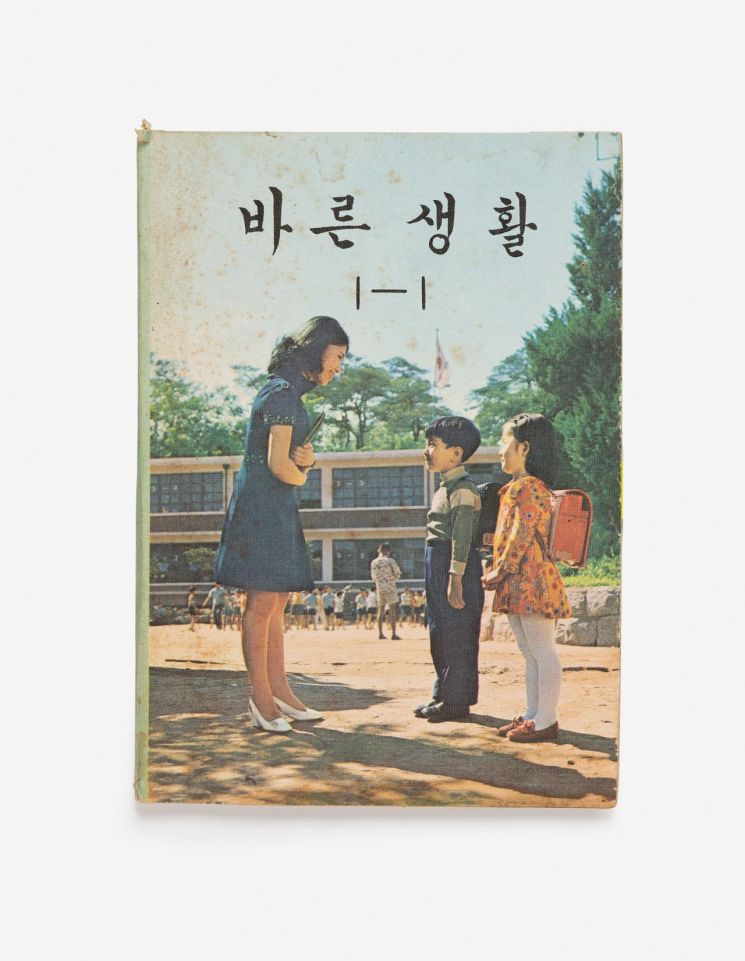
[Asia Economy Reporter Jongil Park] Songpa-gu (Mayor Park Seong-su) will hold the exhibition "Textbooks, Our Stories (Subtitle: The Compass of 130 Years of Korean Education)" from March 9 to August 31 at the 2nd-floor special exhibition hall of the Songpa Book Museum.
This exhibition retraces the 130-year history of Korean education from the late Joseon Dynasty to the present through over 150 items including textbooks, photographs, and videos.
Korean textbooks have served as a compass that preserved national identity and guided the direction of education even during times of national crisis. The exhibition is organized to allow visitors to explore the flow of Korean education by era.
Part 1 (Late Joseon to Korean Empire 1895-1910) "Modern Education Begins to Sprout" showcases the early forms of modern schools along with modern national textbooks such as "Taeseo Sinsa" and "Daehan Jiji."
Part 2 (Japanese Colonial Period 1910-1945) "The Ordeal of National Education" presents the education of the Korean language through "Joseoneo Dokbon" and Japanese through "Kokugo Dokbon," highlighting the era's focus on vocational education.
Additionally, visitors can listen to the country's first recorded Korean language textbook, "Joseoneo Dokbon, 1935," directly.
Part 3 (Curriculum Outline Period 1945-1954) "Hope Blossoms Amid Ruins" introduces the passionate educational efforts to reclaim the Korean language and spirit after liberation through textbooks and interview videos.
It features the first national elementary school Korean language textbook after the establishment of the government, "Badugi and Cheolsu (Korean 1-1)," and the "History Textbook" published in 1946.
Part 4 (1st-2nd Curriculum 1954-1973) "A Dragon Rises from a Stream" covers social issues of the time such as fierce entrance exam competition for prestigious middle and high schools despite post-war hardships, skyrocketing textbook prices, and heavy school bags that hindered children's growth.
Part 5 (3rd-4th Curriculum 1973-1987) "National Development Through Education" introduces the era's characteristics including the National Education Charter, strengthened anti-communist and moral education, and the overheating of private tutoring.
Part 6 (5th-6th Curriculum 1987-1997) "Drawing the 21st Century" allows visitors to see educational changes at a glance through textbooks such as "Speaking and Listening," "Reading," "Writing," and "Mathematics Workbook," which introduced the one-subject multiple-textbook system.
"Textbooks, Our Stories" is scheduled to open at 3 p.m. on the 9th and can be viewed free of charge from Tuesday to Sunday, 10 a.m. to 6 p.m.
Notably, this exhibition offers free audio guides through Naver Audio Clip. The audio guide recording features Korea's star history lecturer "Keunbyeolssaem" Choi Tae-sung, adding special appeal.
Park Seong-su, Mayor of Songpa-gu, stated, "Textbooks have been a beacon that preserved national identity during difficult times, illuminated the darkness, and guided us toward the right path. Through this exhibition, we hope to evoke nostalgia among generations who experienced those times and provide a valuable educational experience for today's generations who did not."
© The Asia Business Daily(www.asiae.co.kr). All rights reserved.
![Clutching a Stolen Dior Bag, Saying "I Hate Being Poor but Real"... The Grotesque Con of a "Human Knockoff" [Slate]](https://cwcontent.asiae.co.kr/asiaresize/183/2026021902243444107_1771435474.jpg)
















