LG Proposed to Resume Negotiations First, but SK Did Not Respond
SK Requests Veto Power Relying on US Electric Vehicle and Battery Industry Support
[Asia Economy Reporter Choi Dae-yeol] LG Energy Solution stated that about a month has passed since the U.S. International Trade Commission (ITC) issued its final ruling on the electric vehicle battery trade secret infringement case last month, but SK Innovation has shown no intention to negotiate so far.
Although LG did not disclose the amount of settlement they consider appropriate internally, they acknowledged that the multi-trillion won difference currently being discussed in the market is accurate. LG pointed out that they have invested over 5 trillion won in research and development (R&D) over the past 10 years, and considering that other cases with much smaller market sizes and damages have resulted in settlements worth several hundred billion won, SK should propose a settlement amount commensurate with that.
During a conference call with reporters on the 5th, Han Woong-jae, head of LG Energy Solution’s legal office, said, "Since the ITC’s final decision on the 10th of last month, we have not received any contact." Jang Seung-se, Executive Vice President of the company’s Business Strategy Division, also said, "We have repeatedly said that the door to negotiation is open and (LG) even proposed to SK to resume negotiations first, but there has been no response for over a month."
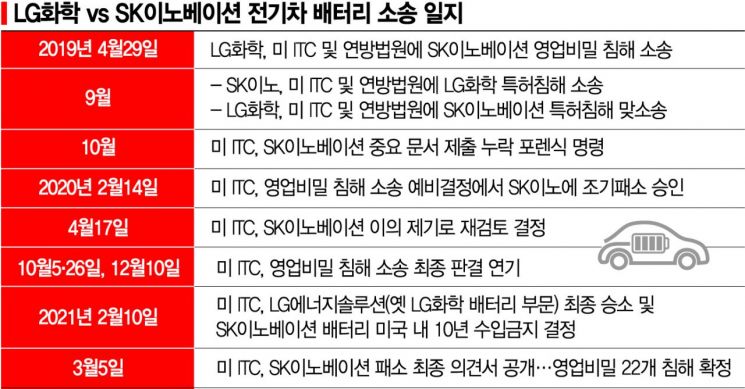
Earlier, the ITC mostly accepted LG’s claims in the lawsuit alleging that SK infringed on LG’s trade secrets and poached personnel, and decided to impose a 10-year import ban on SK batteries. This will take effect after the 60-day presidential review period.
If the two companies reach a settlement during this period, the issue will be nullified. Since SK, which is building a large-scale factory in the U.S., would effectively have to cease operations if imports are banned for 10 years, there were many expectations that the two companies would negotiate a settlement after the ITC ruling. However, it is said that no behind-the-scenes negotiations have taken place. SK is hoping that U.S. President Joe Biden will exercise his veto power, citing the need to promote the electric vehicle and battery industries in the U.S.
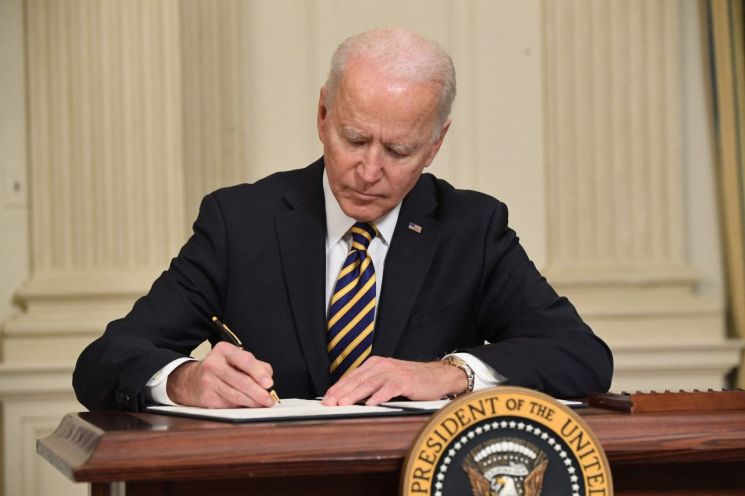 U.S. President Joe Biden signed an executive order at the White House on the 24th of last month (local time) to review the supply chain status of critical industrial items. President Biden ordered a 100-day review of the supply chains for four key items that revealed structural issues in supply and demand: semiconductor chips, large-capacity batteries for electric vehicles, rare earth elements, and pharmaceuticals. <이미지:연합뉴스>
U.S. ITC Final Ruling Last Month, Negotiations Yet to Resume
Gap in Perception of Multi-Trillion Won Settlement Amount Remains
LG has not specifically disclosed the settlement amount they are proposing. It is known in the market that LG is asking for a multi-trillion won figure, while SK is proposing several hundred billion won, and LG did not deny these rumors. They believe that for the settlement between the two companies to progress, the total settlement amount needs to come closer.
Han said, "The cost spent on R&D over the past 10 years is 5.3 trillion won, and including facility investments, it approaches 20 trillion won," adding, "Based on the ITC ruling, it is inferred that SK stole trade secrets and gained unfair benefits by saving more than 5 trillion won in R&D alone."
He also referred to a ruling by the U.S. ITC in a domestic dispute between companies over botulinum toxin products, commonly known as Botox. The conflict between Daewoong Pharmaceutical and Medytox over strain theft escalated to the U.S., and after the ITC ruling, the companies settled by exchanging settlement money, royalties, and in-kind assets (partner company shares).
Executive Vice President Jang said, "The market size of Botox is less than one-tenth that of electric vehicle batteries, yet the settlement amount was around 400 billion won in that case," adding, "Although the import ban lasted only about 21 months, royalties were paid for 11 years. Considering this, it can give us an idea of what an appropriate compensation level might be in the LG-SK lawsuit."
© The Asia Business Daily(www.asiae.co.kr). All rights reserved.



















