"Do Not Lie Down for Brain Tumor Surgery and Operate on the Wrong Limb"
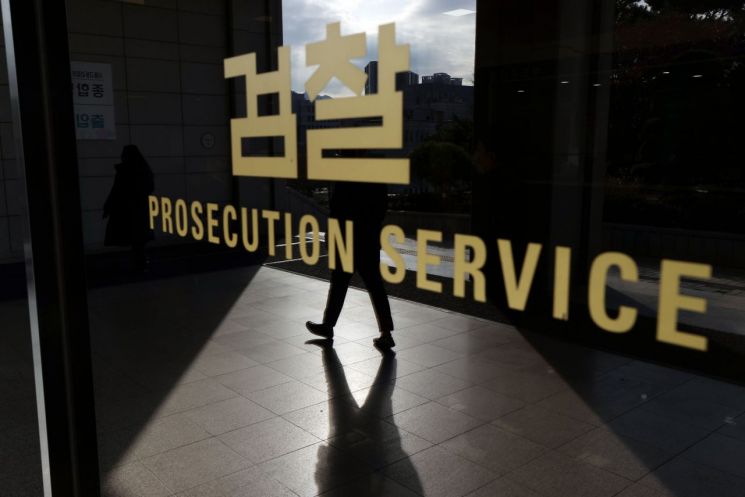
[Asia Economy Reporter Choi Seok-jin] Amid the resignation of Prosecutor General Yoon Seok-yeol on the 4th in opposition to the ruling party's push to establish the Serious Crime Investigation Agency (Jungsucheong) for the 'separation of investigation and prosecution,' a current prosecutor claimed that in practice, 80-90% of cases already have investigation and prosecution separated. The prosecutor also argued that the prosecution's authority to direct investigations, which was abolished due to the adjustment of investigative rights between the police and prosecution, should be restored.
According to the legal community on the 5th, Prosecutor Jang Jin-young of the Cheonan Branch of Daejeon District Prosecutors' Office made this claim in a post titled 'The Identity and Direction of the Prosecution' on the internal prosecution network the day before.
At the beginning of the post, Prosecutor Jang stated, "Although the Prosecutor General has resigned, the prosecution is still performing its original duties and must continue to do so," and explained the background of posting the article by saying, "Rather, I thought it might be good to frankly consider the direction of the prosecution's identity together with the members of the prosecution at this time."
He added, "If the identity and direction of the prosecution are determined, it might be possible to respond more firmly and consistently to prosecution reform more efficiently."
Prosecutor Jang first said, "Regarding the prosecution's main role of investigation, the recent new criminal justice system grants the prosecution judicial control over the police's primary investigations and a secondary supplementary investigation function, and limits the prosecution's direct investigation areas by law."
He said, "Along with the issue of the prosecution's identity, the separation of investigation and prosecution is being debated, and it seems that the majority within the prosecution believe that investigation and prosecution cannot be separated," and questioned, "Is it really impossible to separate investigation and prosecution?"
Prosecutor Jang said, "Putting aside theoretical issues of investigation concepts and based on practical work, the prosecution's main roles can be divided into two types: first, cases transferred by the police, and second, direct investigations initiated by the prosecution independently of the police," and added, "From the perspective of an ordinary frontline prosecutor with about 15 years of experience, these two types of cases cannot be discussed under the same standards regarding investigation, prosecution separation, or the prosecution's identity."
Prosecutor Jang expressed regret about why most media and the public focus only on the prosecution's direct investigation cases in discussions about prosecution reform.
He pointed out, "Most of the cases reported daily in the media are 'prosecution direct investigation cases,' but 80-90% of the cases handled by the prosecution are 'police transferred cases,' which are directly related to the public's human rights and livelihood, and are handled by the vast majority of prosecutors (I think about 90% of all prosecutors)."
He continued, "What puzzles me is why the media and most of the public show little interest in prosecution reform measures related to police transferred cases, which are directly connected to the public's livelihood and human rights and constitute 80-90% of prosecution work, while showing great interest in prosecution direct investigation cases, which seem less directly related to livelihood."
Prosecutor Jang argued, "In fact, in 'police transferred cases,' investigation (in terms of initiation and primary investigation completion before transfer?of course, supplementary investigation by the prosecution is still possible under current law), prosecution, and trial maintenance work can be considered somewhat separated, and practically this cannot be denied."
He questioned, "Then why are investigation, prosecution, and trial maintenance separated in 'police transferred cases'?" and said, "First, the separation of the main investigation (i.e., initiation and primary investigation before transfer) and prosecution is probably because the police, who have much more personnel and are closer to the public, can respond quickly at the early stage of investigation, which is efficient."
He added, "On the other hand, regarding legal and evidentiary deficiencies that may be missed in the primary investigation, prosecutors as quasi-judicial officers decide whether to prosecute through investigation direction (which no longer exists) and supplementary investigation, and also play a role in judicial control over the primary investigative agency, which is close to the public and has many personnel, where concerns about abuse of public authority persist. This is efficient from the perspective of human rights protection and judicial procedures."
Prosecutor Jang said, "Prosecution and trial maintenance are also efficiently separated in police transferred cases," and asked, "Isn't that why there are separate trial prosecutors for maintaining prosecution in police transferred cases as is currently done?"
He emphasized, "In general criminal cases or transferred cases, unless there are special circumstances, investigation, prosecution, and trial maintenance can be separated, and this is not only possible but also efficient without hindering swift judicial procedures and judicial justice."
Prosecutor Jang also revealed his conviction that the prosecution's role in police transferred cases, which account for 80-90% of all cases, is judicial control and human rights advocacy rather than investigation.
He asked, "Then what is the prosecution's identity in police transferred cases?" and stated, "According to the purpose of the amended law, the legislature seems to require the prosecution to play a role as an institution of judicial control and human rights advocacy in an objective position rather than actively and directly conducting investigations in handling general criminal cases."
He continued, "Unlike prosecution direct investigation cases, in police transferred cases where judicial control over the police's primary investigation is the main role, it seems self-contradictory for prosecutors to try to conduct both human rights advocacy and actively lead and perform substantive investigative acts, which could be invasive."
Prosecutor Jang emphasized, "In other words, regarding police transferred cases, the prosecutor's main role is as an institution of judicial control and human rights advocacy, and therefore direct investigative acts should be conducted only in a supplementary manner for judicial control over the police and for deciding whether to prosecute, which is the true role of the prosecution as an objective human rights protection institution."
He added, "Forgetting or neglecting the main role as an institution of judicial control and human rights advocacy in police transferred cases and trying to take the lead in active investigative acts that may increase coercive investigation or human rights violations beyond efforts to ascertain the facts of the case seems self-contradictory."
While pointing out the impropriety of prosecutors taking the lead in investigations in police transferred cases, Prosecutor Jang strongly emphasized the necessity of investigation direction and supplementary investigation over the police.
He introduced a case last year where the Cheonan Branch directed the police investigation from the police stage in a child abuse death case transferred by the police, conducted supplementary investigation during the 20-day detention period after transfer, and eventually prosecuted for murder, resulting in a guilty verdict up to the appellate court.
Prosecutor Jang said, "In that case, without the prosecution's investigation direction, initial involvement, and supplementary investigation, it would have been practically difficult to prove and punish the suspect for murder within the legally limited detention period," and expressed concern, "It is clear that under the current judicial system where investigation direction has been abolished, and if supplementary investigation is also eliminated in the future, it will become even more difficult."
He also rebutted claims that prosecution's investigation direction or involvement causes human rights violations or other harms.
Prosecutor Jang said, "Rather, I thought that without the prosecution's direction and supplementary investigation, it would have been difficult to thoroughly prove the suspect's crime and maintain prosecution, and thus the victims and their families would not have been properly vindicated. I have seen countless cases where parties actively requested supplementary investigation from the prosecution, but I have rarely seen parties protesting or opposing supplementary investigation by the prosecution."
He said, "Although it is in the past, I still cannot understand why investigation direction by the prosecution was abolished," and pointed out, "Now, even if there is a serious crime at the early stage of police investigation, investigation direction or involvement is practically difficult, and if the prosecution's supplementary investigation function is also blocked, the damage and human rights violations suffered by the public will obviously increase."
He added, "Especially in serious detention cases among police transferred cases, if the prosecution's direction or involvement is blocked from the beginning due to the short legal detention period, difficulties in evidence collection and neglect of complex legal review will inevitably cause harm to the public."
Prosecutor Jang said, "In general criminal cases, judicial control over the police, which has primary investigative authority, is the prosecution's main role, and for this, investigation direction and supplementary investigation by the prosecution are essential. I do not understand what harm these elements cause to the public, why investigation direction that provides much greater human rights protection and judicial benefits to the public was abolished, and furthermore, why a new Public Prosecution Office Act is being created to abolish the supplementary investigation function as well. If the goal is truly to protect the public's human rights and judicial justice, restoring investigation direction and maintaining the supplementary investigation function are indispensable," he reiterated.
He added, "I understand that legislation is very cautious and based on long research, so I was discouraged thinking that once investigation direction is lost, it will never be restored. But seeing how quickly laws like the Jungsucheong Act and Public Prosecution Office Act are being made, I hope that a bill to restore investigation direction, which is essential for protecting the public's human rights, can be made even faster," expressing a somewhat ironic hope.
Prosecutor Jang then emphasized the necessity of direct prosecution investigation.
He said, "As mentioned, in police transferred cases, the police have primary investigative authority, and the prosecution performs judicial control through supplementary investigation or reviewing police warrant applications, so even if investigation, prosecution, and trial maintenance are separated, there is little disruption to work and it can even be efficient."
He questioned, "But what about so-called serious crimes left as direct investigation areas for the prosecution under the amended law, such as corruption crimes, economic crimes, public official crimes, election crimes, defense business crimes, and major disasters?"
He asked, "In specialized fields like large corporate accounting fraud or cases requiring rapid response by legal experts due to serious large-scale disaster damage, does separating investigation, prosecution, and trial maintenance align with judicial justice and procedural efficiency?"
Prosecutor Jang said, "First, these cases require expertise, and investigation records alone can reach thousands or tens of thousands of pages. I've even heard it described as several truckloads of documents. Honestly, as someone who graduated from law school without special expertise, I am not confident I could handle such serious crime investigations well. It would take months just to learn specialized financial terminology, and I don't know when I could start investigating."
He said, "However, in financial crime cases, some prosecutors have accounting qualifications or related majors and possess expertise, and many of these prosecutors have been in charge of related investigation fields," and pointed out, "If specialized prosecutors conduct investigations and then prosecutors lacking expertise or not involved in the investigation take over to understand the case, it could take months, and then another trial prosecutor reviewing the records could take additional months."
He added, "I wonder if proper judicial response would have been possible if investigation, prosecution, and trial maintenance were separated in Sewol ferry-related cases, major disaster cases, or large corporate financial crime investigations, and I question whether such separation would bring any judicial justice or procedural efficiency."
Prosecutor Jang said, "Therefore, worldwide, due to reflections on insufficient coordinated response and lack of expertise in serious crime investigations, the trend is moving toward closely integrated investigation, prosecution, and trial maintenance," and emphasized, "In line with this, the amended criminal procedure law currently in effect grants direct investigation authority to the prosecution, which is a quasi-judicial institution with expertise, in serious crime investigation fields so that investigation, prosecution, and trial maintenance can be conducted closely and organically."
Prosecutor Jang expressed regret over Prosecutor General Yoon Seok-yeol's resignation the day before in opposition to the ruling party's push to establish the Jungsucheong.
He said, "The political neutrality and independence, which were the starting point and core issues of prosecution reform, suddenly disappeared, and as a result of the current Prosecutor General showing a will for proper political independence and neutrality to an extent that seemed excessive, ironically, instead of encouragement or rewards, absurd bills to abolish the prosecution office and establish the Jungsucheong were even proposed."
At the end of the post, Prosecutor Jang made a plea titled 'A Complaint to Some People,' saying, "If you diagnosed a brain tumor (political neutrality or independence issue) and said you would perform brain tumor surgery, you should perform that surgery. Please stop performing surgery on the wrong arms and legs (attempts to abolish investigation direction and supplementary investigation functions of general criminal prosecutors)."
He added, "Lying on the operating table with a brain tumor diagnosis but only talking about arms and legs, neither the patient nor those around them realize they are dying from a brain tumor and are brainwashed into thinking the problem is really with the arms and legs."
He concluded, "The prosecution is also part of a state institution that exists for the people and the country, so I hope you remove the problematic brain tumor and restore the wrongly operated arms and legs to complete proper prosecution reform by preparing political neutrality measures and practical judicial control measures through restoring investigation direction."
© The Asia Business Daily(www.asiae.co.kr). All rights reserved.

















