Saudi Arabia, "Production Cuts Continue in April" Amid Supply Shortage Concerns
Saudi Leads Oil Output Freeze...Encouragement Before Meeting
Impact of Biden Administration and Crown Prince Bin Salman's Confrontation
[Asia Economy Reporter Hyunwoo Lee] Contrary to market expectations, international oil prices surged following the news that OPEC+ (Organization of the Petroleum Exporting Countries and major oil-producing countries) decided to freeze oil production. Saudi Arabia announced it would continue its production cuts next month, leading the Arab League countries in maintaining the freeze, which significantly heightened concerns about supply shortages. Some speculate that recent tensions between the U.S. Biden administration and the Saudi royal family influenced Saudi Arabia's decision to lead the production freeze.
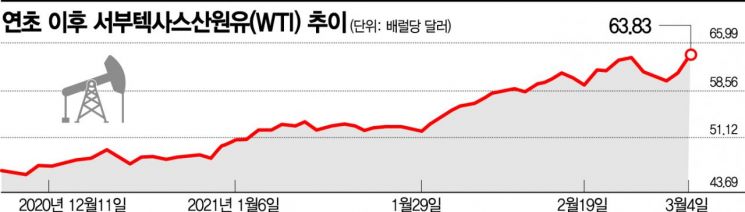
According to foreign media including Bloomberg, on the 4th (local time) at the New York Mercantile Exchange (NYMEX), the price of April West Texas Intermediate (WTI) crude oil soared by $2.55 per barrel (4.2%) from the previous day to $63.83. This is the highest WTI price since April 25, 2019, when it reached $65.21.
The sharp rise began after the OPEC+ ministerial meeting announced during the trading session that major oil-producing countries would freeze production next month at the same level as this month. Earlier, on the day the OPEC+ technical committee meeting started on the 2nd, news had emerged that major oil producers were considering increasing daily production by more than 500,000 barrels, which had pushed WTI prices below the $60 mark.
The international oil market was also dominated by expectations of increased production. According to CNBC, Saudi Arabia had announced before the OPEC+ meeting that it would stop its current daily production cut of 1 million barrels starting in April, and there was a prevailing outlook that oil-producing countries would ramp up production due to global COVID-19 vaccinations and slowing spread, which would increase oil demand.
However, the actual outcome of the OPEC+ meeting defied market expectations. Saudi Arabia, which had said it would stop production cuts, announced it would continue them in April. Saudi Energy Minister Abdulaziz bin Salman, who attended the meeting, stated, "We will continue our voluntary production cut of 1 million barrels per day in April," adding, "We will gradually reduce the cuts in the future, but we will not rush."
When other Arab countries also announced they would freeze production at the same level as this month, concerns about supply shortages intensified, causing WTI prices to surge. According to CNBC, before the meeting, Minister Abdulaziz met with ministers from Arab countries and reportedly encouraged them to "view the situation very cautiously and maintain the current levels."
While Saudi Arabia's leadership in freezing production is mainly interpreted as an effort to strengthen its influence over international oil price decisions, some speculate that recent conflicts between the Biden administration and the Saudi royal family also played a significant role. Oil industry media OilPrice.com reported, "Saudi Arabia had already warned since last month that any decision to increase production could be reversed," and suggested that "recent discussions about sanctions against Crown Prince Mohammed bin Salman by the U.S. government may have influenced the decision."
© The Asia Business Daily(www.asiae.co.kr). All rights reserved.
![Clutching a Stolen Dior Bag, Saying "I Hate Being Poor but Real"... The Grotesque Con of a "Human Knockoff" [Slate]](https://cwcontent.asiae.co.kr/asiaresize/183/2026021902243444107_1771435474.jpg)
















