Prompt revision needed for legislative cases not aligned with the purpose of the law amendment
[Asia Economy Honam Reporting Headquarters Reporter Lee Hyung-kwon] The Public Housing Special Act, which was proposed and amended last December, includes a provision that if a tenant loses their qualification as a priority purchase candidate during the sale conversion process of a 5-year public rental housing, the rental business operator must sell it at the priority purchase price even if selling to a third party instead of the tenant.
The main cause of many complaints regarding the sale conversion of public rental housing is that when existing tenants lose their priority purchase qualification, rental business operators could sell to third parties at general sale prices much higher than the priority purchase price.
Conflicts between rental business operators and tenants have intensified over the screening process for ineligible households, who can be sold to at prices much higher than the sale price supplied to priority purchase households.
In other words, since general sales can only be made if many ineligible households who cannot receive priority purchase emerge, some rental business operators aiming for market price gains have deliberately made the qualification criteria for priority purchase candidates stricter or revoked them repeatedly, prompting the push for a legislative amendment to fundamentally block this.
Accordingly, the law was amended so that sales to third parties must also be made at or below the priority purchase price, with the legislative intent that rental business operators' abuses against tenants would be eliminated by requiring that remaining housing units sold to third parties after the priority sale conversion be sold at prices not exceeding the priority sale conversion price.
However, contrary to the legislative intent, criticisms have been raised that the amendment lacks practicality.
It is pointed out that the reality, where anxious public rental housing tenants hope for an early sale conversion amid soaring apartment sale prices, has become more distant.
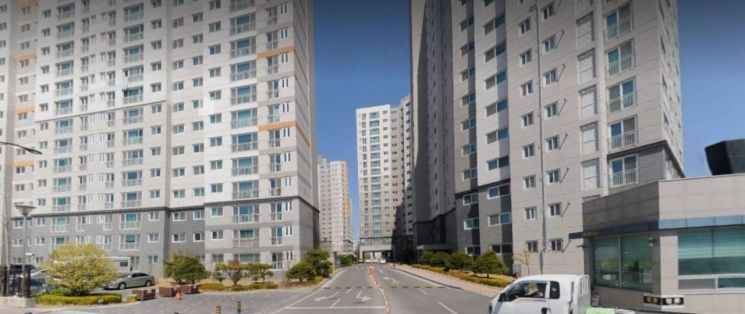
Recently, Songbo Apartment in Yeonhyang-dong, Suncheon City, Jeollanam-do, has become the focal point of discussion due to the amended Public Housing Special Act during its sale conversion process.
Among the 757 tenant households in Songbo Apartment, 529 priority purchase tenant households can receive sale conversion at 226 million KRW.
Considering that recent apartment sale prices in Suncheon have reached the 400 million KRW range, priority purchase tenant A said, "I feel like I won the lottery."
On the other hand, the 228 households classified as ineligible must purchase the apartment at 334 million KRW even after a special discount of 15 million KRW from the general supply price of 349 million KRW, which is 108 million KRW higher than the priority purchase households.
From the perspective of ineligible households, the large price gap with priority purchase households inevitably leads to dissatisfaction regarding the ineligibility screening, interpretation of the Public Housing Special Act, and the implementation date.
According to the emergency countermeasure committee composed mainly of ineligible households and media reports, there is a claim that the amended Public Housing Special Act should be applied retroactively so that the priority purchase price and the general supply price for sales to third parties are the same.
In this case, the rental business operator, Songbo Pineville Co., Ltd., would need to invest an additional 35 million KRW per household, totaling 26.5 billion KRW, for the sale conversion.
After deducting the tenant deposit of 189 million KRW from the sale conversion price of 226 million KRW, a balance of 37 million KRW remains, totaling 28 billion KRW for all 757 households.
However, the Housing and Urban Fund that the rental business operator must repay amounts to 72 million KRW per household, totaling 54.5 billion KRW, requiring an additional 26.5 billion KRW in funds.
Therefore, the claim by the emergency committee and some media that "Suncheon City approved general supply sales, causing a 30 billion KRW loss to tenants and only benefiting the rental business operator" is argued to be far from reality.
In other words, telling Songbo Pineville Co., Ltd. to provide 26.5 billion KRW and proceed with the sale conversion is equivalent to telling them not to do the sale conversion at all.
It is common sense that rental business operators will not spend hundreds of billions of KRW to carry out sale conversions, and there is concern that the Public Housing Special Act, contrary to its legislative intent, could become an obstacle for public rental housing approaching sale conversion.
Accordingly, experts analyze that the expectations of residents in the Ocheon District of Suncheon City, mostly composed of rental apartments awaiting sale conversion, are becoming more distant.
In the case of J Apartment in Ocheon District, adding the rental deposit of 175 million KRW and the fund loan of 90 million KRW taken by the rental business operator results in 265 million KRW per household.
If the priority sale conversion price is up to 265 million KRW, there is no financial burden on the rental business operator, but if it is 226 million KRW like Songbo Apartment, an additional 39 million KRW per household must be raised for sale conversion, which could lead to higher priority sale prices or delayed sale conversions.
Therefore, it is pointed out that a prompt legislative amendment is necessary to resolve this issue, which is expanding nationwide.
Meanwhile, there is a conflict between Suncheon City and the emergency committee over the interpretation of the special provision on priority sales in the supplementary provisions of the Public Housing Special Act, which states, "This law also applies to public rental housing whose sale conversion was not completed at the time of enforcement."
The emergency committee argues that since the law was amended on December 22 last year and general supply approval was granted on January 15 this year, it falls under cases occurring before the amendment and enforcement, so retroactive application under Article 8 of the supplementary provisions applies, and supply should be at the priority sale conversion price.
On the other hand, Suncheon City claims that since the priority sale conversion was approved on December 18 last year before the law amendment and the law came into effect on March 23 this year, it is appropriate to apply the previous rental housing law, not retroactively.
Meanwhile, priority purchase households, who have only the ownership transfer left after paying the additional balance of 37 million KRW, are cautious amid the escalating conflict.
Priority purchase tenant A said, "Even if the emergency committee's claim is correct, which company would invest 26.5 billion KRW to carry out the sale conversion? If the rental company goes bankrupt, the damage will fall entirely on us."
Real estate expert B said, "Unlike the good legislative intent, the problem arose due to a lack of expertise during the amendment process, and the overall legislative process is regrettable," adding, "The issues must be resolved quickly to prevent nationwide spread."
© The Asia Business Daily(www.asiae.co.kr). All rights reserved.
![Clutching a Stolen Dior Bag, Saying "I Hate Being Poor but Real"... The Grotesque Con of a "Human Knockoff" [Slate]](https://cwcontent.asiae.co.kr/asiaresize/183/2026021902243444107_1771435474.jpg)











