White House "No precedent for sanctioning allied leaders"
UN "Sets bad precedent by not holding accountable for human rights abuses"
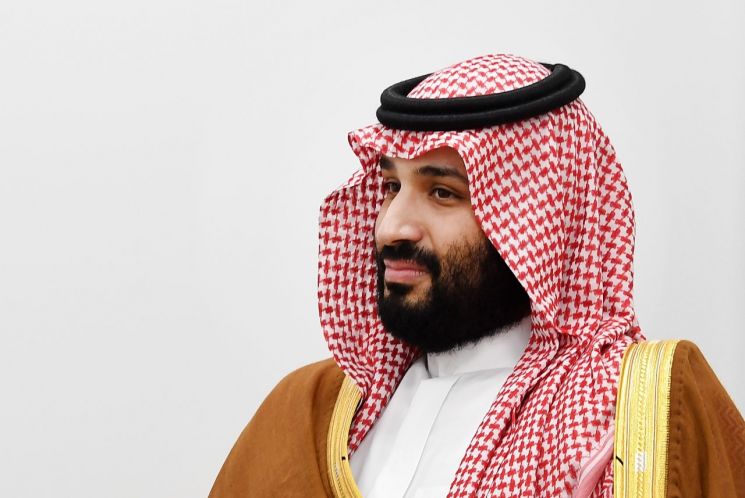
[Asia Economy Reporter Kim Suhwan] U.S. President Joe Biden has decided not to sanction Saudi Crown Prince Mohammed bin Salman, who is reportedly responsible for ordering the assassination of Saudi dissident journalist Jamal Khashoggi. This decision has sparked criticism from various sectors, including the UN, raising questions about Biden's diplomatic capabilities.
On the 1st (local time), according to major foreign media, White House Press Secretary Jen Psaki responded to reporters' questions about whether the U.S. has the authority to sanction Crown Prince bin Salman by saying, "There is no precedent for directly sanctioning the leader of a country allied with the United States." She added, "We are closely examining human rights abuses by the Saudi government" and "We are currently in close communication with Saudi Arabia to ensure such issues do not recur."
Ned Price, spokesperson for the U.S. State Department, also stated that "structural issues related to the assassination of Khashoggi are currently being analyzed" and that "policy efforts will be focused on preventing future inhumane acts within Saudi Arabia." He further added that the U.S. has demanded institutional reforms from Saudi Arabia, including disbanding the Rapid Intervention Force, an elite unit of the Saudi royal family, and halting the suppression of dissidents.
Earlier, on the 26th of last month, a report from the U.S. Director of National Intelligence (DNI) was released, revealing Crown Prince bin Salman's involvement in Khashoggi's assassination. Immediately after the report's release, the U.S. State Department imposed sanctions such as visa restrictions on 76 Saudi individuals.
However, Crown Prince bin Salman was reportedly excluded from the sanctions. This contrasts with President Biden's earlier stance before last year's election, where he expressed his intention to hold bin Salman accountable and punish him for the Khashoggi incident. It is interpreted that a compromise was reached to avoid deteriorating diplomatic relations with Saudi Arabia, a key U.S. ally in the Middle East, should the crown prince be directly sanctioned.
This decision has triggered critical voices from various sectors within the U.S. Senator Bob Menendez, chairman of the Senate Foreign Relations Committee, criticized, "Not sanctioning bin Salman is tantamount to effectively condoning inhumane acts by dictators worldwide." Adam Schiff, chairman of the House Intelligence Committee, also pointed out, "It is difficult to understand not sanctioning the main orchestrator who ordered the assassination."
The New Yorker reported, "President Biden has turned his back on the value of human rights protection that he promised himself," adding that "this has left numerous human rights organizations and diplomatic experts bewildered." The New York Times (NYT) evaluated the decision as "effectively letting the murderer go free."
The United Nations also joined the chorus of criticism against the U.S. government. Agnes Callamard, UN Special Rapporteur who led the investigation into the Khashoggi case, called the Biden administration's decision "a very dangerous move," criticizing that "it sets a bad precedent of not holding national leaders accountable for inhumane acts."
Meanwhile, Saudi Arabia has rejected the U.S. intelligence report implicating the crown prince in Khashoggi's assassination, stating there is "no clear evidence" of his responsibility. The Saudi ambassador to the UN tweeted that "the report only raises suspicions" and that "Crown Prince bin Salman has already punished all parties involved in this case." Last year, bin Salman ordered an investigation into the Khashoggi assassination and detained eight Saudi nationals suspected of involvement.
Jamal Khashoggi, a prominent Saudi dissident journalist and persistent critic of Crown Prince bin Salman, was killed in October 2018 after entering the Saudi consulate in Istanbul, Turkey. Since then, the international community has pointed to bin Salman as the mastermind behind the murder, but the Saudi government has strongly denied these allegations.
© The Asia Business Daily(www.asiae.co.kr). All rights reserved.
![Clutching a Stolen Dior Bag, Saying "I Hate Being Poor but Real"... The Grotesque Con of a "Human Knockoff" [Slate]](https://cwcontent.asiae.co.kr/asiaresize/183/2026021902243444107_1771435474.jpg)















