[Asia Economy Reporter Kim Hyewon] The POSCO Cheongam Foundation announced on the 2nd that this year's POSCO Cheongam Award recipients are Professor Baek Muhyun of the Department of Chemistry at KAIST for the Science Award, Yongnam Middle School in Sacheon, Gyeongnam for the Education Award, the nonprofit organization Child Welfare Practice Association Seum for the Service Award, and CEO Jeong Han of i3system Co., Ltd. for the Technology Award.
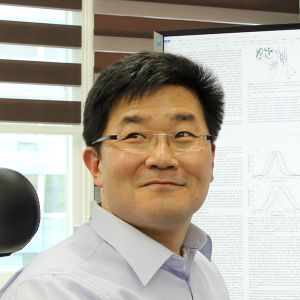
Professor Baek, the Science Award recipient (Deputy Director of IBS Research Group), is a chemist who elucidated the reaction principles of chemical reactions mediated by transition metal catalysts and established principles enabling the development of better catalysts. He is particularly recognized as a pioneer of transformative research that demonstrated the ability to predict and design chemical reactions using computers and theoretical/computational chemistry methods.
In 2016, he predicted catalyst candidate materials capable of activating methane gas through computational chemistry, and last year, he proposed the possibility of a 'universal functional group' that can freely control atomic groups determining the electrical properties of organic compounds by utilizing minute voltage differences. The universal functional group research is regarded as an achievement that can replace existing paradigms, and it is expected that the ripple effect will be significant if future research results are applied to the chemical industry.
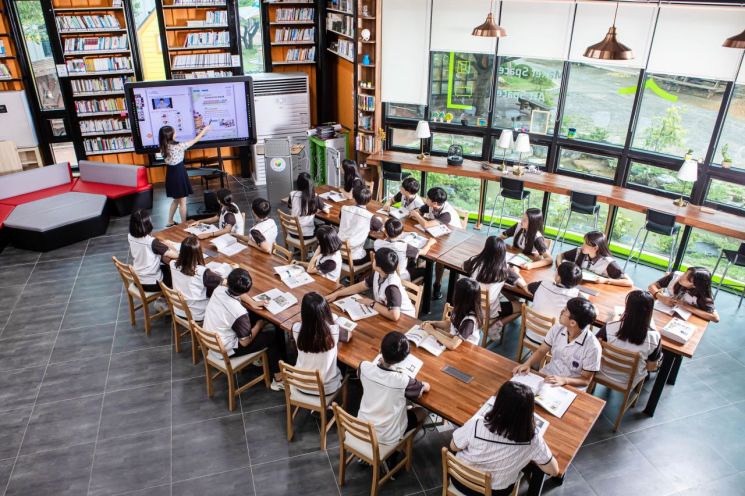
The Education Award recipient, Yongnam Middle School in Sacheon, Gyeongnam, faced the risk of closure due to a sharp decline in student numbers caused by population decrease in Sacheon City until 2011. However, teachers took the lead in driving innovation, and with participation and support from students, parents, and local governments, they succeeded in innovating educational spaces, transforming the school into an innovation school attracting attention in Korea's education sector.
Teachers remodeled the teachers' office into a caf?-style space, marking a turning point in the culture of teachers' offices in Korea. They provided students with complete spaces such as 'Chaeumtteul,' a rest and play area, and 'Jihyesaem,' a cultural and educational complex space. They also introduced interactive digital classes in response to the COVID-19 era, presenting a successful future model for rural schools, which was highly praised.
The Service Award recipient, the nonprofit organization Child Welfare Practice Association Seum, was established in 2015 as the first in Korea to support a "world where children of incarcerated parents live with dignity" from the perspective of children's rights. It was highly evaluated for building a sustainable integrated support platform that pursues not only support activities for the daily lives of children of incarcerated parents and their families but also changes in social structures and systems.
Since its establishment, it has provided basic support such as emergency living expenses, daily necessities, and medical treatment fees to ensure children of incarcerated parents can live properly, continuous academic progress through scholarship support, and various mentoring programs. It has consistently practiced family-integrated support activities caring for families beyond just children of incarcerated parents. Additionally, it has played a leading role in policy changes advocating for the rights of children of incarcerated parents through expanding family visitation rights, strengthening protection of children’s rights, and social awareness improvement activities.
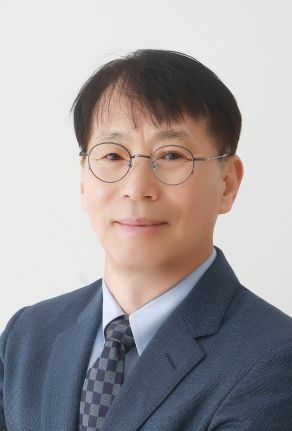 Jeonghan, CEO of i3System
Technology Award recipient CEO Jeong is a first-generation researcher in Korea's infrared image sensor field, dedicating over 30 years solely to developing infrared image sensors. After earning his doctorate at KAIST, he founded a company in 1998 and accelerated the development of infrared image sensors, playing a key role in Korea becoming the seventh country in the world to mass-produce infrared image sensors.
The infrared image sensors developed and mass-produced for the first time domestically by CEO Jeong are used to identify objects in dark spaces and have high demand in national strategic fields such as defense, space, and medical sectors. Particularly, the recently developed 12㎛ ultra-small infrared image sensor using proprietary technology is an essential component for autonomous vehicles commercially available only in the United States worldwide. This successful development of proprietary technology is evaluated as laying the foundation for Korea to advance as a technology-leading country in the infrared image sensor field.
The POSCO Cheongam Foundation was established in 2006 to contribute to national development by spreading public interest and participation in POSCO's founding philosophy of creativity, talent development, sacrifice, and service spirit, and has been leading the realization of "corporate citizenship growing together."
The POSCO Cheongam Award is presented in four categories: science, education, service, and technology, with a prize of 200 million KRW awarded in each category. This year's award ceremony is scheduled to be held on April 6 at the Art Hall on the 4th floor of the West Tower of POSCO Center in Seoul. Due to the impact of COVID-19, the ceremony scale will be significantly reduced, and the entire ceremony will be broadcast live in real-time on the POSCO Cheongam Foundation's YouTube channel.
© The Asia Business Daily(www.asiae.co.kr). All rights reserved.
![Clutching a Stolen Dior Bag, Saying "I Hate Being Poor but Real"... The Grotesque Con of a "Human Knockoff" [Slate]](https://cwcontent.asiae.co.kr/asiaresize/183/2026021902243444107_1771435474.jpg)
















