January 5,689 Cases → February 1,463 Cases
Buying Sentiment Declined After 2·4 Measures... Loan Interest Rate Hike Also a Factor
However, Jeonse Crisis Persists, Short-Term Supply Shortage May Change Spring Situation
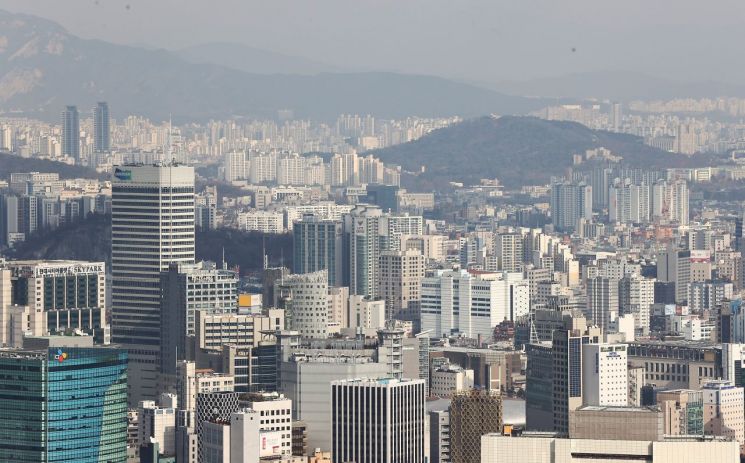
[Asia Economy Reporter Onyu Lim] The volume of apartment transactions in Seoul in February sharply declined compared to January. Following the government's self-praised 'supply shock' 2·4 measures announcement and the rise in loan interest rates, buyers appear to have adopted a wait-and-see stance. However, some point out that the situation could reverse during the spring moving season, as short-term supply and jeonse (long-term lease) inventory remain insufficient.
According to the Seoul Real Estate Information Plaza as of the 1st, the number of apartment sales transactions in Seoul for February was recorded at 1,463 cases. This represents a decrease of more than 74% compared to the previous month (5,689 cases). Compared to the same period last year (8,301 cases), it dropped by over 82%. Transactions for detached and multi-family houses (260 cases) as well as multi-unit and row houses (2,236 cases) also plunged to less than half of the previous month’s volume.
Since housing sales transactions must be reported within 30 days after contract signing, February statistics will be finalized at the end of March. However, judging by the current trend, the transaction volume is unlikely to increase significantly.
The decrease in Seoul housing sales volume is largely interpreted as a result of reduced buyer demand. According to the Korea Real Estate Board, the sales supply-demand index fell for two consecutive weeks from 111.9 on the 8th of last month to 109.8 on the 22nd. This ended a 17-week continuous upward trend. Although the index remains above 100, indicating that buyers still outnumber sellers, the upward momentum has slowed.
The rate of house price increases has also slightly decreased. The weekly rise in Seoul apartment prices was 0.1% as of the 1st of last month, just before the 2·4 measures announcement, but dropped to 0.08% by the 22nd.
The government interprets this as the 'effect of the 2·4 measures.' On the 26th of last month, Land, Infrastructure and Transport Minister Chang-Hum Byun said at a policy briefing, “Although it is still early to evaluate the effect of the measures, various indicators show that the previously overheated buying trend is generally shifting to a wait-and-see stance.”
There is also an opinion that the rise in interest rates for unsecured loans and mortgage loans since February has had an impact.
However, some caution that it is too early to draw conclusions, as in the past, housing price increases have temporarily slowed after government measures only to rebound later. Especially during the spring moving season, housing demand may increase. Given the shortage of jeonse supply and the high jeonse prices, there are concerns that jeonse demand could shift to purchase demand, potentially stimulating house prices.
© The Asia Business Daily(www.asiae.co.kr). All rights reserved.
![Clutching a Stolen Dior Bag, Saying "I Hate Being Poor but Real"... The Grotesque Con of a "Human Knockoff" [Slate]](https://cwcontent.asiae.co.kr/asiaresize/183/2026021902243444107_1771435474.jpg)















