Increased Financial Authority Sanctions and Pressure Including Financial Consumer Protection Act and Private Equity Fund Disciplinary Actions
Essential to Maintain Smooth Communication with Financial Authorities Based on Expertise and Experience
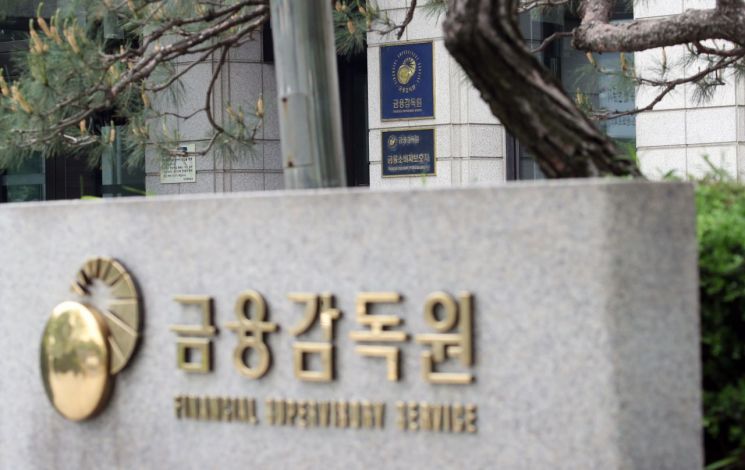
[Asia Economy Reporter Kwangho Lee] The possibility of reappointment is being predicted for incumbent auditors from the Financial Supervisory Service (FSS) at commercial banks whose terms expire in March. This year marks the inaugural year of the Financial Consumer Protection Act (FCPA), and with compensation and disciplinary procedures pending due to private equity fund sales such as Lime and Optimus, close interaction with financial authorities is crucial. In particular, as sanctions and pressure from financial authorities intensify, there is a growing call for their expertise, activities, and experiential knowledge.
Five Auditors from FSS Expected to be Reappointed
According to the FSS electronic disclosure system on the 26th, there are five incumbent auditors from the FSS at commercial banks whose terms expire in March.
They are Lee Ik-jung, auditor at NH Nonghyup Bank (former head of the Special Bank Inspection Bureau), Park Yong-wook, auditor at Jeju Bank (former head of the Consumer Protection General Bureau), Byun Dae-seok, auditor at Daegu Bank (former head of the Special Bank Service Bureau), Song Hyun, auditor at Gwangju Bank (head of the Savings Bank Inspection Bureau), and Jang Hyun-gi, auditor at Busan Bank (former head of the Foreign Exchange Operations Office).
Previously, KB Kookmin Bank and Shinhan Bank reappointed incumbent auditors Joo Jae-sung and Heo Chang-eon, whose terms were set to expire at the end of last year. Auditor Joo served as the deputy head of the FSS Banking Division and as CEO of Woori Financial Research Institute, while Auditor Heo held senior positions such as deputy head in charge of insurance and president of the Financial Security Institute.
Hana Bank currently has Executive Director Cho Sung-yeol, who served as head of the FSS Jeju branch and the General Bank Inspection Bureau, and Woori Bank recruited Jang Byung-yong, former head of the FSS Savings Bank Supervision Bureau, at last year’s shareholders meeting.
Need for Smooth Communication with Financial Authorities
The financial sector views the strong consumer protection stance of financial authorities and ongoing regulatory tightening as reasons to favor the reappointment of these individuals to ensure smooth communication with the authorities.
A financial industry insider said, "Currently, dispute resolution committees and disciplinary review committees related to private equity funds at banks are scheduled one after another, and depending on the disciplinary outcomes for sitting financial holding company chairpersons and bank presidents, significant changes in governance are inevitable. With the full enforcement of the FCPA at the end of next month and ongoing controversies over dividend reductions and profit-sharing systems, the trend of appointing incumbent auditors from the FSS is expected to continue."
He added, "Those from the FSS have proven expertise in supervision and inspection fields and can be considered verified personnel for performing audit committee duties."
Another insider said, "Banks appoint FSS alumni because their interests align. Banks can use these FSS alumni as shields to play a buffering role against supervision and inspection by financial authorities, making their work easier to carry out."
A representative from a commercial bank also said, "Since banks undergo inspections by financial authorities every year, it is not easy to sever close ties. Among public officials nearing retirement, there are even talks about competing to secure the well-regarded incumbent auditor positions."
Potential Obstruction to Financial Authorities’ Work
There are also concerns. If such appointments continue and exert influence, they could hinder the work of financial authorities. The savings bank crisis 10 years ago (2011) is a clear example. At that time, retired FSS officials who were re-employed by savings banks were found to have engaged in lobbying and various corrupt practices against the FSS. As a result, the post-retirement employment restrictions, initially applied only to grade 2 or higher officials, were expanded to grade 4 or higher. To prevent such side effects, it is necessary to increase transparency in the incumbent auditor appointment process.
A representative from the National Financial Industry Labor Union criticized, "It is not socially justifiable for retired financial authority officials to be re-employed as senior executives at banks they once supervised."
He added, "The appointment process for incumbent auditors should involve open recruitment and greater transparency, and improvements to the Public Officials Ethics Act are also necessary."
Meanwhile, the Korea Development Institute (KDI) released a report in 2019 titled 'Economic Effects of Financial Authority Alumni Re-employment in Financial Companies,' which found that when financial authority alumni are re-employed by financial companies, the likelihood of those institutions being sanctioned decreases to one-seventh. In response, the FSS distributed rebuttal materials stating, "The FSS operates various internal control measures to prevent improper collusion with retirees."
© The Asia Business Daily(www.asiae.co.kr). All rights reserved.
![Clutching a Stolen Dior Bag, Saying "I Hate Being Poor but Real"... The Grotesque Con of a "Human Knockoff" [Slate]](https://cwcontent.asiae.co.kr/asiaresize/183/2026021902243444107_1771435474.jpg)















