False Sales Contract Signing Followed by Contract Cancellation
Focused Investigation on Suspected 'Real Transaction Price Inflation'
False Reporting Without Contract... 30 Million Won Fine
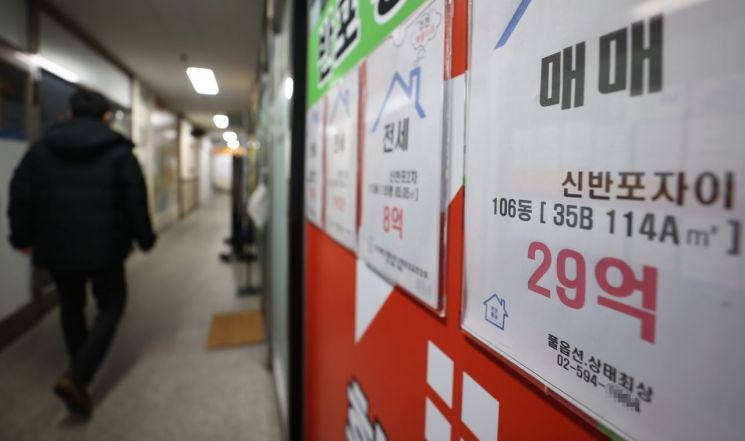
[Asia Economy Reporter Moon Jiwon] The government will conduct a high-intensity planned investigation into suspected cases of so-called 'real transaction price boosting,' where contracts for high-priced housing sales are signed and reported to stimulate housing prices, then subsequently canceled.
The Ministry of Land, Infrastructure and Transport (MOLIT) announced on the 25th that it will carry out a focused inspection of suspected false real transaction reports aimed at market disruption through the 'Real Estate Transaction Analysis Planning Team' and the Korea Real Estate Board's 'Permanent Real Transaction Investigation Team.'
According to MOLIT, over the past year, numerous suspected cases of contract cancellations intended to manipulate real transaction prices, beyond simple cancellations due to reporting errors, have been identified.
Since the amendment of the Real Estate Transaction Reporting Act on February 21 last year, which made reporting contract cancellations mandatory, there have been a total of 798,000 apartment sales transactions nationwide over one year, with about 39,000 cancellations reported (4.9%).
Among the 39,000 cancellations, excluding those due to joint name changes or errors in reporting details such as location or area, approximately 22,000 cases (56.6%) are 'pure cancellations.'
By region, the figures are as follows: Seoul 1,300 cases (1.7%), Gyeonggi-do 6,100 cases (2.6%), Incheon 1,200 cases (2.4%), five major metropolitan cities 6,700 cases (3.5%), eight provinces 6,500 cases (2.7%), and Sejong City 300 cases (3.7%).
Notably, among pure cancellations without re-reporting after contract termination, about 3,700 cases (16.9% of pure cancellations) recorded the highest price at the time of contract. Such transactions are highly likely to involve false contracts signed and reported to inflate real transaction prices, then canceled.
The proportion of transactions recording the highest price among pure cancellations is highest in Seoul at 36.9% (470 cases), followed by Sejong 29.6% (89 cases), Gyeonggi-do 19.3% (1,186 cases), Incheon 17.8% (215 cases), five major metropolitan cities 16.5% (1,096 cases), and eight provinces 10.5% (686 cases).
Among pure cancellations recording the highest price, many suspicious cases were detected where specific individuals repeatedly participated in multiple transactions or cancellations were concentrated in particular complexes.
For example, a person named 'Gap' might sign a contract to sell house A at the highest price, then cancel it, then sign a contract to buy house B at the highest price and cancel again, alternating roles as seller, buyer, and broker in multiple transactions. Such 'multiple transactions by specific individuals' account for 952 cases nationwide (4.3% of pure cancellations).
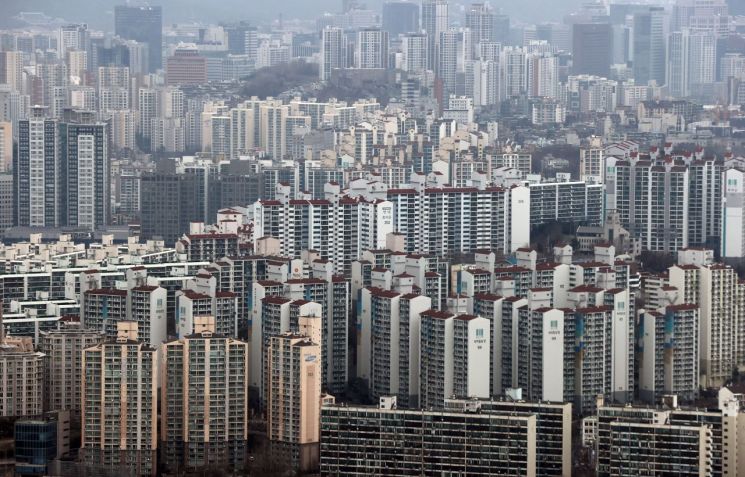
MOLIT has identified cases where specific individuals participated in cancellation transactions up to five times (36 cases) as sellers, buyers, or brokers.
Of course, the fact that a transaction was canceled after reporting the highest price does not necessarily mean it was market manipulation intended to stimulate housing prices, but MOLIT believes detailed investigations are necessary for such multiple transactions by specific individuals.
This investigation will select and conduct inspections on suspected cases of 'real transaction price boosting'?transactions reported at nonexistent highest prices and then canceled?among transactions conducted over about one year since cancellation reporting became mandatory on February 21 last year.
The investigation will focus on regulated areas with many cancellation transactions at reported highest prices, such as Seoul, Sejong, Busan, and Ulsan. It will be conducted over three months from this month to May, with the possibility of extension if necessary.
The investigation will focus on verifying whether false real transaction reports were made by checking contracts, contract deposits, contract cancellations, deposit returns, and double compensation. It will also examine whether tax evasion or loan regulation violations occurred during the financing process.
If it is confirmed that a contract was falsely reported without actually being concluded, a fine of 30 million KRW will be imposed. If any suspected criminal cases are detected during the investigation, the matter will be immediately referred to the relevant police station for investigation.
If it is proven that licensed real estate agents unfairly fabricated completed transactions or unduly influenced the market price of brokerage objects, disciplinary actions such as license suspension will also be taken.
Kim Hyungseok, Director of Land Policy at MOLIT, emphasized, "Through high-intensity planned investigations of real transactions, we will root out market disruption activities by some speculative forces that damage the order of the real estate market. We will make every effort to create an environment where ordinary citizens can trade real estate with confidence."
© The Asia Business Daily(www.asiae.co.kr). All rights reserved.
![Clutching a Stolen Dior Bag, Saying "I Hate Being Poor but Real"... The Grotesque Con of a "Human Knockoff" [Slate]](https://cwcontent.asiae.co.kr/asiaresize/183/2026021902243444107_1771435474.jpg)
















