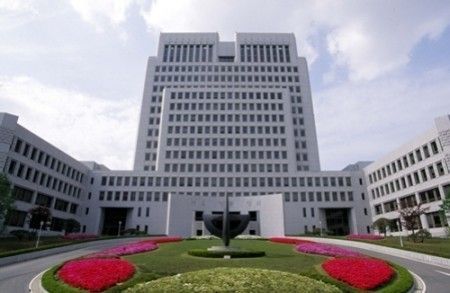
[Asia Economy Reporter Seongpil Cho] The Supreme Court has recognized conscientious objection to military service and acquitted a man in his 20s who had refused reserve forces training for several years on the grounds that he could not participate in military training that takes the lives of others. This is the first case recognizing refusal of military service based on personal beliefs rather than religious reasons.
The Supreme Court's First Division (Presiding Justice Heung-gu Lee) announced on the 25th that it upheld the lower court's acquittal of Mr. A, who was charged with violating the Reserve Forces Act and Military Service Act. The court ruled, "Even if one refuses reserve forces training and military mobilization training based on ethical, moral, or philosophical beliefs rather than religious beliefs, if it is based on true conscience, it should be considered a 'justifiable reason' as stipulated in the Reserve Forces Act and Military Service Act."
Mr. A was discharged in February 2013 and transferred to the reserves, but from November 2016 to April last year, he was tried for not attending reserve forces training and military mobilization training about ten times. He argued that his absence from training was an act based on his belief that he could not participate in military training for war that takes the lives of others, and that he had justifiable reasons.
The first and second trials found Mr. A's belief to be sincere and acquitted him. The Supreme Court agreed. It found no legal error in the acquittal judgment. A Supreme Court official said, "This is the first case recognizing refusal of reserve forces training and military mobilization training based on true conscience rather than religious belief, and acknowledging it as a 'justifiable reason' under the Reserve Forces Act and Military Service Act."
The current Reserve Forces Act (Article 15, Paragraph 9, Subparagraph 1) stipulates that a person who does not attend training without a 'justifiable reason' or a person who attends training on behalf of someone else shall be punished by imprisonment for up to one year or a fine of up to 10 million won. Also, the Military Service Act (Article 90, Paragraph 1, Subparagraph 1) states that a person who receives a military mobilization training summons and does not enlist or attend inspection at the designated time without a 'justifiable reason' shall be punished by imprisonment for up to one year or a fine of up to 10 million won.
© The Asia Business Daily(www.asiae.co.kr). All rights reserved.
![Clutching a Stolen Dior Bag, Saying "I Hate Being Poor but Real"... The Grotesque Con of a "Human Knockoff" [Slate]](https://cwcontent.asiae.co.kr/asiaresize/183/2026021902243444107_1771435474.jpg)















