Some '20s and 30s' Club Entertainment During COVID-19
Citizens "Worry About COVID Resurgence", "Transmission to Family and Friends" Outrage
Government Reviews 'Social Distancing' Measures
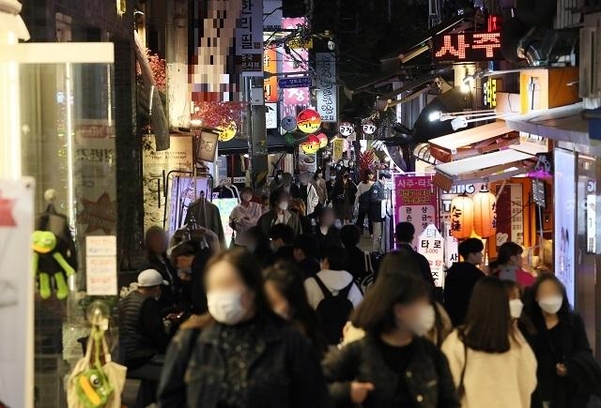
[Asia Economy Reporter Han Seung-gon] "It's fine if they get COVID themselves, but it’s infuriating because it causes harm to us."
Recently, there has been public outrage as young people in their 20s and 30s blatantly violate quarantine rules by visiting clubs, drinking closely packed together, and dancing despite the ongoing spread of COVID-19. The so-called 'drinking and dancing youth' not only raise concerns about the spread of COVID-19 but also are expected to cause severe damage to self-employed small business owners who are enduring each day as a literal 'living hell.'
Citizens raised their voices, calling it selfish behavior. Kim, a company employee in his 30s, strongly criticized, "It’s not just a day or two; the anxiety over COVID spread caused by youth misconduct is now even tiresome. They should all be fined and punished."
Another office worker in his 40s, Lee, expressed frustration, saying, "Ignoring quarantine rules is a problem, but it seems they don’t even care about the risk of their family or acquaintances catching COVID. That’s the most infuriating part."
As citizens’ concerns and criticisms indicate, club visits have been active recently, especially among young people. Some clubs operate a so-called 'two-shift system,' where they let customers out between 11 a.m. and noon, then reopen around 4 to 5 p.m. and operate until 10 p.m., catering to customers in their 20s and 30s.
According to quarantine rules, only one person per 8 square meters is allowed in clubs, and dancing and moving between tables are prohibited. However, club scenes revealed through multiple media reports show that these rules are not properly followed. People dance closely packed together, and some customers even remove their masks to enjoy the nightlife. It is literally a 'blind spot' in COVID-19 prevention.
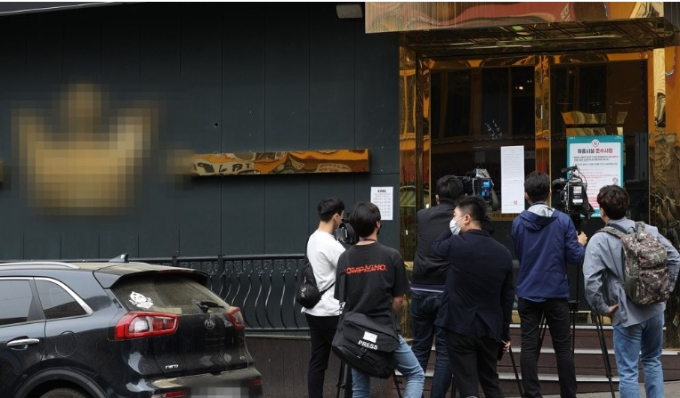 On the afternoon of May 7 last year, a COVID-19 confirmed patient visited a club in Itaewon, Seoul.
 [Image source=Yonhap News]
The club environment is a '3C environment'?crowded, close-contact, and confined?where COVID-19 spreads most easily. Even if people dance and talk while wearing masks, the moment they remove masks to drink, the virus can spread through the air, and due to the enclosed structure of clubs, anyone can easily get infected.
In fact, last July, a COVID-19 cluster infection originating from clubs in Itaewon, Seoul, spread widely. As of May 26, there was even a seventh-generation infection. It started from an academy instructor in Incheon who visited Itaewon clubs, then spread to students, karaoke rooms, and three restaurants, eventually reaching the families of the last restaurant visitors.
By that date, the cumulative number of confirmed cases related to the clubs exceeded 250, showing a severe spread of COVID-19. This is why experts and citizens continue to express concern. It is practically not surprising if a club-related COVID-19 outbreak occurs anytime and anywhere because of these factors.
Meanwhile, Seoul city and police conducted surprise inspections of clubs and unlicensed entertainment establishments in Gangnam and caught 10 places violating COVID-19 quarantine rules. Seoul city announced that, together with local districts, they conducted joint inspections of clubs and unlicensed entertainment facilities in Gangnam-gu and Seocho-gu during the early hours of Saturday, the 20th.
As a result, seven clubs were caught violating quarantine rules such as social distancing. Local governments plan to impose administrative penalties such as fines on these businesses. Additionally, three unlicensed entertainment establishments violating gathering restrictions were also caught. A total of 53 people were booked for violations of the Food Sanitation Act and Infectious Disease Control and Prevention Act and will be investigated.
Amid growing concerns over club-related COVID-19 spread, the government announced it will monitor patient trends this week and consider adjusting the current 'social distancing' levels (Level 2 in the metropolitan area, Level 1.5 in non-metropolitan areas).
Son Young-rae, head of the Social Strategy Division at the Central Disaster and Safety Countermeasures Headquarters, said at a regular briefing on the 21st, "After the Lunar New Year holiday, the number of patients is increasing nationwide," adding, "We will closely monitor the situation through this week and consider adjusting distancing levels and quarantine measures if necessary."
Son also stated, "Although the third wave, which had been declining, is showing an upward trend again, considering the backlog of tests due to the Lunar New Year holiday, it is necessary to carefully observe how the trend develops during this week."
Regarding the increase in confirmed cases, he explained, "Cluster infections continue to occur in '3C' (crowded, confined, close-contact) environments such as manufacturing and among foreign workers, and regional cluster infections in family and acquaintance gatherings and multi-use facilities are steadily increasing," adding, "This is attributed to the easing of distancing measures and the effects of the Lunar New Year holiday."
© The Asia Business Daily(www.asiae.co.kr). All rights reserved.


















