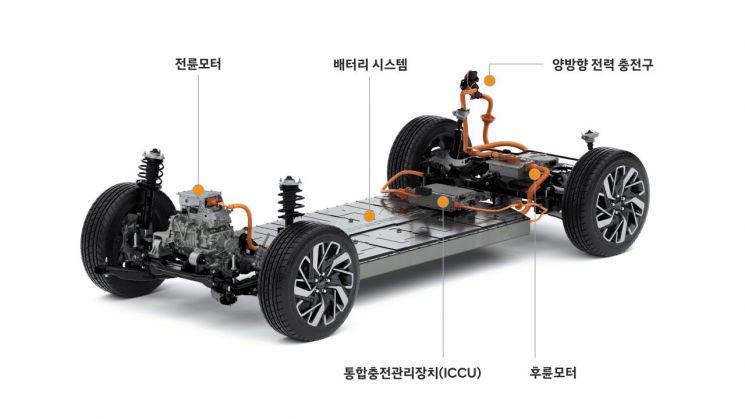
[Asia Economy Reporter Oh Hyung-gil] Hyundai Motor Company, which is building a complete car factory in Indonesia, has solved one 'task' to produce electric vehicles locally.
The Indonesian Ministry of Economic Affairs revised government regulations to widen the difference in individual consumption tax (luxury tax) between electric vehicles and hybrids. Initially, the individual consumption tax for electric vehicles and plug-in hybrids was 0% of the sales price, while hybrids were taxed between 2% and 8% depending on engine displacement.
However, the rates were changed to 0%, 5%, and 6% to 8%, respectively, increasing the gap, and at the time electric vehicles actually begin production, the difference will be further widened to 0%, 8%, and 10% to 12%.
This move by the Indonesian government has increased the likelihood that Hyundai will produce electric vehicles locally. Hyundai is scheduled to start producing internal combustion engine vehicles once the complete car factory in Bekasi, on the outskirts of Jakarta, is completed by the end of this year.
Since entering Indonesia, Hyundai has been engaged in a 'push and pull' negotiation with the local government regarding plans to produce electric vehicles, following the government's active requests.
Indonesia, as a producer of electric vehicle battery materials such as nickel, cobalt, and manganese, has set a goal to become an 'electric vehicle industry hub' by 2030 and is comprehensively promoting the development of electric vehicle and battery businesses.
Hyundai has insisted that for electric vehicles to be produced in Indonesia, there must be a difference in individual consumption tax rates between hybrids and other types, and has requested revisions from the local government.
© The Asia Business Daily(www.asiae.co.kr). All rights reserved.
![Clutching a Stolen Dior Bag, Saying "I Hate Being Poor but Real"... The Grotesque Con of a "Human Knockoff" [Slate]](https://cwcontent.asiae.co.kr/asiaresize/183/2026021902243444107_1771435474.jpg)















