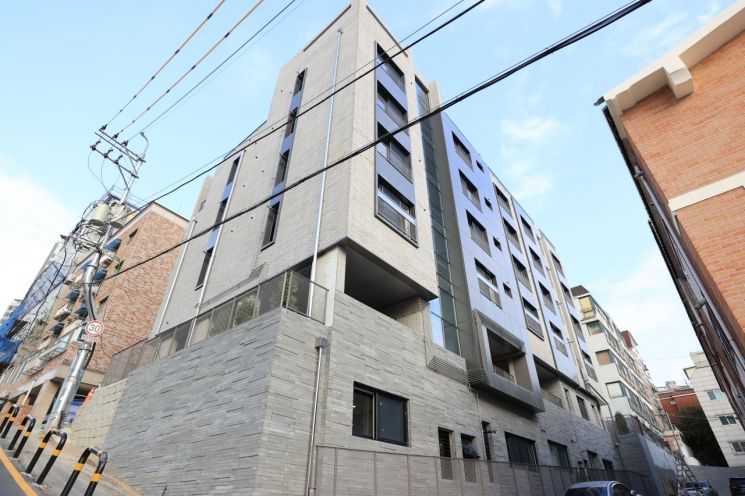
[Asia Economy Reporter Kangwook Cho] #. Mr. A, who had been residing in a Happy Housing unit in Guro-gu, Seoul, was evicted in October 2019. At that time, it was confirmed that Mr. A owned a Maserati ‘Ghibli’ valued at 99.08 million KRW.
As the housing price overheating trend continues, ‘move-in loopholes’ in public rental housing for low-income citizens have become a persistent problem. In response, a bill has been proposed to prevent so-called ‘Albuja’ tenants?those whose assets or income exceed the criteria?from residing in public rental housing through deceptive means.
According to political and real estate industry sources on the 11th, Shin Young-dae, a member of the National Assembly from the Democratic Party of Korea, introduced the ‘Partial Amendment to the Special Act on Public Housing’ on the 1st, which mandates regular verification of whether public rental housing tenants’ assets and income meet the legal standards.
The amendment mainly requires regular checks on tenants’ assets and income during their residence. In particular, it allows public housing operators to terminate lease contracts or refuse renewals if tenants exceed the eligibility criteria even after moving into public rental housing.
Current law stipulates that lease contracts can be terminated or renewals refused if tenants’ assets or income exceed legal standards. However, there are no specified methods or criteria for verifying tenants’ assets or income. This makes it difficult to detect ‘Albuja’ tenants or those residing through deceptive means and to establish grounds for contract termination or refusal of renewal. Consequently, tenants can meet asset and income qualifications only at the time of move-in but actually possess assets or income far exceeding the standards, enabling ‘loophole residency.’
In fact, a national audit in October last year revealed that over the past five years, there have been about 1,900 cases of disqualified residency in Seoul’s public rental housing due to income excess, illegal subletting, and other reasons?averaging 400 cases annually.
By disqualification reason, home ownership (1,108 cases) was the most common. Among disqualified cases, 437 (about 40%) occurred in redevelopment rental housing, accounting for 82% of all disqualified residents in redevelopment rental housing. Following this were income excess (551 cases), real estate excess (118 cases), and vehicle value excess (68 cases). Most cases were detected at the time of lease renewal after initially meeting eligibility criteria at move-in.
 Maserati Ghibli
In particular, besides the case of the Maserati Ghibli worth about 100 million KRW, another tenant residing in national rental housing was evicted for exceeding the standard after owning a Mercedes-Benz E300 valued at 53.52 million KRW. These vehicles exceeded the automobile value limit of 24.68 million KRW for national rental and Happy Housing by two to four times.
Representative Shin said, “Public rental housing is a project funded by the state or local governments to ensure housing stability for vulnerable groups, so tenants who do not meet eligibility requirements must be thoroughly checked,” adding, “We will take the lead in improving laws and systems so that rental housing can be prioritized for vulnerable groups urgently needing housing support.”
© The Asia Business Daily(www.asiae.co.kr). All rights reserved.
![Clutching a Stolen Dior Bag, Saying "I Hate Being Poor but Real"... The Grotesque Con of a "Human Knockoff" [Slate]](https://cwcontent.asiae.co.kr/asiaresize/183/2026021902243444107_1771435474.jpg)















