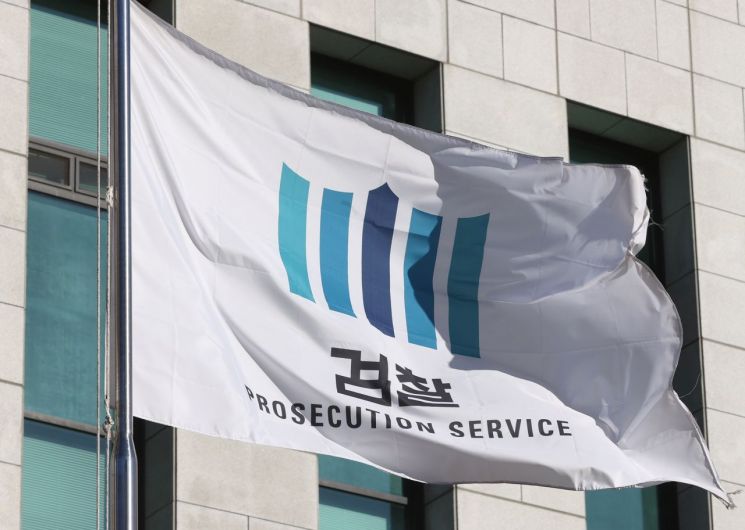
[Asia Economy Reporter Park Cheol-eung] Korea's prosecution system was established after the Gabo Reform. It had the authority to both investigate and prosecute, but during the Japanese colonial period in 1912, the 'Joseon Criminal Ordinance' granted prosecutors and judicial police officers unlimited freedom to conduct forced investigations. The origin of the prosecution power, known as omnipotent, was rooted in Japan's intent to suppress the Korean people.
After liberation, during the authoritarian era, military police or intelligence agencies played the role of the highest authority, but after democratization in 1987, the prosecution took over that position, according to proponents of prosecution reform.
The core of prosecution reform is to separate investigation and prosecution. The High-ranking Officials' Crime Investigation Office (Gong-su-cheo) has already been launched, and the ruling party is pushing for a plan to abolish even the six major crimes (corruption, economy, public officials, elections, defense projects, and major disasters) left to the prosecution, making it responsible only for prosecution. If realized, the prosecution as it has been known will disappear, leaving only the role of legal experts who do not conduct investigations.
At the end of last year, Kim Yong-min, a member of the Democratic Party of Korea, proposed a bill to establish a Public Prosecution Office instead of the prosecution office, and on the 9th, Hwang Un-ha, also from the Democratic Party, introduced a bill to establish a separate investigative agency called the Serious Crime Investigation Office. This was done together with the 'Active Members' Group Cheoreomhoe,' composed of Democratic Party members and Choi Kang-wook from the Open Democratic Party. Members include Kim Nam-guk, Kim Seung-won, Kim Yong-min, Moon Jeong-bok, Min Byung-duk, Min Hyung-bae, Yoon Young-duk, Lee Soo-jin, Jang Kyung-tae, Choi Hye-young, Hong Jeong-min, and Han Jun-ho.
The Democratic Party's prosecution reform special committee has already decided on establishing a separate investigative agency. Since it is also necessary to prevent the relative over-expansion of police power, the six major crimes cannot be handed over to the police. However, the issue remains as to which ministry the separate investigative agency should belong to?whether the Ministry of Justice, Ministry of the Interior and Safety, or the Prime Minister's Office. The special committee plans to discuss bills proposed by individual members and is expected to present a bill at the committee level by the end of this month. After a public discussion process, the plan is to pass it within the first half of this year.
'Cheoreomhoe' stated, "The purpose is to completely separate the 'direct investigation authority,' the core of prosecution abuse, from the prosecution and transfer it to the newly established 'Serious Crime Investigation Office,' achieving checks and balances through the separation of investigation and prosecution and establishing a just criminal justice system."
They also pointed out that in other countries, prosecutors only serve as public prosecutors responsible for prosecution and maintaining public prosecution in criminal trials. 'Cheoreomhoe' said, "The image of prosecutors directly investigating suspects or witnesses is familiar and taken for granted in Korea, but 'direct investigation by public prosecutors' is a unique system not found in advanced countries, whether in common law or civil law systems," adding, "It not only undermines the objectivity of public prosecutors but also violates the basic principle of evidence law that prosecutors cannot be witnesses in court."
© The Asia Business Daily(www.asiae.co.kr). All rights reserved.
![Clutching a Stolen Dior Bag, Saying "I Hate Being Poor but Real"... The Grotesque Con of a "Human Knockoff" [Slate]](https://cwcontent.asiae.co.kr/asiaresize/183/2026021902243444107_1771435474.jpg)















