Korea Real Estate Board February 2nd Week Apartment Price Trends
Seoul 0.10%→0.09% Growth Rate Slows
Gyeonggi Province Also Slightly Pauses... Incheon Soars
Jeonse Market Nationwide Growth Rate Slows
Impact of 2·4 Housing Supply Measures... Housing Prices in Focus
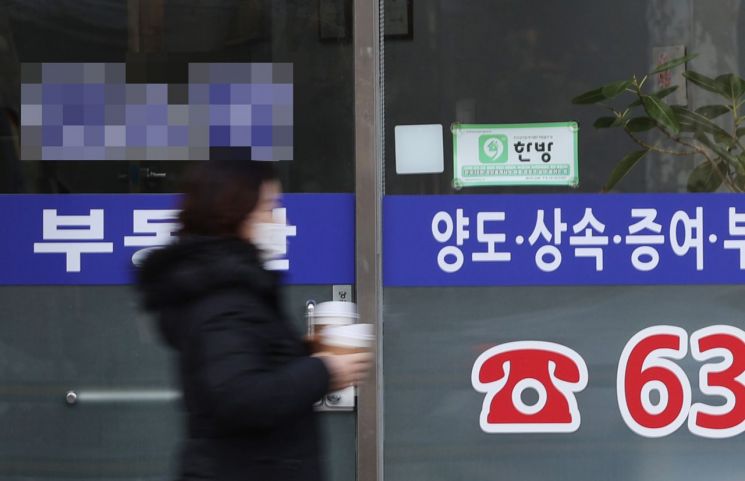
[Asia Economy Reporter Moon Jiwon] After the government's announcement of the 2·4 supply plan, the apartment price growth rate in Seoul and Gyeonggi Province showed signs of slowing compared to the previous week. However, in Incheon, apartment prices rose significantly, leading the entire Seoul metropolitan area to maintain the highest growth rate for three consecutive weeks.
According to the weekly apartment price trend report for the second week of February by the Korea Real Estate Board on the 11th, as of the 8th, apartment prices in the Seoul metropolitan area rose by 0.33% compared to the previous week, marking the same growth rate for three consecutive weeks.
The Seoul metropolitan area recorded a 0.31% increase in the third week of last month, the highest growth rate in 8 years and 8 months since the Korea Real Estate Board began compiling statistics, and then surpassed that record again with a 0.33% increase just one week later. Since then, the growth rate has remained at 0.33% for two consecutive weeks, indicating a soaring housing market.
However, in Seoul, apartment prices rose by 0.09% this week, a smaller increase compared to 0.10% the previous week. This is the first time in about six months that Seoul's apartment price growth rate has slowed compared to the previous week, since the fourth week of August last year (0.02% → 0.01%).
The Korea Real Estate Board analyzed, "With expectations for market stabilization due to the 'Public-led 3080+ Supply Plan' announced on the 4th, while demand for mid-to-low priced apartments remained steady, some areas with previously high growth rates showed a cautious stance, leading to a reduced growth rate."
Since the government announced plans to secure about 830,000 housing sites nationwide, including 320,000 units in Seoul by 2025, there has not yet been a significant shock effect on the overall Seoul metropolitan market, but a slowdown in growth rates has been sensed in some areas of Seoul.
In Seoul, the upward trend in the Gangnam area remained clear. Songpa-gu (0.14%) recorded the highest growth rate in Seoul, with prices rising mainly in Jamsil and Sincheon-dong, but the growth rate narrowed compared to 0.17% the previous week due to decreased buying demand after the policy announcement.
Gangnam (0.12%) and Gangdong-gu (0.08%) also saw price increases centered on popular complexes and new buildings, but the growth rates either narrowed or remained steady. Seocho-gu (0.11%) saw steady buying demand mainly in popular complexes in Banpo-dong and Jamwon-dong, leading to an expanded growth rate.
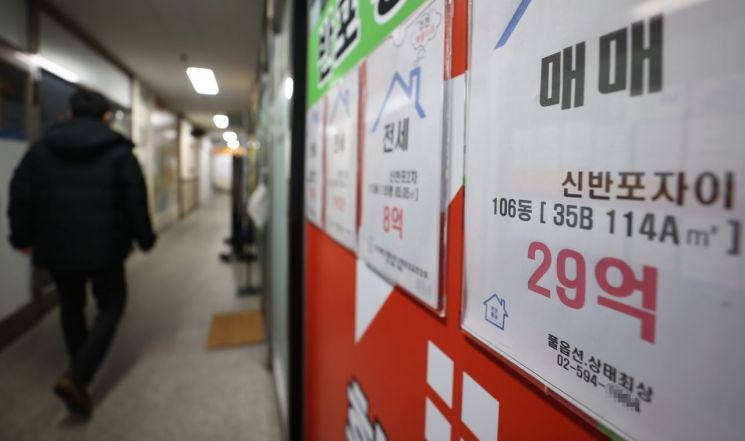
Gyeonggi Province also saw a slight decrease in apartment price growth rate from 0.47% to 0.46%.
Areas such as Sangnok-gu (1.12%) and Danwon-gu (0.72%) in Ansan rose significantly due to transportation benefits like the GTX-C line, and cities including Uiwang (1.07%), Yangju (0.98%), Uijeongbu (0.77%), Dongducheon (0.67%), and Hanam (0.47%) also showed high growth rates.
In the Seoul metropolitan area, Incheon’s growth rate increased from 0.31% to 0.37%. Yeonsu-gu (0.71%) saw a significant price increase mainly in older complexes in Yeonsu and Dongchun-dong, which are relatively cheaper compared to Songdo New City.
Regions outside the metropolitan area, which saw significant apartment price increases until last year, have shown a somewhat subdued atmosphere this year.
Provincial areas saw a slowdown in growth rate from 0.24% last week to 0.22% this week. Since the second week of December last year, when the growth rate peaked at 0.38%, the growth rate has been shrinking almost every week.
Excluding Incheon, the five major metropolitan cities (0.31% → 0.29%) and eight provinces excluding Gyeonggi Province (0.18% → 0.17%) also reduced their growth rates.
This is interpreted as a result of the government designating most major provincial areas as regulated zones at the end of last year and recently expanding real transaction investigations to low-priced apartments in the provinces, which has dampened buying demand.
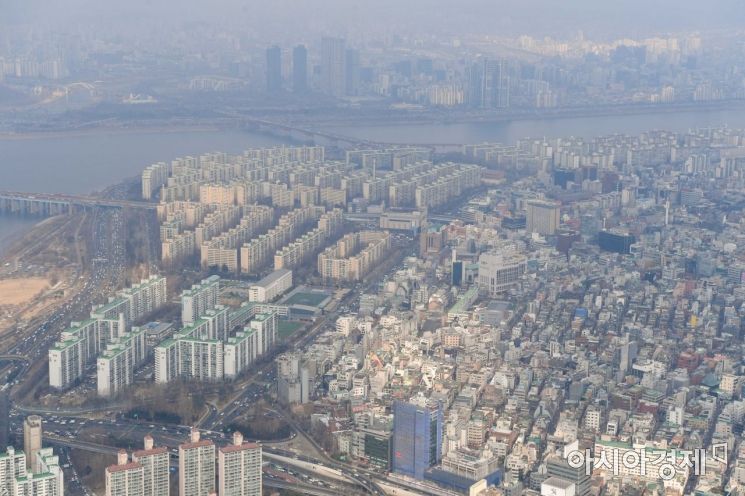 Apartment complexes in the Gangnam area as seen from a Seoul Metropolitan Police Agency helicopter on the 10th. Photo by Jinhyung Kang aymsdream@
The jeonse (long-term lease) market also generally saw a reduction in price growth rates.
Nationwide apartment jeonse prices rose by 0.22% this week, a slowdown compared to 0.24% the previous week.
Seoul (0.11% → 0.10%) and Gyeonggi Province (0.29% → 0.27%) saw reduced growth rates, leading to a slight decrease in the overall Seoul metropolitan area growth rate from 0.23% to 0.22%. In the metropolitan area, only Incheon saw an increase in growth rate from 0.22% last week to 0.26% this week.
The Korea Real Estate Board explained the Seoul jeonse market atmosphere, saying, "Due to fatigue from rapid price increases and an increase in move-in volumes, supply has accumulated mainly in high-priced complexes, leading to a reduced growth rate. However, the upward trend continued due to waiting demand for subscription and supply plans, as well as relocations related to redevelopment projects."
In Gyeonggi Province, jeonse price growth rates were high in Namyangju (0.69%), Uijeongbu (0.69%), and Siheung (0.44%), while Hanam (-0.14%) saw a decline in jeonse prices for the first time in 82 weeks since the third week of July 2019, due to accumulated jeonse supply influenced by move-in volumes.
Additionally, Sejong (0.89% → 0.79%), Daejeon (0.43% → 0.34%), Daegu (0.35% → 0.28%), Busan (0.25% → 0.22%), and Gwangju (0.09% → 0.07%) all saw reduced growth rates compared to the previous week.
© The Asia Business Daily(www.asiae.co.kr). All rights reserved.
![Clutching a Stolen Dior Bag, Saying "I Hate Being Poor but Real"... The Grotesque Con of a "Human Knockoff" [Slate]](https://cwcontent.asiae.co.kr/asiaresize/183/2026021902243444107_1771435474.jpg)













