On the First Day of China's Travel Restriction Advisory, Air Passenger Numbers at 14% of Last Year
Carrot Measures Like Free Coupons Effective Amid COVID-19 Trauma
[Asia Economy Beijing=Special Correspondent Jo Young-shin] The novel coronavirus infection (COVID-19) has blocked the movement of Chinese people during the Lunar New Year holiday. Although the Chinese government restricted movement during the Lunar New Year and introduced various incentives, it seems that trauma related to COVID-19 reduced travel during the holiday. The official Lunar New Year holiday period in China this year is from February 11 to 17. However, Chinese people usually take an additional two weeks off before and after the official holiday period.
According to Chinese media such as Pengpai and Global Times on the 29th, the number of passengers who traveled through Beijing Capital International Airport on the 28th, the start day of the Lunar New Year holiday season, was 37,600. This is only 13.7% compared to 273,600 passengers last year.
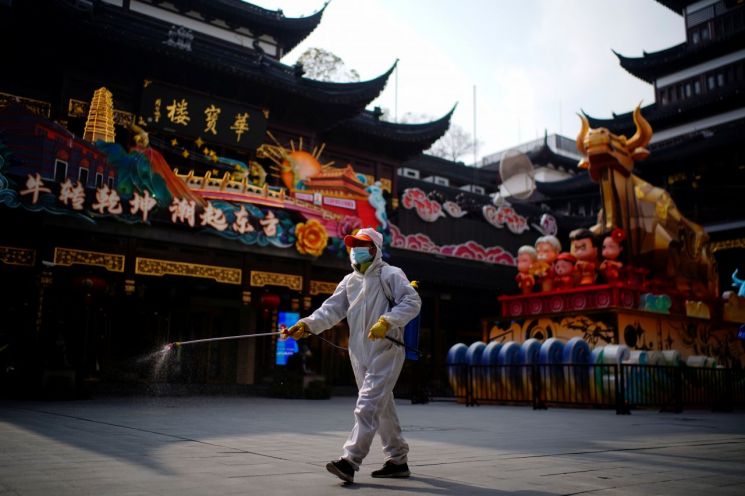
The Global Times reported that a total of 1.92 million people are expected to travel through the Capital Airport this year, which is a 60% decrease compared to the previous year. It also predicted that flights will decrease by more than 40% compared to last year.
Pengpai reported that as of 12 noon on the 28th, more than half of the nationwide flights were canceled.
The Chinese Ministry of Transport announced that during this year's Lunar New Year holiday, 1.15 billion trips (annual basis) are expected, a 60% decrease compared to 2019.
The peak of the return crowd to Beijing is estimated to be between February 16 and 18. During this period, the daily average number of people returning to Beijing by train is expected to reach 70,000.
Ahead of the March Two Sessions (National People's Congress and Chinese People's Political Consultative Conference), Beijing authorities are urging people to avoid traveling during the Lunar New Year holiday as much as possible.
They have also established complicated COVID-19 procedures to minimize the influx of people coming into Beijing from outside. People coming to Beijing from low-risk COVID-19 areas must submit a negative COVID-19 nucleic acid test result taken within 7 days. They must also undergo 14 days of health monitoring and receive additional nucleic acid tests during this period.
People from medium-risk and high-risk COVID-19 areas are, in principle, prohibited from entering Beijing.
Beijing authorities have also introduced incentives to discourage travel during the Lunar New Year. They are distributing consumption coupons to citizens spending the Lunar New Year in Beijing and providing 20GB of free mobile data. They have also introduced free refund and change policies for airline tickets. Authorities are encouraging employers to provide separate bonuses to workers who do not visit their hometowns.
As of the 28th, the National Health Commission of China reported 36 confirmed COVID-19 cases in China: 21 in Heilongjiang Province, 13 in Jilin Province, and one each in Beijing and Hebei Province.
© The Asia Business Daily(www.asiae.co.kr). All rights reserved.
![Clutching a Stolen Dior Bag, Saying "I Hate Being Poor but Real"... The Grotesque Con of a "Human Knockoff" [Slate]](https://cwcontent.asiae.co.kr/asiaresize/183/2026021902243444107_1771435474.jpg)















