Following China, Japan also 'Distorts Kimchi History'
Citizens say "NoNoJapan should be active again"
'Mukbang' YouTuber 'Hamji' and Professor Seokyeongdeok refute 'Kimchi History Shaking'
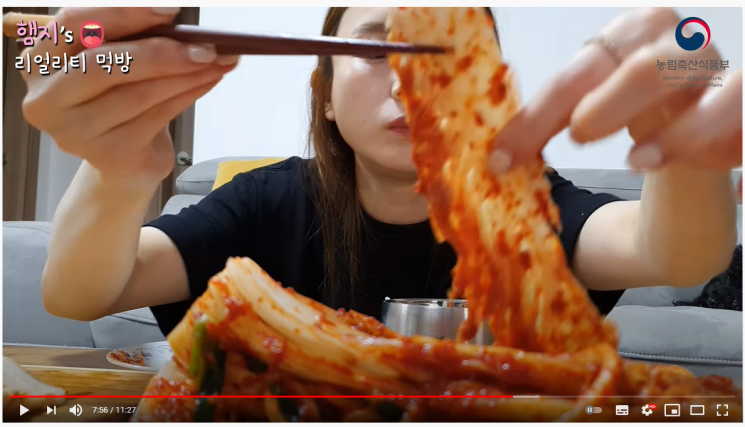 YouTuber Hamji, famous for "Mukbang," is broadcasting a protest against China's "Kimchi Dongbukgongjeong." Photo by Hamji YouTuber Channel Capture
[Asia Economy Reporter Han Seung-gon] There is growing dissatisfaction toward China and Japan, who have been repeatedly claiming kimchi, a traditional Korean food, as their own.
In particular, there are views that the boycott movement against Japanese products, 'NoNoJapan,' might flare up again. While other countries like China, which distort the history of kimchi, are problematic, the public is outraged that Japan has now even touched kimchi.
Recently, amid debates between Korean and Chinese YouTubers over the origin of kimchi, a Japanese media outlet reported that kimchi is a derivative of pao cai (泡菜, pickled vegetables) from China's perspective.
On the 26th, the Japanese online current affairs and economic magazine Japan Business Press (JBPress) published an article titled "Korea's rebuttal culture seen through the Korea-China kimchi origin controversy," asserting that "kimchi is a derivative of pao cai."
The media stated, "China's 'pao cai,' certified by the International Organization for Standardization (ISO), means 'salted vegetables,' but the first Korean kimchi described in the 'Goryeosa' was 'chimchae (沈菜),' a pickled vegetable used as an offering in ancestral rites, made with vegetables, garlic, and ginger," and claimed, "There is no change between pao cai and chimchae, the original kimchi." They added, "Each country has only slightly modified it according to their own climate, ethnicity, and lifestyle."
They also cited the Korea Agro-Fisheries & Food Trade Corporation, stating that from August to December 2020, Korea's kimchi imports amounted to 281,000 tons, about seven times the export volume, arguing that "Korea cannot maintain its diet without cheap Chinese kimchi."
The Korea-China kimchi origin controversy arose last November when China's Sichuan province's salted vegetable 'pao cai' received ISO certification, and the Chinese Communist Party's official newspaper, Global Times, reported it as "the humiliation of the kimchi origin country."
Amid ongoing controversy, on the 20th, Chinese Foreign Ministry spokesperson Hua Chunying said at a regular briefing, "I am not an expert in food issues, but from what I see, pao cai is a type of fermented food pickled in salt and is not exclusive to a few countries or regions."
Hua added, "In China, it is called 'pao cai,' and on the Korean Peninsula and among the ethnic Koreans in China, it is called 'kimchi.' These have overlapping aspects, but each has its own strengths in ingredients, taste, and cooking methods." This was interpreted as implying that kimchi and pao cai are essentially the same.
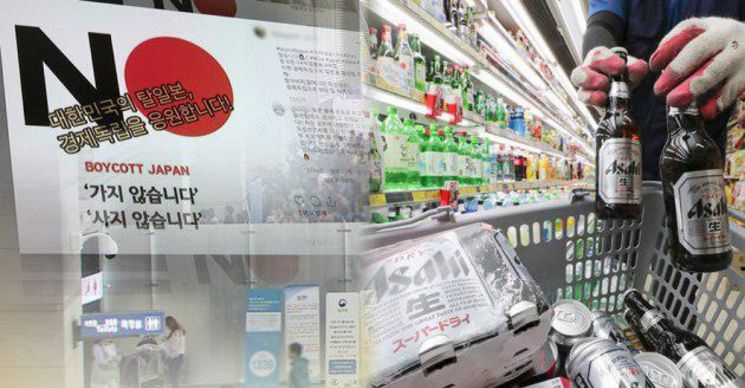
Citizens immediately expressed outrage. Many responded that they could not understand the claims of China and Japan, and some suggested that the boycott movement against Japanese products should be revitalized.
A company employee in his 40s, Mr. Kim, who said he learned about the issue through the news, stated, "China and Japan's historical distortions against our country are not new, but now touching even food like kimchi is going too far," and criticized, "The NoNoJapan movement should be strengthened."
Another office worker in his 30s, Mr. Park, raised his voice, saying, "Kimchi is our country's unique history itself. They even insist Dokdo is their land, and now they are picking on kimchi too. It's absurd."
Meanwhile, a domestic YouTuber's rebuttal video against China's claims is gaining popularity. Despite suffering disadvantages such as contract termination from a Chinese agency due to the video, the YouTuber continues to upload videos asserting that kimchi is a traditional Korean food.
Famous 'mukbang' (broadcasts specializing in eating food) YouTuber 'Hamzy' uploaded a video titled 'Real Mukbang Kimjang Kimchi Making' on his YouTube channel on the 25th. He showed himself making kimchi and enjoying it deliciously with boiled pork slices.
He indicated that the video was "content produced in collaboration with the Ministry of Agriculture, Food and Rural Affairs in November to promote our food."
Previously, Hamzy had made a bold statement to Chinese YouTubers involved in the 'Kimchi Northeast Project,' asserting "kimchi is Korean food," and had received a contract termination notice from a Chinese agency.
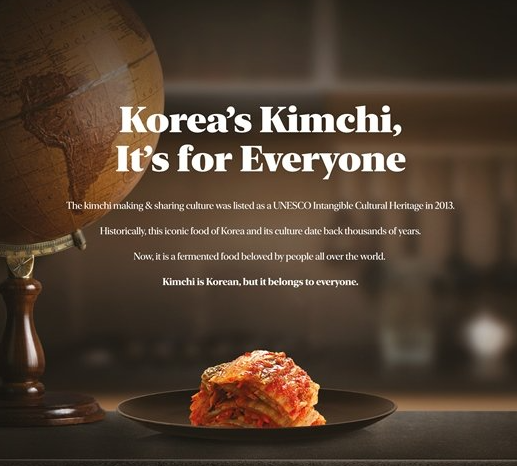
Amid the historical distortions of kimchi by China and Japan, rebuttals at the civilian level are also ongoing. Professor Seo Kyung-duk of Sungshin Women's University placed a 'kimchi advertisement' in The New York Times on the 19th.
The advertisement was published on the 18th (local time) on page 5 of the A section of The New York Times Americas edition and page 5 of the International New York Times (Europe and Asia edition).
The ad reads under the title "Korea's Kimchi, for the World," stating, "The kimjang culture was registered as UNESCO Intangible Cultural Heritage in 2013. Historically, it has been Korea's representative food culture for thousands of years." It also emphasized, "Today, it has become a fermented food loved worldwide, and Korean kimchi has become the world's."
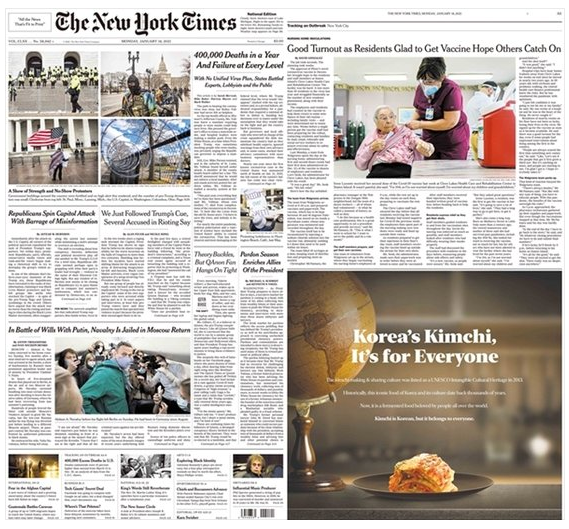
Professor Seo said, "Rather than responding to China's absurd 'Kimchi Northeast Project' one by one, I want to convey accurate facts about kimchi concisely to people worldwide," adding, "The New York Times advertisement is intended to promote to global leaders, and we are also promoting it to netizens worldwide through various SNS such as Instagram and Facebook using the advertisement file."
© The Asia Business Daily(www.asiae.co.kr). All rights reserved.
![Clutching a Stolen Dior Bag, Saying "I Hate Being Poor but Real"... The Grotesque Con of a "Human Knockoff" [Slate]](https://cwcontent.asiae.co.kr/asiaresize/183/2026021902243444107_1771435474.jpg)


















