Many Building Transactions in Seoul and Capital Area
Real Estate Investment Advantageous Due to No Regulation
Controversy Over Discrimination Against Domestic Residents With Many Restrictions
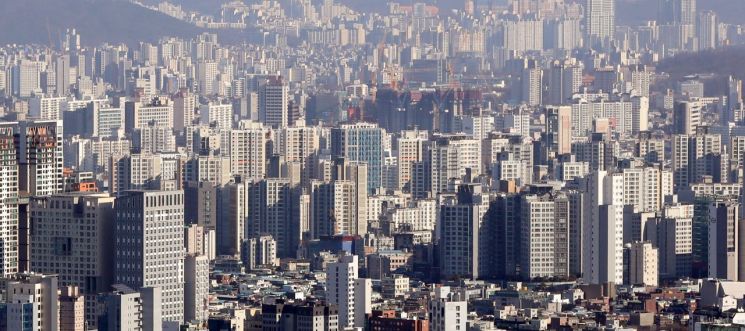
[Asia Economy Reporter Moon Jiwon] Last year, foreign nationals' transactions of domestic buildings surpassed 20,000 for the first time, marking an all-time high. It was found that foreigners particularly traded many buildings in the Seoul metropolitan area, where price increases were significant. Since foreigners are not subject to real estate regulations such as loan restrictions, concerns have been raised about severe reverse discrimination against domestic residents.
According to the Korea Real Estate Board on the 26th, last year, foreign nationals' transactions of domestic buildings (including single-family houses, multi-family houses, apartments, and commercial officetels) totaled 21,048 cases. This represents an 18.5% increase compared to the previous year (17,763 cases). This is the largest scale since the Real Estate Board began compiling related statistics in January 2006.
Foreigners' building transactions exceeded 10,000 in 2014 and increased to 19,948 in 2018, but decreased by 11.0% to 17,763 in 2019 compared to the previous year. However, last year's transaction volume surged, surpassing 20,000.
While the government has imposed loan regulations and mandatory submission of financing plans on domestic residents, such regulations do not apply to foreigners, which is interpreted as causing a rapid increase in foreigners' real estate purchases aiming for capital gains.
Looking at last year's foreign transactions by region, Gyeonggi-do had the highest number with 8,975 cases, followed by Seoul (4,775 cases) and Incheon (2,842 cases). This indicates that building purchases were concentrated in the metropolitan area.
In particular, Seoul recorded 3,886 transactions, with a growth rate of 22.9% compared to the previous year. Gangnam-gu (395 cases), where high-priced buildings are concentrated, had the most transactions, followed by Guro-gu (368 cases), Seocho-gu (312 cases), Yeongdeungpo-gu (306 cases), Jongno-gu (272 cases), and Songpa-gu (256 cases).
Transactions in Gyeonggi-do and Incheon increased by 18.1% and 5.2%, respectively, compared to the previous year. In Gyeonggi-do, Bucheon-si (1,362 cases), Ansan-si (926 cases), Suwon-si (795 cases), and Siheung-si (766 cases) had many transactions.
It has been pointed out that foreigners can speculate on real estate more easily than domestic residents because when using their home country's banks, they are not subject to loan-to-value (LTV) ratios when trading houses, and due to information restrictions, it is difficult to impose comprehensive real estate tax or capital gains tax. In fact, as house prices rose excessively last year, speculative transactions by some foreigners became controversial.
© The Asia Business Daily(www.asiae.co.kr). All rights reserved.
![Clutching a Stolen Dior Bag, Saying "I Hate Being Poor but Real"... The Grotesque Con of a "Human Knockoff" [Slate]](https://cwcontent.asiae.co.kr/asiaresize/183/2026021902243444107_1771435474.jpg)















