Attention on Future US Economic Policies Including Stimulus Measures and Comprehensive Pressure on China
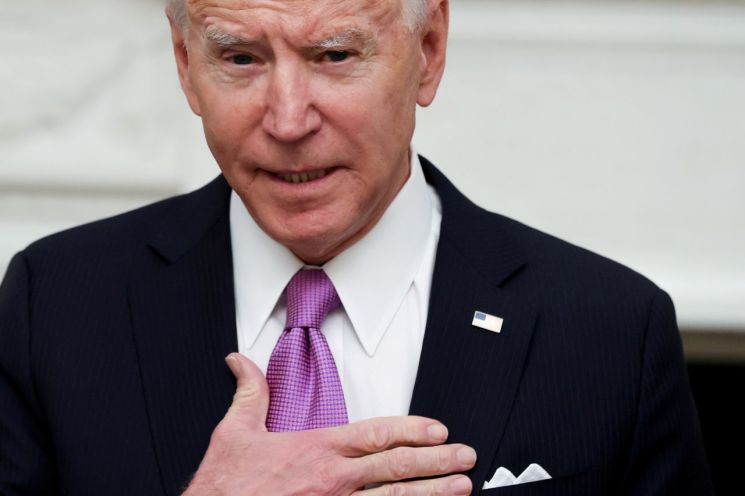
[Asia Economy Reporter Jeong Hyunjin] As confirmation hearings for economic officials under the Joe Biden U.S. administration are gaining momentum, the Federation of Korean Industries (FKI) emphasized that the U.S. will focus its economic policies on rebuilding the American economy and expanding alliances among democratic nations during the early stages of governance. It stressed that the South Korean economy should prepare to play the role of an ally to the U.S. while simultaneously maintaining economic exchanges with China.
On the 26th, the FKI released a report titled "Policy Directions Seen Through Biden Administration’s Economic Appointments," outlining five key points of the Biden administration’s future economic policies: ▲ a third large-scale economic stimulus package ▲ doubling the minimum wage ▲ Biden-style manufacturing revival plan ▲ comprehensive pressure on China ▲ realization of 5G democratic alliances.
The FKI identified the first key point to watch in the Biden administration as the passage of the third stimulus package and the implementation of emergency measures such as the Defense Production Act in response to COVID-19. Janet Yellen, former Federal Reserve Chair and current Treasury Secretary nominee, indicated during her confirmation hearing that she would "act big" with aggressive fiscal stimulus measures and mentioned actively considering issuing ultra-long-term bonds with maturities of 50 years to address concerns about fiscal burdens.
The FKI expects that if the third stimulus package is implemented, it will also impact the Federal Reserve’s ultra-low interest rate monetary policy. With the third stimulus and infrastructure investments, economic recovery and rising inflation could accelerate the timing of interest rate hikes from the initially expected 2025 to 2023.
Additionally, the Biden administration is expected to pursue minimum wage increases aimed at rebuilding the middle class. The White House’s economic advisory body, the Council of Economic Advisers (CEA), known as the "President’s economic tutor," is composed of progressive economists including Cecilia Rouse, an expert in education and racial issues, reflecting President Biden’s intention to actively push Democratic Party priorities such as reducing income inequality.
Accordingly, there is growing interest in how the federally mandated minimum wage increase promised by President Biden will proceed. Biden pledged to raise the federal minimum wage from the current $7.5 to $15 by 2025 and to increase union membership rates by simplifying union formation procedures and strengthening collective bargaining rights. Already, eight states including California and Illinois have passed laws to raise the minimum wage to $15, and this provision is included in the third stimulus package.
The FKI also highlighted the Biden-style manufacturing revival plan as a noteworthy aspect. President Biden’s vision of "Make in America, Buy American" centers on three policies: manufacturing within the U.S., purchasing and sourcing American raw materials, and encouraging American companies that have expanded overseas to return home. Particularly, Gina Raimondo, nominee for Secretary of Commerce who will oversee this, demonstrated a strong understanding of businesses by improving infrastructure and the business environment as Governor of Rhode Island, reducing the state’s unemployment rate from 7.7% in 2014 to 3.6% in 2019, which was previously among the worst in the U.S., according to the FKI.
Regarding China policy, the administration is expected to continue strong containment measures by nominating Katherine Tai, a second-generation Taiwanese American, as U.S. Trade Representative (USTR). Tai, known as a hardliner on China, is reported to advocate for an "aggressive response" that includes direct investment in American industries and workers, as well as building a united front with U.S. allies and friendly nations to pressure China.
Furthermore, statements by Secretary Yellen and Secretary of State nominee Tony Blinken about combating China’s unfair trade practices and refusing to import products made with forced labor from the Uyghur population in Xinjiang suggest that the Biden administration will maintain a tough stance on China policy for the foreseeable future, the FKI forecasted.
Regarding strengthening U.S. alliances, compared to the Trump administration’s strong global pressure such as excluding Huawei 5G equipment, the Biden administration is expected to utilize diplomatic means in the upcoming new technology hegemony battles. Attention should also be paid to the Biden administration’s stance on whether to expand and reform the Group of Seven (G7) summit. The FKI anticipates that the Biden administration will emphasize restoring multilateral order and strengthening alliances, actively leveraging coalitions with friendly countries to check China, and that the idea of officially recognizing this coalition as the group of ten democratic countries (D10) may be considered.
Kim Bongman, Director of International Cooperation at the FKI, said, "From the perspective that 'personnel = policy,' the current appointments before the Biden administration’s policies fully take shape carry significant implications. For South Korea, it is a concern to respond considering the Biden administration’s emphasis on alliances and its hardline stance on China. It is time for the public and private sectors to pool wisdom and prepare detailed responses together."
© The Asia Business Daily(www.asiae.co.kr). All rights reserved.
![Clutching a Stolen Dior Bag, Saying "I Hate Being Poor but Real"... The Grotesque Con of a "Human Knockoff" [Slate]](https://cwcontent.asiae.co.kr/asiaresize/183/2026021902243444107_1771435474.jpg)















