Increased Complaints of Fatigue Among Employees Due to Strengthened Management and Supervision
Additional Tasks Like Daily Reports and Some Places Requiring Hourly Reporting
Experts Say "Negative Impact on Motivation and Possible Violation of Workers' Personal Rights"
[Asia Economy Reporter Lee Jung-yoon] Park Seung-ho (31, pseudonym), an employee at a mid-sized company who has been working from home for three months due to the novel coronavirus infection (COVID-19), has found that working from home has added an extra task. Every day, after clocking out on the attendance system, he must write and submit a daily report to the company. He has to organize what he did during working hours by time and write down the tasks for the next day to report to his supervisor. This was not something he did when working in the office. It was enough to report verbally as needed. Park said, "Writing the report has extended my clock-out time from 6 p.m. to 6:30 p.m.," adding, "Working from home is not always good."
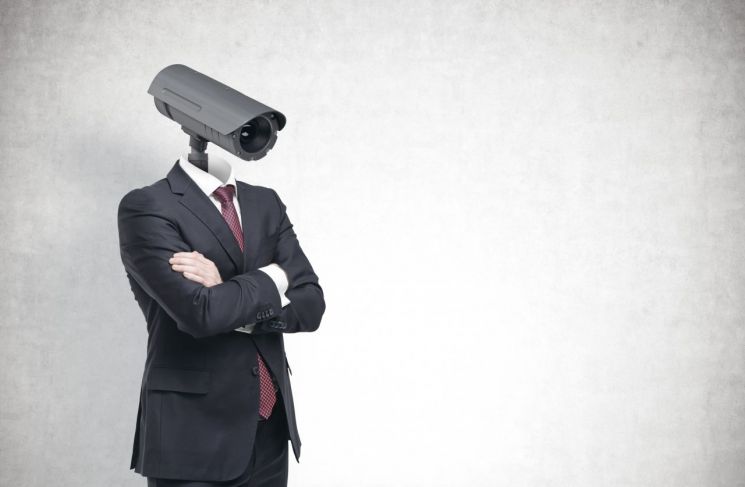
As the COVID-19 situation has continued for over a year, working from home has become a new work style for office workers. However, as companies increase efforts to check and supervise work status, more people are complaining about discomfort. While the intention is to monitor work diligence constantly since employees are working from home, the extent has become so severe that fatigue is serious.
Office worker Yoo Cheol-gyu (36, pseudonym) also finds working from home uncomfortable. For about a month, his company has required employees to keep their messenger apps open during working hours and respond within 1-2 minutes. He feels uneasy whenever he leaves his seat briefly, such as to use the restroom, because he never knows when a message from a supervisor checking his work status will come. Yoo said, "There were no such rules at the beginning of working from home, but they have gradually appeared over time," adding, "I feel like I am being monitored every day, so I would rather go to the office and feel at ease."
According to a recent survey by the employment portal Incruit, among 937 office workers who participated, 23.1% answered "yes" to the question, "Have you ever experienced discomfort due to unfair instructions or inadequate systems from the employer during working from home?" Actual cases of unfair instructions experienced by office workers during working from home included "taking and sending a screenshot every 30 minutes," "monitoring work progress in real-time," and "certifying work status via video calls." Responses also indicated that it is difficult to separate work and life during working from home, and that work orders after working hours have increased. Some office workers also reported difficulty concentrating on work while working at home. Choi (32) said, "While working from home, my two children keep coming in and whining to play. Even when I lock the door and work, they keep knocking and crying, making it hard to concentrate."
Experts explain that excessive management by companies weakens the advantages of working from home. Professor Kim Sung-hee of Korea University Labor Issues Research Institute said, "Real-time supervision or retrospective checks of work status during working from home stem from an outdated simple control method. It negatively affects motivation by undermining the autonomy, which is a key advantage of working from home," adding, "Companies trying to control every detail through surveillance can also infringe on workers' personal rights."
© The Asia Business Daily(www.asiae.co.kr). All rights reserved.
![Clutching a Stolen Dior Bag, Saying "I Hate Being Poor but Real"... The Grotesque Con of a "Human Knockoff" [Slate]](https://cwcontent.asiae.co.kr/asiaresize/183/2026021902243444107_1771435474.jpg)















